Algeria
 Egypt
 Libya
 Morocco
 Sudan
 Tunisia
 Benin
 Burkina Faso
 Cabo Verde
 Côte d'Ivoire
 Ghana
 Guinea
 Guinea-Bissau
 Liberia
 Mali
 Mauritania
 Nigeria
 Senegal
 Sierra Leone
 The Gambia
 Togo
 Cameroon
 Central African Republic
 Chad
 DR Congo
 Equatorial Guinea
 Gabon
 Republic of the Congo
 São Tomé and Príncipe
 Burundi
 Comoros
 Djibouti
 Eritrea
 Ethiopia
 Kenya
 Madagascar
 Malawi
 Mauritius
 Mozambique
 Rwanda
 Seychelles
 Somalia
 South Sudan
 Tanzania
 Uganda
 Angola
 Botswana
 Eswatini
 Lesotho
 Namibia
 South Africa
 Zambia
 Zimbabwe
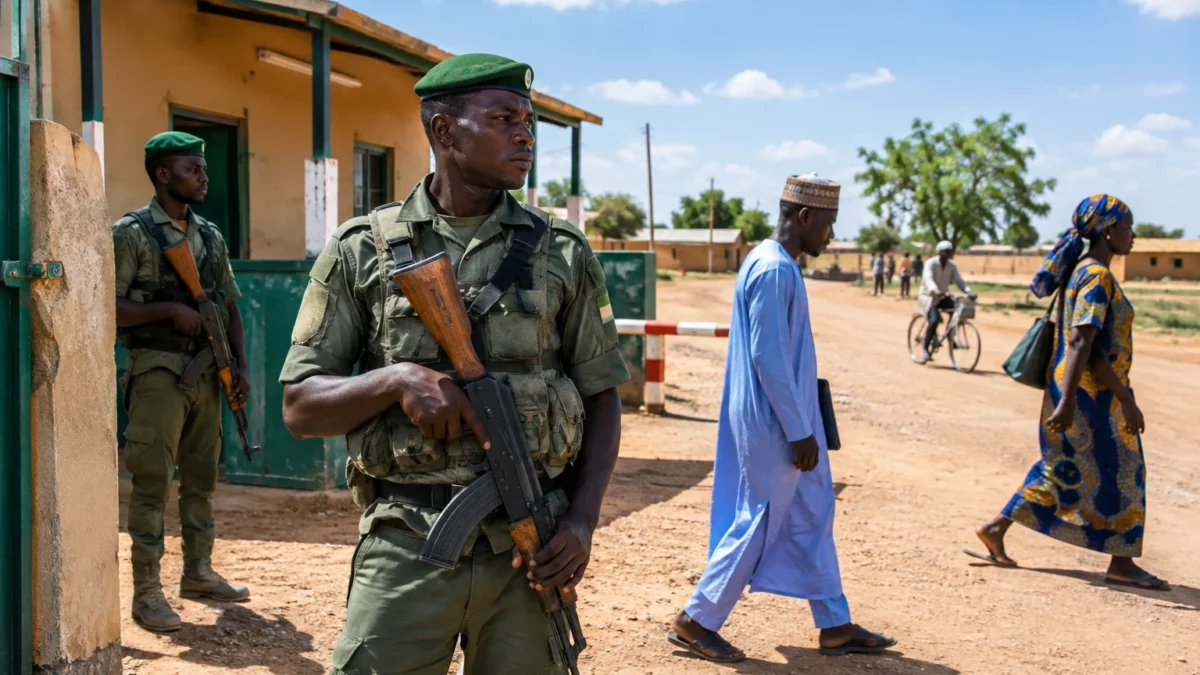
In Sanam, western Niger, the attack on a National Guard position is a reminder of the human cost of operations in border areas. It comes as Nigerien forces face armed groups on several fronts, from Liptako-Gourma to the Lake Chad Basin.
A post targeted in Sanam
On Thursday 26 November 2026, armed men attacked a National Guard position in Sanam, in Abala department, Tillabéri region. The provisional toll announced by Niger’s Ministry of Defence stands at 13 military personnel killed and 20 injured. Several of the wounded are said to be in a serious condition and have been evacuated for treatment.
The Nigerien News Agency also reported these figures, attributing them to the ministry’s statement. The Associated Press separately confirmed the toll and location of the attack, based on official statements. The authorities say several attackers were neutralised and that search and pursuit operations are continuing. In the information available, they have not publicly named a group responsible.
The military personnel in Sanam were taking part in Operation Almahaou, a name meaning “whirlwind” in Zarma. This detail places the attack within a security response already under way in the region, but on its own it does not establish the mission’s strategy or operational toll.
Tillabéri, persistent pressure on communities
Sanam is in Tillabéri region, in the west of the country, near the borders with Mali and Burkina Faso. This part of Liptako-Gourma is crossed by local and cross-border movements, while armed groups carry out attacks on security forces and civilians. The vast, difficult-to-monitor borders give this violence a regional dimension.
Data from ACLED, an organisation that records political violence, ranks Tillabéri among the deadliest regions in the central Sahel in 2025. Its annual toll records more than 1,200 deaths in the region. This figure aggregates several types of violent events: it does not mean that all the victims were civilians, or that they were all linked to a single armed group.
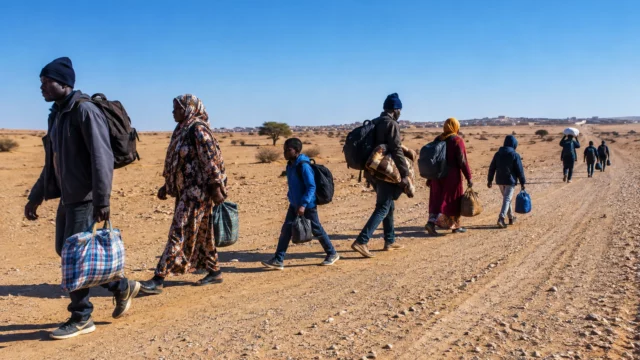
The situation affects residents in different ways. Attacks and security operations can disrupt travel between villages, access to markets and healthcare, and journeys to farmland. Isolated posts and transport routes expose security forces, as well as traders, transport workers and people travelling for their daily activities. The information available does not yet make it possible to assess the attack’s immediate impact on Sanam’s residents.
Two centres of violence, responses to coordinate
Niger must also respond to threats in the south-east, around Diffa and Lake Chad. On 24 November, an attack near Baroua, which the authorities attributed to Boko Haram, targeted military personnel. Nigerien media outlet Les Échos du Niger also reported an official toll of 11 dead and five injured. This separate incident is a reminder that Nigerien forces must spread their resources across several distant regions.
The presence of armed groups affiliated with al-Qaeda and the Islamic State organisation has been reported in Tillabéri in recent years. However, no public evidence cited in the first reports of the Sanam attack makes it possible to attribute responsibility to either of these groups. This distinction matters: a premature attribution could cloud understanding of the facts and local dynamics.
Niger is also undergoing political and security realignment. Since the July 2023 coup, the transitional authorities have redirected their partnerships and security messaging. The country left the Economic Community of West African States (ECOWAS), a regional integration organisation, on 29 January 2025, alongside Mali and Burkina Faso. The three states have strengthened their cooperation within the Alliance of Sahel States, which has become a confederation.
Regional cooperation in question
This institutional shift does not change geographical realities: armed groups, trade and movement cross borders. Tackling violence therefore also depends on the flow of information between neighbouring countries, the protection of routes and the coordination of responses. Relations between the AES and ECOWAS, as well as cooperation mechanisms among Sahelian states, have a tangible impact on border communities.
For the Nigerien authorities, the Sanam attack raises an immediate question about protecting isolated positions and treating the wounded. For residents, the challenge is also to preserve everyday activities without increasing the risks associated with travel. The figures announced remain provisional: changes to the toll and the findings of ongoing operations will be crucial in establishing the scale of the attack.
Across West Africa, events in Tillabéri and Diffa show that the threat is not concentrated in a single area. They test the ability of governments and regional organisations to maintain channels of cooperation despite political realignments. At this stage, attention will need to focus on the results of searches in Sanam, the possible identification of the attackers and measures taken to protect the region’s population.