Algeria
 Egypt
 Libya
 Morocco
 Sudan
 Tunisia
 Benin
 Burkina Faso
 Cabo Verde
 Côte d'Ivoire
 Ghana
 Guinea
 Guinea-Bissau
 Liberia
 Mali
 Mauritania
 Niger
 Nigeria
 Senegal
 Sierra Leone
 The Gambia
 Togo
 Cameroon
 Central African Republic
 Chad
 DR Congo
 Equatorial Guinea
 Gabon
 Republic of the Congo
 São Tomé and Príncipe
 Burundi
 Comoros
 Djibouti
 Eritrea
 Ethiopia
 Kenya
 Madagascar
 Malawi
 Mauritius
 Mozambique
 Rwanda
 Seychelles
 Somalia
 South Sudan
 Tanzania
 Uganda
 Angola
 Botswana
 Eswatini
 Lesotho
 Namibia
 Zambia
 Zimbabwe
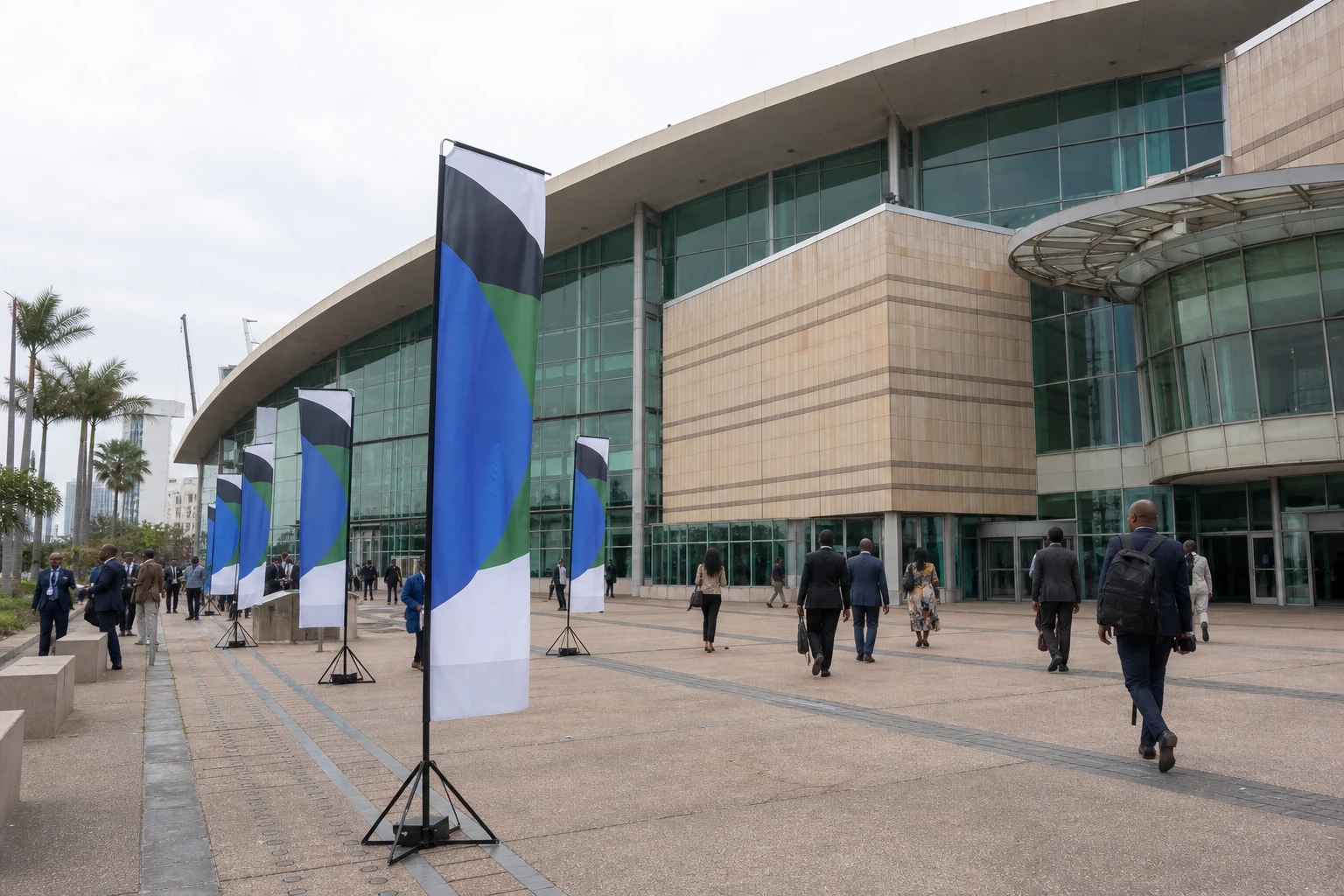
In Durban, southern African leaders seek to protect a rare achievement: stability
In a region where crises can quickly spill from one neighbour to another, security is about more than borders. It also shapes trade, transport, jobs and investor confidence. It is against this backdrop that leaders of the Southern African Development Community, SADC, are meeting in Durban to strengthen political and security coordination.
The gathering comes at a particular moment for the organisation. South Africa is hosting the 46th Ordinary Summit of Heads of State and Government in Durban on 16 and 17 August 2026, with a meeting of the Troika of the Organ on Politics, Defence and Security Cooperation scheduled for 16 August. The theme chosen for the summit places resilient, sustainable and inclusive industrialisation at the forefront, underpinned by infrastructure, agricultural transformation and the development of critical minerals. Security and the economy are therefore being treated as two parts of the same equation.
SADC has 16 member states: South Africa, Angola, Botswana, Comoros, the Democratic Republic of the Congo, Eswatini, Lesotho, Madagascar, Malawi, Mauritius, Mozambique, Namibia, the United Republic of Tanzania, Seychelles, Zambia and Zimbabwe. Its Organ on Politics, Defence and Security Cooperation was launched in 1996 to support peace and the rule of law in the region. The protocol governing it was subsequently signed in 2001.
The political message: speak with one voice, without ignoring divisions
The position being put forward in Durban is clear: preserve regional stability by prioritising dialogue, mediation and preventive diplomacy. This approach has been central to SADC’s method for several years. The organisation emphasises a collective approach rather than scattered bilateral responses in a region where local tensions can quickly take on a regional dimension.
This stance is also explained by recent events. In June 2026, the Troika of the Organ met in an extraordinary session and reaffirmed its commitment to peace, the consolidation of democracy and regional stability, particularly in relation to Madagascar and the Democratic Republic of the Congo. This precedent matters. It shows that SADC is seeking to keep a grip on sensitive issues before they become entrenched.
The Durban meeting is therefore part of a sequence of institutional continuity. The Troika operates as a three-part steering mechanism, comprising an outgoing chair, an incoming chair and the serving chair. In this arrangement, rotation is intended to prevent any one state from monopolising the security portfolio and to maintain a political balance among members.
According to information released by SADC, the chair of the Organ is now passing to Eswatini, represented by King Mswati III, while Tanzania, led by President Samia Suluhu Hassan, is leaving the role with the organisation’s congratulations for its support for peace initiatives. The handover is more than a protocol gesture: it determines who will speak for the region in the coming months, including on its most sensitive crises.
What the summit says about southern Africa’s real priorities
The phrase heard repeatedly in Durban is familiar: without stability, there can be no lasting integration. But behind this self-evident point are very concrete issues. Governments want to facilitate trade between member states, strengthen local value chains and protect sectors exposed to external shocks, such as agriculture, transport and energy. In several countries in the region, even minor security disruptions drive up logistics costs and weaken the informal economy, which remains crucial to households.
The summit also comes as SADC seeks to give economic substance to its Vision 2050 and its Regional Indicative Strategic Development Plan 2020–2030. The idea is simple: turn the region’s underground wealth, particularly critical minerals, into jobs, factories, skills and local revenue. For people, the stakes are not abstract. They concern the value added locally, the quality of roads, access to electricity and the ability of states to retain more revenue at home.
In this context, security is also a matter of economic sovereignty. A stable region attracts more investment and makes public policy more predictable. By contrast, prolonged tensions strain budgets, shift priorities and slow regional projects. That is why SADC now brings industrialisation, infrastructure, agriculture, critical minerals and collective security together on the same agenda.
Durban’s selection also carries symbolic weight. The city is hosting a summit at which southern Africa is discussing integration from within a country, South Africa, that is simultaneously the host, the serving chair and a diplomatic driving force. For Pretoria, the challenge is to show that it can maintain a clear regional line amid international tensions shaped by geopolitical strains, economic uncertainty and the effects of climate change.
A process to follow beyond Durban
The summit’s significance extends beyond the dates of 16 and 17 August 2026. Decisions taken in Durban will shape how SADC handles political crises, fragile transitions and mediation issues in the region in the months ahead. Since its creation, the organisation has shown that it wants to prevent escalation and prioritise African solutions to African tensions. The Durban summit is therefore a test of consistency between words and action.
It will also be important to watch how the Troika of the Organ, now led by Eswatini, aligns its priorities with those of the ordinary summit. That is the real challenge: maintaining a collective response in a region where security concerns, industrial ambitions and social expectations are now moving in tandem. If SADC can stay this course, it will strengthen a regional tool that many African organisations regard as a model of political coordination and crisis prevention.