Algeria
 Egypt
 Libya
 Morocco
 Sudan
 Tunisia
 Benin
 Burkina Faso
 Cabo Verde
 Côte d'Ivoire
 Ghana
 Guinea
 Guinea-Bissau
 Liberia
 Mali
 Mauritania
 Niger
 Nigeria
 Senegal
 Sierra Leone
 The Gambia
 Togo
 Cameroon
 Central African Republic
 Chad
 DR Congo
 Equatorial Guinea
 Gabon
 Republic of the Congo
 São Tomé and Príncipe
 Burundi
 Comoros
 Djibouti
 Eritrea
 Ethiopia
 Kenya
 Madagascar
 Malawi
 Mauritius
 Mozambique
 Seychelles
 Somalia
 South Sudan
 Tanzania
 Uganda
 Angola
 Botswana
 Eswatini
 Lesotho
 Namibia
 South Africa
 Zambia
 Zimbabwe
A ruling that goes beyond the dock
In Kigali, the memory of the genocide against the Tutsi remains a question of justice, but also of public discourse, transmission and responsibility. When a French court upholds a lengthy sentence against a former Rwandan doctor, the case is about more than one man. It is a reminder that the legacy of the 1994 genocide continues to play out in courts, memorials and relations between Rwanda and its external partners.
Rwanda, a member of the East African Community since July 2007, has made national reconstruction a central pillar of its recent trajectory. In this region, where national courts and judicial cooperation remain uneven, prosecutions brought outside Rwanda therefore carry significant political and symbolic weight. They matter to survivors as much as to younger generations, born after 1994 but inheritors of a still-living memory.
What the Paris Court of Appeal upheld
On the night of Friday 18 to Saturday 19 July 2026, the Paris Court of Appeal upheld the 27-year prison sentence handed down to Eugène Rwamucyo. The 67-year-old former Rwandan doctor had already been convicted at first instance in October 2024. The sentence relates to his complicity in genocide, his participation in a conspiracy to prepare that crime, his complicity in crimes against humanity and his participation in a conspiracy to prepare those crimes. He was, however, acquitted of the charges of genocide and crimes against humanity.
The case alleges that the former lecturer at the University of Butare relayed instructions from Hutu authorities calling on the population to attack Tutsi. A speech delivered on 14 May 1994 in the presence of Jean Kambanda, then head of the interim government, lies at the heart of the case. The judges also attribute to him a role in burying victims in mass graves, an episode described as an attempt to make evidence disappear.
French justice tried Rwamucyo under the principle of universal jurisdiction, which allows France to prosecute alleged perpetrators of serious crimes committed elsewhere. The proceedings illustrate a reality familiar to Rwandan survivors: several suspects in the genocide lived in Europe for years, sometimes under established professional identities, before complaints, warrants or belated investigations caught up with them.
Rwanda and an unfinished judicial reckoning
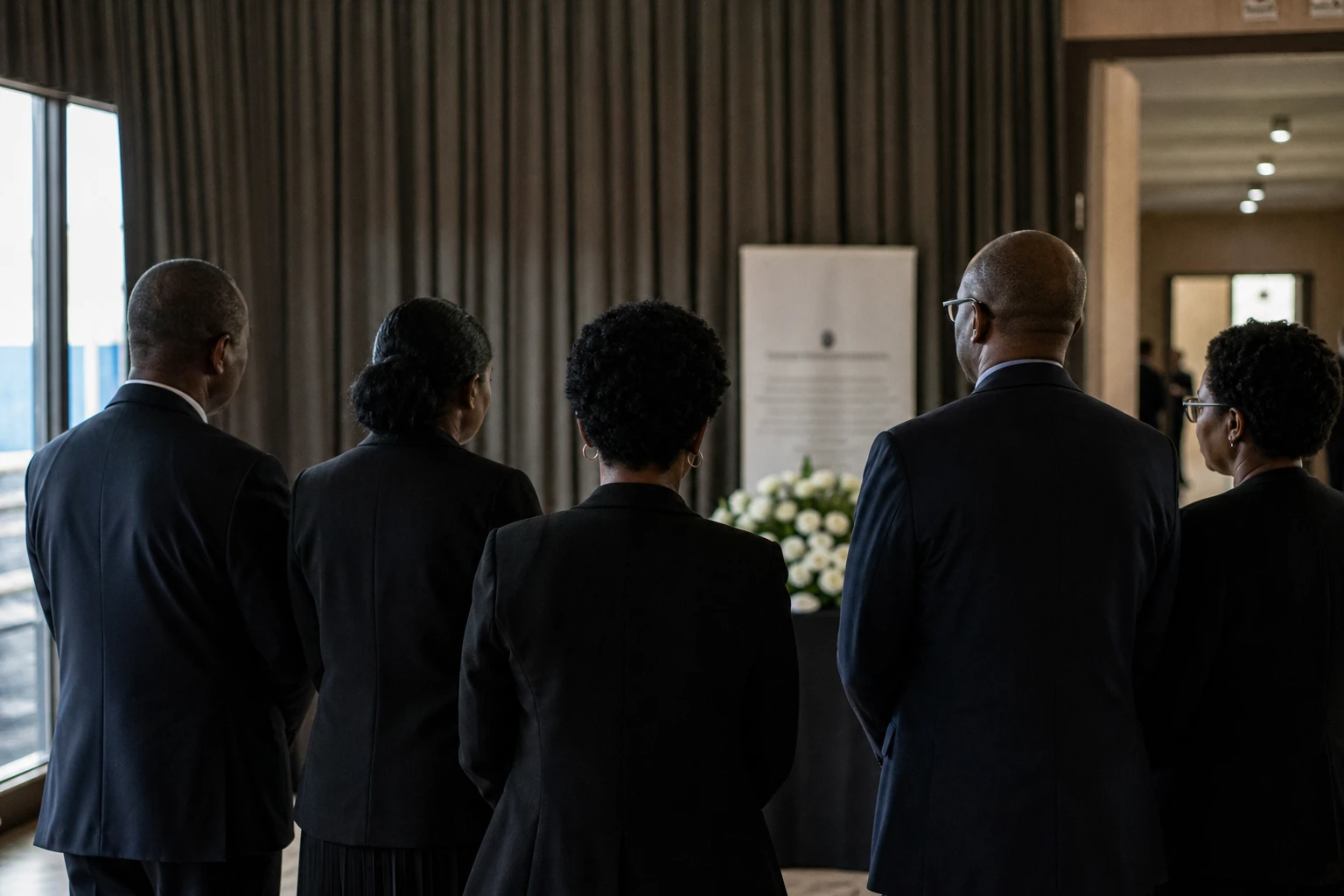
The genocide against the Tutsi, which began after the attack on President Juvénal Habyarimana’s plane on 6 April 1994, killed between 800,000 and more than one million people, according to United Nations sources. The UN also notes that the tragedy was fuelled by years of hate speech, political divisions and dehumanisation. In Kigali, the Kwibuka 32 commemorations once again brought together authorities, diplomats, survivors and UN staff in 2026 to remember the victims.
This dimension matters for Rwanda today. The country has built its reconstruction on national unity, the fight against incitement to hatred and the central role of official memory. Trials held outside Rwanda, particularly in France, therefore serve a dual purpose. They offer a form of judicial recognition. But they also remind us that the chain of responsibility has not yet been fully closed.
For survivors, the sentence being upheld may be seen as belated validation of their testimony. For victims’ families, it prolongs an wait that has lasted more than thirty years. For generations of Rwandans born after 1994, it shows that international and national justice are not separate worlds: they respond to one another, sometimes slowly, but together they build recognition of the facts.
A Rwandan case, but also an African and regional one
Across East Africa, the Rwamucyo case goes beyond Rwanda’s own memory. It concerns the movement of people, judicial cooperation and states’ ability to deal with mass crimes without waiting for another legal system to take their place. The East African Community, of which Kigali is a long-standing and strategic member, is building its integration on institutional trust. Cases related to the genocide nevertheless remind us that no integration can endure without credible justice.
The other lesson is continental. The African Union, states in the region and foreign courts face the same question: how can mass crimes be tried when the accused have fled, grown old or rebuilt their lives elsewhere? The answers vary, but the need is the same. Solid investigations, accessible archives, effective cooperation and careful public discourse are essential. Only then can trials become more than mere legal episodes and turn into genuine moments of truth.
The judicial calendar itself calls for vigilance. Other cases related to the genocide against the Tutsi remain open or have been revived in France, while Kigali continues to defend a rigorous account of its national memory. This sequence shows that, 32 years after 1994, Rwanda is not only dealing with its past. It is also continuing to secure recognition of it, in a regional setting where justice, memory and diplomacy move at different speeds.