Algeria
 Egypt
 Libya
 Morocco
 Sudan
 Tunisia
 Benin
 Burkina Faso
 Cabo Verde
 Côte d'Ivoire
 Ghana
 Guinea
 Guinea-Bissau
 Liberia
 Mali
 Mauritania
 Niger
 Nigeria
 Senegal
 Sierra Leone
 The Gambia
 Togo
 Cameroon
 Central African Republic
 Chad
 DR Congo
 Equatorial Guinea
 Gabon
 Republic of the Congo
 São Tomé and Príncipe
 Burundi
 Comoros
 Djibouti
 Eritrea
 Ethiopia
 Kenya
 Madagascar
 Malawi
 Mauritius
 Mozambique
 Seychelles
 Somalia
 South Sudan
 Tanzania
 Uganda
 Angola
 Botswana
 Eswatini
 Lesotho
 Namibia
 South Africa
 Zambia
 Zimbabwe
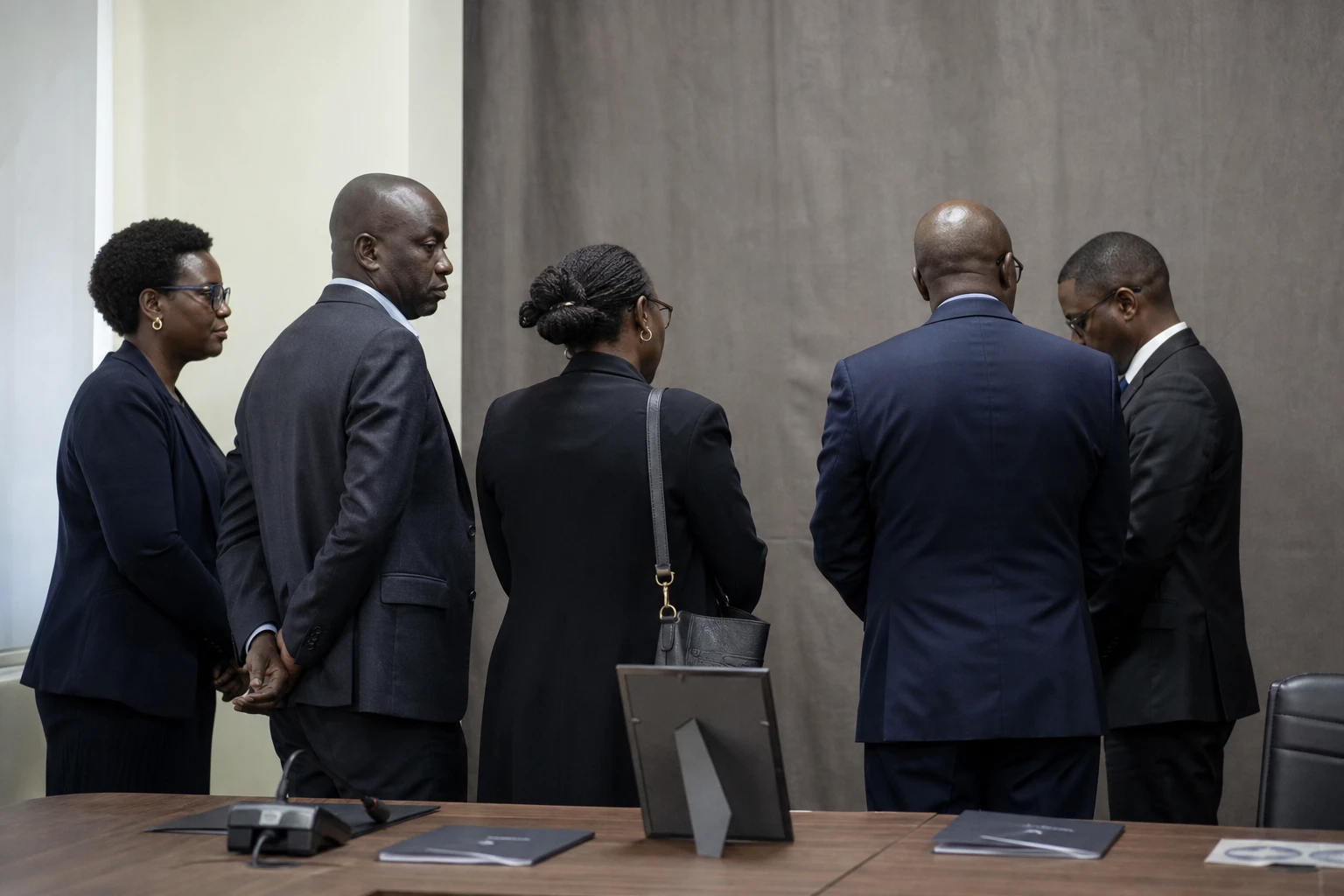
When genocide memory enters the judicial process
In Kigali, the memory of the genocide against the Tutsis is not confined to the Kwibuka ceremonies, the national period of remembrance. It also continues to be pursued through the courts, far from East Africa, where some cases still find a judicial outcome. That gives the ruling delivered in Paris on Friday 17 July 2026 significance beyond the fate of Eugène Rwamucyo alone.
In this case, the French justice system upheld on appeal the 27-year prison sentence handed down at first instance to the Rwandan doctor for complicity in genocide and crimes against humanity. The verdict is part of a longer sequence: he was tried in October 2024, then retried on appeal in Paris from 9 June to 17 July 2026. The civil parties had called for the sentence to be upheld again, while the prosecution had sought 30 years.
A case born of long-standing impunity
Rwanda has built its post-1994 trajectory around two pillars: rebuilding the state and preserving the memory of the genocide against the Tutsis. The government in Kigali says that more than one million Rwandans were massacred in 100 days, and that the annual commemoration on 7 April, known as Kwibuka, serves remembrance, the preservation of evidence and civic education. The Kigali Genocide Memorial in Gisozi is described as the final resting place of more than 250,000 victims.
This memory remains central to public life in Rwanda. In 2026, national institutions, public services and the United Nations in Rwanda took part in the 32nd commemoration of the genocide. The message is consistent: remembrance is not merely ritual; it is also political, educational and judicial.
The Paris trial is also part of the broader history of justice under the principle of universal jurisdiction. In other words, a state can try serious crimes committed elsewhere when the legal circumstances allow it. In this case, the acts alleged against Rwamucyo date back to 1994, in the former prefecture of Butare, now associated with the city of Huye in southern Rwanda.
What the Paris court upheld
On Friday 17 July 2026, the Paris Assize Court of Appeal upheld the 27-year prison sentence. According to updates from the collective representing the civil parties, the verdict concerns participation in a conspiracy to commit genocide and crimes against humanity, as well as complicity in genocide and crimes against humanity. The same sentence had already been handed down at first instance in 2024.
The heart of the case is what the prosecution alleges the former doctor did: not merely witness the massacres, but contribute to their local organisation, notably through the burial of bodies and statements seen as actively contributing to the machinery of genocide. The hearings also recalled that in October 2024 the court had found the gravity of the crimes justified a lengthy sentence, despite the defence’s arguments about his age, family life and the time elapsed since the events.
The convicted man now has a period in which to appeal to the Court of Cassation, a step that would not retry the facts but examine whether the law was correctly applied. The case is therefore not necessarily closed judicially. Symbolically, however, the appeal ruling reinforces a broader trend: France is pursuing cases linked to the genocide against the Tutsis at its own pace, after years of investigations and delayed trials.
What this means for survivors, Rwanda and the region
For Rwandan survivors, these proceedings cannot undo the irreversible. They do, however, help establish individual responsibility, where time has often worked against the victims. The Paris trial also highlights a sensitive point: many genocide suspects left Rwanda as early as 1994 and sometimes rebuilt their lives in Europe, North America or elsewhere, long complicating prosecutions.
In Kigali, the stakes remain twofold. On the one hand, international or foreign justice can reinforce the recognition of the crimes. On the other, the Rwandan state continues to make the memory of the genocide part of a highly structured public policy, with memorial sites, educational programmes and national ceremonies. This interplay between justice and memory contributes to social reconstruction, but it also serves as a reminder that the country still lives with the material traces of the past: missing names, exhumed mass graves, incomplete families and open cases.
The issue also resonates across East Africa. Rwanda belongs to the East African Community (EAC), which now brings together eight partner states in pursuit of deeper economic and institutional integration. In the region, questions of justice, the movement of people, border conflicts and the circulation of memories remain closely connected. A trial such as Rwamucyo’s is a reminder that mass crimes do not stop at national borders, and that their judicial treatment often ends up bringing together French justice, Rwandan memory and regional cooperation.
At continental level, the case also says something broader: Africa is looking not only for commemorative gestures, but for truth and accountability mechanisms that can endure. Rwanda has made the memory of the genocide a pillar of its contemporary political identity. The confirmation of this conviction on appeal in Paris shows that this memory continues to find support beyond the country, across a judicial landscape that now reaches Europe and the EAC and, by extension, the wider African debate on impunity for mass crimes.