Algeria
 Egypt
 Libya
 Morocco
 Sudan
 Tunisia
 Benin
 Burkina Faso
 Cabo Verde
 Côte d'Ivoire
 Ghana
 Guinea
 Guinea-Bissau
 Liberia
 Mali
 Mauritania
 Niger
 Nigeria
 Senegal
 Sierra Leone
 The Gambia
 Togo
 Cameroon
 Central African Republic
 Chad
 DR Congo
 Equatorial Guinea
 Gabon
 Republic of the Congo
 São Tomé and Príncipe
 Burundi
 Comoros
 Djibouti
 Eritrea
 Ethiopia
 Kenya
 Malawi
 Mauritius
 Mozambique
 Rwanda
 Seychelles
 Somalia
 South Sudan
 Tanzania
 Uganda
 Angola
 Botswana
 Eswatini
 Lesotho
 Namibia
 South Africa
 Zambia
 Zimbabwe

A conviction that prolongs Madagascar’s crisis
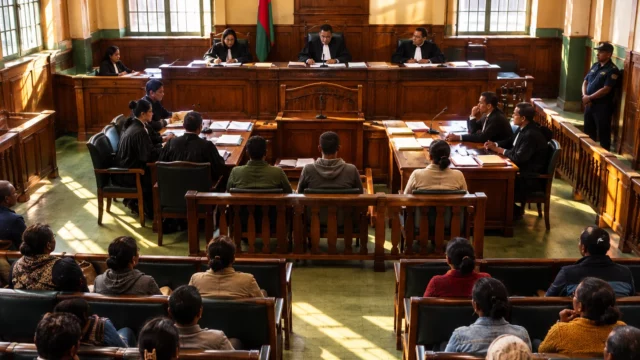
In Antananarivo, Madagascar’s justice system has struck at one of the faces of the former security apparatus. Richard Ravalomanana’s sentence of ten years of hard labour cannot be seen merely as a criminal case. It also tells the story of what the 2025 uprising left behind: bereaved families, a polarised society and a state called on to account for its actions.
In Madagascar, cases linked to the crackdown have become a political test. Since Andry Rajoelina’s fall in October 2025, the government that emerged from the institutional upheaval has sought to show that it can judge past abuses without turning the justice system into an instrument of revenge. It is a delicate exercise in a country where the balance between public order, criminal accountability and institutional stability remains fragile.
What the Antananarivo court decided
On Tuesday 1 September 2026, the criminal court of the Antananarivo tribunal sentenced the former president of the Senate to ten years of hard labour. The court found him guilty of complicity in murder and complicity in intentional assault and battery. According to information reported at the hearing, the sentence was handed down after a trial lasting about six hours, and the defendant’s lawyer announced an appeal.
The judges found that Richard Ravalomanana had played a role in the crackdown on protests in September 2025. At the time, he held a central position in the circle around former president Andry Rajoelina. According to publicly reported judicial information, he had already been removed from his Senate post in October 2025, then arrested in late December and placed in pre-trial detention in Antananarivo in January 2026.
The case is not limited to this conviction. Parallel proceedings are still under way, including over corruption allegations raised by Madagascar’s justice system. This accumulation of cases shows that the chapter opened by the 2025 protests is far from closed.
Crackdown, social crisis and political upheaval
The uprising began in late September 2025 in the capital, over water and electricity cuts. The protest movement soon broadened its focus to the cost of living, unemployment, corruption and the exercise of power. The UN then reported at least 22 deaths and more than a hundred people injured, noting that some victims had been hit by security forces, while others had died in violence and looting.
Those figures were disputed by the authorities at the time, but they also provided a basis for international pressure. The UN called for swift, independent and transparent investigations. A few weeks later, it described the military takeover on 14 October 2025, following the National Assembly’s removal of the head of state, as an “unconstitutional change of power”.
In this context, Richard Ravalomanana represented more than an individual official. A former gendarmerie general and former president of the Senate, he also symbolised continuity between the security apparatus and political power. His conviction therefore touches on a sensitive issue: the responsibility of those who order, relay or endorse the use of force against people taking to the streets.
What this means for the people of Madagascar
For the victims’ families, the verdict may appear to be an initial sign of recognition. For the executive, it is also a way of saying that violence committed during the crisis will not go unpunished. But the challenge for the justice system is broader: it must convince people that prosecutions are guided by clear legal criteria, not just by the balance of power at any given moment.
That is the sensitive point. During a transition, abuses must be punished. Yet if trials target only figures from the defeated camp, suspicions of victor’s justice can quickly take hold. In Madagascar, this tightrope is all the more important because the 2025 crisis affected heavily mobilised urban neighbourhoods, as well as households dependent on already unreliable public services. Water and electricity cuts first disrupted daily life before becoming an issue of political legitimacy.
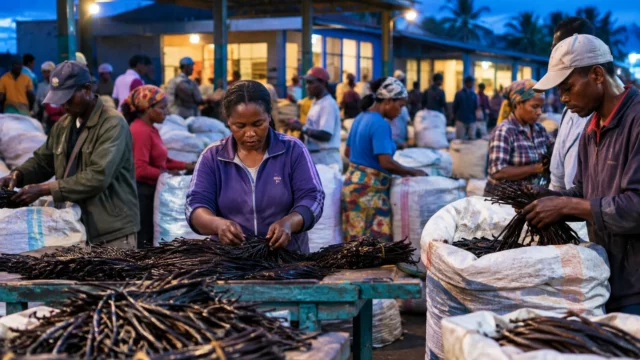
The conviction of the former president of the Senate also touches on the balance between the capital and the periphery. Antananarivo concentrates power, high-profile hearings and the most visible protests. But the effects of the crisis extend beyond the city: prices, transport, access to energy and trust in the administration. The real cost of an institutional stand-off is often felt fastest in modest households, markets and the informal economy.
A Malagasy case with regional implications
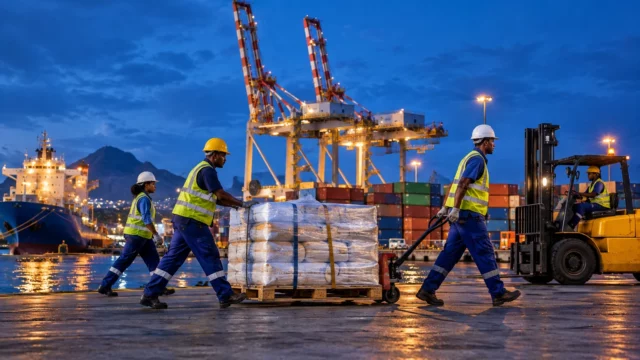
Madagascar belongs to several African integration frameworks, including SADC, which brings together 16 Southern African states, COMESA and the Indian Ocean Commission. These bodies do not resolve a national court case. However, they provide a political context in which institutional stability, investor confidence and the movement of goods matter directly.
The SADC summit held in August 2026 called on Malagasy actors to preserve calm and give priority to dialogue. That reminder is important. It shows that the Malagasy crisis is not being viewed solely as an internal matter. It is also being watched as a signal for the entire Indian Ocean arc and Southern Africa, where every difficult transition can affect regional balances.
What happens next will therefore unfold on several fronts: a possible appeal by the defence, other proceedings under way and the ability of the transitional authorities to prevent the justice system from becoming an extension of the political crisis. In Madagascar, the verdict of 1 September has not yet brought anything to a close. On the contrary, it opens a new phase in which the demand for truth will have to coexist with the need for stability.