Algeria
 Egypt
 Libya
 Morocco
 Sudan
 Tunisia
 Benin
 Burkina Faso
 Cabo Verde
 Côte d'Ivoire
 Ghana
 Guinea
 Guinea-Bissau
 Liberia
 Mali
 Mauritania
 Niger
 Nigeria
 Senegal
 Sierra Leone
 The Gambia
 Togo
 Cameroon
 Central African Republic
 Chad
 DR Congo
 Equatorial Guinea
 Gabon
 Republic of the Congo
 São Tomé and Príncipe
 Burundi
 Comoros
 Djibouti
 Eritrea
 Ethiopia
 Kenya
 Madagascar
 Malawi
 Mauritius
 Mozambique
 Rwanda
 Seychelles
 Somalia
 South Sudan
 Tanzania
 Uganda
 Angola
 Botswana
 Eswatini
 Lesotho
 Namibia
 Zambia
 Zimbabwe
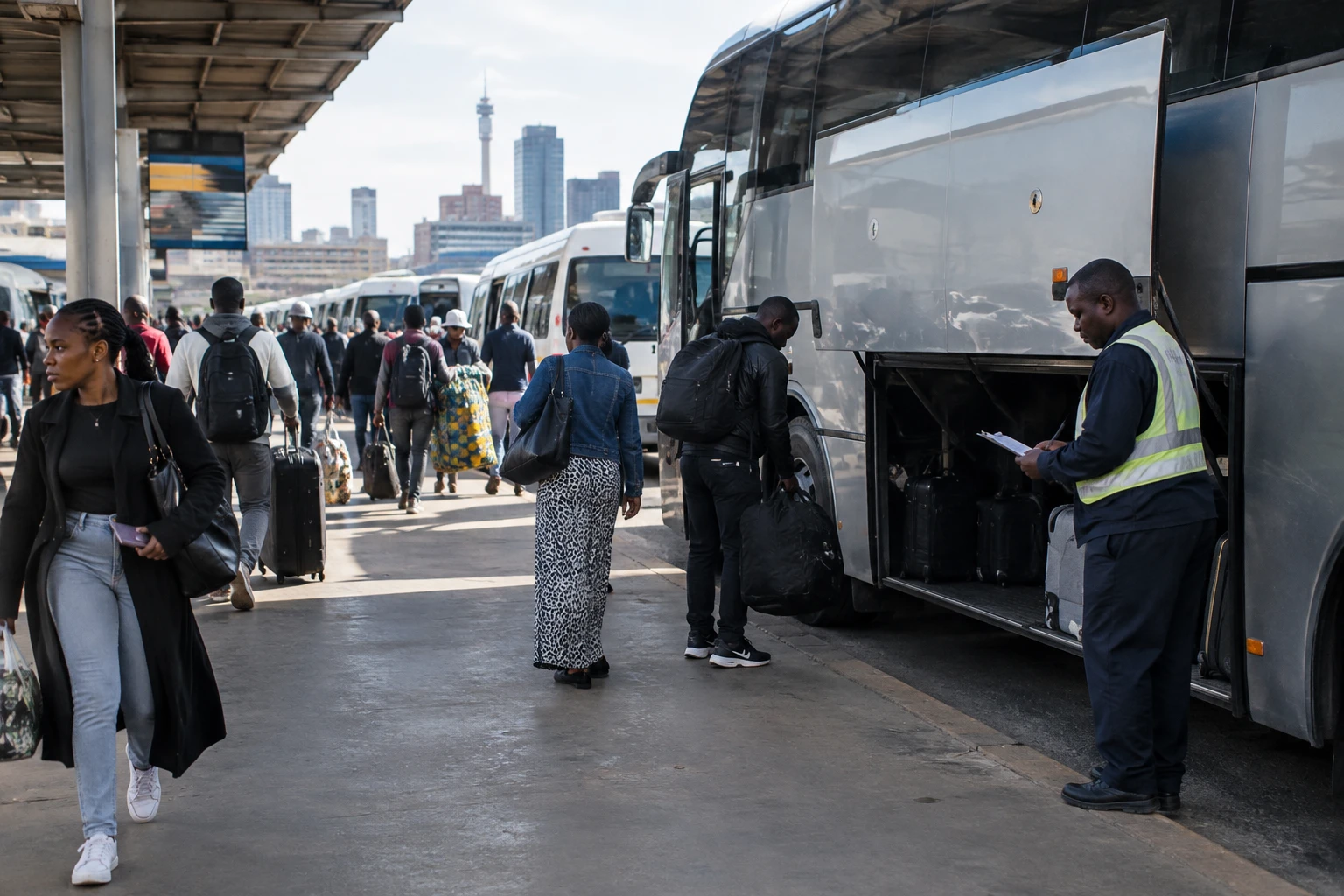
Diplomatic relations can deteriorate far from people’s homes, but the effects are felt in factories, farms and export-related jobs. For South Africa, restoring ties with Washington is therefore as much an economic issue as a political one.
On 26 October 2026, South Africa’s ambassador to the United States, Roelf Meyer, called for direct dialogue between the two governments. He was speaking on the sidelines of an event devoted to his memoirs. He described relations as “tense” and the situation as a “deadlock”, while arguing that talks could pave the way for negotiations. Roelf Meyer’s interview on relations between Pretoria and Washington was reported by AFP.
A diplomatic dispute with real-world consequences
Tensions have intensified since Donald Trump returned to the White House in 2025. Disagreements concern several issues: South African foreign policy, racial and land issues, and trade. Washington has criticised South African policies and launched a programme to receive white South Africans who say they feel persecuted. Pretoria rejects this description of the situation in the country.
Relations were also affected by the expulsion, in March 2025, of South African ambassador Ebrahim Rasool, following his criticism of Donald Trump. Pretoria subsequently appointed Roelf Meyer, a former apartheid government negotiator in the talks that led to democracy, to replace him. His negotiating experience gives his appeal particular resonance, but does not guarantee that Washington will agree to reopen a regular political channel.
The disagreement has also been evident in international forums. The United States did not take part in the G20 summit held in Johannesburg in 2025. According to AFP, Washington has also excluded South Africa from preparatory meetings and from the G20 summit it will host in December 2026. Meyer said Pretoria had “turned the page” on the exclusion. South African representatives are nevertheless due to take part in the B20, the business track.
AGOA: preferential access, not protection from tariffs
An immediate issue is AGOA, the US law granting eligible sub-Saharan African countries preferential access to the US market for certain products. The programme has been extended until 31 December 2028, according to the South African government. This deadline gives exporters greater certainty, but does not automatically protect their goods from other US tariffs or from a separate decision on their eligibility.
The risk is therefore twofold: losing an AGOA-related tariff benefit, or seeing that benefit reduced by other trade measures. In July 2026, the South African government confirmed that a 12.5% duty applied to certain products from the country under a US forced-labour procedure. Cars and some raw materials may also be affected by sector-specific measures. Rates and products covered vary between schemes: preferential access is not the same as a general exemption.
The consequences are not evenly distributed. Large exporting companies may seek other markets, although this takes time and new investment. Suppliers, workers in industrial supply chains and producers in regions dependent on particular sectors often have less room to absorb a drop in orders. For Pretoria, preserving trade dialogue is therefore about defending businesses and jobs, not just export figures.
Pretoria seeks to preserve its options
South Africa is not relying exclusively on Washington. It maintains relations with China and the BRICS countries, while remaining engaged in the Southern African Development Community, SADC, which brings southern African states together for regional co-operation. Diversifying export destinations can reduce dependence on a single market. But quickly replacing a major trading partner is neither simple nor equivalent: products, standards, logistics and the investments required all differ.
China introduced a temporary zero-tariff regime from 1 May 2026 for eligible products from South Africa and other African countries with diplomatic relations with Beijing. The measure is due to run until 30 April 2028 and remains subject to rules of origin and the scheme’s conditions. It gives South African exporters an additional opportunity, but is not an automatic solution to difficulties accessing the US market.
Pretoria’s choice is therefore to keep several doors open: negotiate with the United States, diversify trade and defend its interests in African frameworks. The government must also make its foreign policy clear to partners that do not always share its positions, without giving up its sovereign decisions. Meyer’s proposed dialogue does not mean the disputes have been resolved; it aims to create space for them to be discussed.
A test for relations between Washington and Africa
What happens next will depend on the two capitals’ ability to turn statements into concrete meetings. Trade talks and a review of South Africa’s eligibility for AGOA will be important indicators. The US G20 schedule in December 2026 will also show whether diplomatic exclusion continues or a channel for co-operation is restored.
Beyond Pretoria, the issue matters to African countries that benefit from AGOA or want to secure trade with the United States. A trade preference can support exports and jobs, but remains exposed to political choices and US rules. For South Africa, the challenge is to defend its place in trade without reducing its diplomacy to a choice between Washington and Beijing. Roelf Meyer’s appeal opens a path; actions by both governments will show whether it leads to negotiations.