Algeria
 Egypt
 Libya
 Morocco
 Sudan
 Tunisia
 Benin
 Burkina Faso
 Côte d'Ivoire
 Ghana
 Guinea
 Guinea-Bissau
 Liberia
 Mali
 Mauritania
 Niger
 Nigeria
 Senegal
 Sierra Leone
 The Gambia
 Togo
 Cameroon
 Central African Republic
 Chad
 DR Congo
 Equatorial Guinea
 Gabon
 Republic of the Congo
 São Tomé and Príncipe
 Burundi
 Comoros
 Djibouti
 Eritrea
 Ethiopia
 Kenya
 Madagascar
 Malawi
 Mauritius
 Mozambique
 Rwanda
 Seychelles
 Somalia
 South Sudan
 Tanzania
 Uganda
 Angola
 Botswana
 Eswatini
 Lesotho
 Namibia
 South Africa
 Zambia
 Zimbabwe
Praia, a discreet but strategic crossroads for Atlantic music
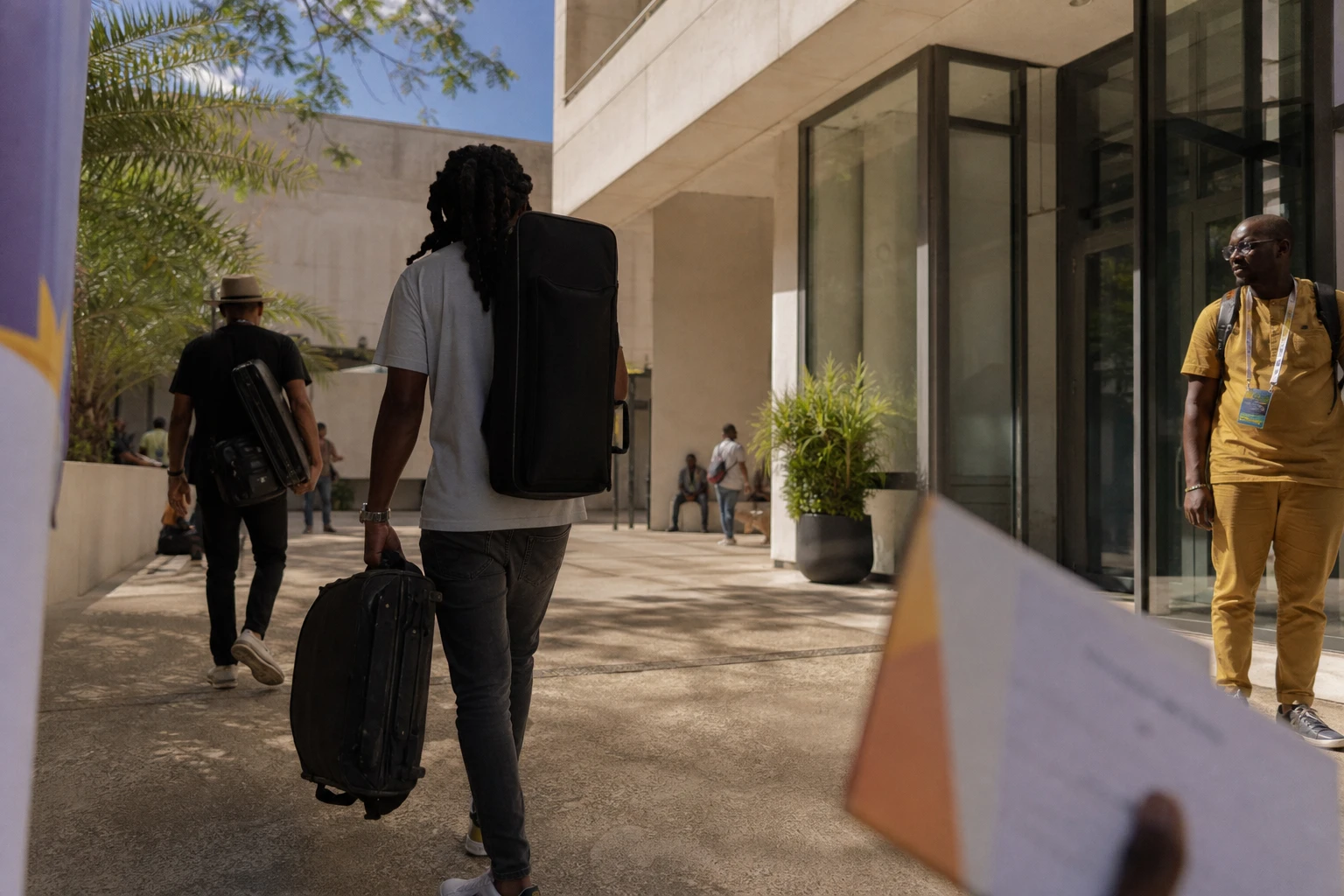
In Praia, music does more than fill venues. It also serves as a bridge between scenes that rarely intersect otherwise: the Cape Verdean islands, the diaspora, West Africa and the Portuguese-speaking world. In the capital of Cabo Verde, a professional marketplace such as the Atlantic Music Expo makes this ambition clear. Every year, in early April, the event turns Praia into a meeting point for artists, producers, programmers and media from across the Atlantic.
The context is significant. Cabo Verde has long turned the movement of people, sounds and influences into a strength. The archipelago does not have a large domestic market, but it has a rare asset: an immediately recognisable musical identity, shaped by morna and coladeira, and a highly open contemporary scene. In the West African region, this cultural ecosystem also serves as a showcase. It demonstrates that a small state can wield influence through the quality of its networks and its ability to connect different musical worlds.
It is in this context that Juliata Cohen comes into view. The artist, born in Paris and shaped by family roots in France, Tunisia and Morocco, says she found a particular space for artistic welcome in Cabo Verde. Her journey, as it is recounted in the music world, speaks to something broader than her personal story: diaspora creators’ paths often take them through places where human connection comes before market logic. In Praia, that logic takes shape on stage, then in the studio, and then on tour.
The decisive moment for her was meeting Mario Lucio, a leading figure in Cape Verdean music, a former culture minister and an influential voice in public debate about the archipelago. RFI recalled this in spring 2025, when it presented his artistic return around Cabo Verde’s independence and the country’s memory. His presence matters. It connects the nation’s cultural history with a generation of artists who continue to carry music as a shared language, beyond borders and affiliations.
When music becomes a tool of influence and reconstruction
The significance of an event such as the Atlantic Music Expo goes far beyond a festival line-up. The event’s official website describes it as a professional marketplace combining concerts, conferences, workshops, one-to-one meetings and a sales area, with a strong focus on artists from Cabo Verde, Africa and the wider Atlantic. In other words, Praia does more than host performances. The city also provides a link in the economic chain: scouting, programming, the circulation of works, contracts and international visibility.
For an island country such as Cabo Verde, this role is essential. The cultural sector generates more than symbolic reach. It also supports the work of technicians, venues, agencies, accommodation providers, transport operators and restaurants. The Cape Verdean press has described the 2026 edition of the AME as a strategic platform for the creative industries, at a time when the authorities were also highlighting the sector’s growing place in the national economy. In a capital such as Praia, where cultural life remains highly concentrated, the knock-on effect is tangible.
Juliata Cohen’s story also sheds light on a more sensitive dimension. When she says that music can heal, soothe and convey messages, she is not speaking in abstract terms. She is describing the practical role of artists at a time marked by conflict, social anger and collective exhaustion. In this kind of situation, the stage becomes a space for symbolic repair. It allows injustice to be expressed without lapsing into preaching, and opens up a horizon without resorting to illusion. This is precisely what many African and diaspora audiences are looking for: stories that bring people together without erasing divisions.
This reading is all the more relevant because Cabo Verde has managed to turn its modest size into a diplomatic advantage. Praia is establishing itself as a credible hub for cultural exchange because, over time, the archipelago has built an image of stability, openness and professionalism. The Atlantic Music Expo is part of this trajectory. It replaces neither public policy nor infrastructure, but it gives them a showcase. And it is a reminder of a reality that is often underestimated: in African cultural economies, reputation sometimes comes before investment, and then attracts it.
For the West African region, the message is clear. Successful cultural markets are not only those that attract crowds, but those that build lasting links between artists, broadcasters and institutions. Cabo Verde plays a distinctive role in this space. It brings West Africa, the Portuguese-speaking world and the Atlantic diaspora into dialogue, while maintaining a clear artistic identity. This combination gives significance to journeys such as Juliata Cohen’s: they tell not only of individual success, but also of a cultural geography in motion.
What needs watching now is not just the calendar for the next AME. It is Cabo Verde’s ability to turn this cultural capital into jobs, professional mobility and lasting regional cooperation. If Praia continues to attract artists from other African and Atlantic backgrounds, the archipelago will confirm that a small country can make its mark through the circulation of works as much as through the size of its market. On a continent where narratives are often contested at political summits, Cabo Verde is a reminder that they are also built on stage, in the studio and in concert halls.