
 Algeria
 Egypt
 Libya
 Morocco
 Sudan
 Tunisia
 Benin
 Burkina Faso
 Cabo Verde
 Côte d'Ivoire
 Ghana
 Guinea
 Guinea-Bissau
 Liberia
 Mali
 Mauritania
 Niger
 Nigeria
 Senegal
 Sierra Leone
 The Gambia
 Togo
 Central African Republic
 Chad
 DR Congo
 Equatorial Guinea
 Gabon
 Republic of the Congo
 São Tomé and Príncipe
 Burundi
 Comoros
 Djibouti
 Eritrea
 Ethiopia
 Kenya
 Madagascar
 Malawi
 Mauritius
 Mozambique
 Rwanda
 Seychelles
 Somalia
 South Sudan
 Tanzania
 Uganda
 Angola
 Botswana
 Eswatini
 Lesotho
 Namibia
 South Africa
 Zambia
 Zimbabwe
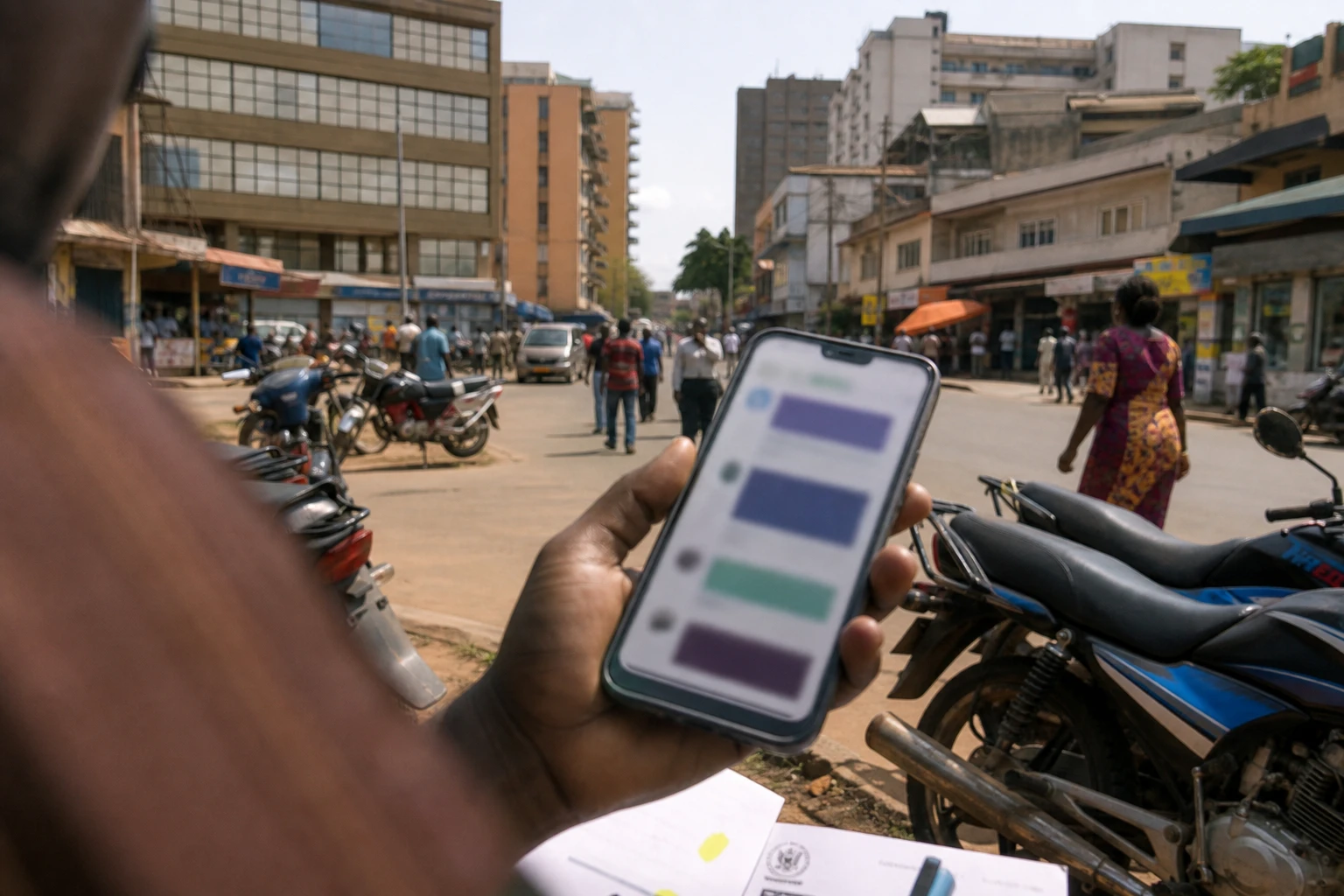
In Yaoundé, the head of state’s absence is already weighing on the machinery of power
In Cameroon, a long presidential absence is never merely a matter of protocol. It eventually affects the chain of decision-making, the interpretation of legal texts and confidence in the state. Since Paul Biya left on 7 June 2026 for a “short private stay in Europe”, the question is no longer whether online rumours are true, but whether Cameroonian institutions can still make the exercise of power visible.
The issue is sensitive because it comes at a time when the country has more than 30 million inhabitants and is already crossed by several fault lines: the armed crisis in the anglophone regions, security tensions in the North, and an electoral cycle that returned Paul Biya to the head of state in 2025. In this context, every official silence fuels speculation, even when no credible source reports a death.
What the verifiable facts show
The starting point is known. On 7 June 2026, the Cameroonian presidency confirmed that Paul Biya had left Yaoundé with his wife, Chantal Biya, for a “short private stay in Europe”. The last clearly dated public communication remains that departure. Since then, no official medical bulletin has been issued, and no undisputed recent image of the head of state has been released through the institutional channels consulted.
On 22 July, Reuters reported that the ruling party had convened a rare meeting of its senior officials amid mounting criticism of the prolonged absence, then described as 45 days abroad. The agency also reported that the government had already rejected reports of medical treatment and maintained that the president could run the country from abroad. On 25 July, AFP likewise wrote that the prolonged absence had reignited debate in Cameroon over government inaction.
Meanwhile, the institutions continue to function as if the executive at the top remains intact. The presidency has published measures dated 22 July 2026, signed in the name of the head of state, as well as protocol messages addressed to foreign leaders. This does not prove that he is physically in Yaoundé; it mainly shows that the administrative apparatus continues to produce regulations.
Legally, Cameroon is not without provisions. The Constitution, as revised, provides that in the event of death, resignation or permanent incapacity duly established by the Constitutional Council, an election for a new president must be held between 20 and 120 days after the vacancy. In that case, the president of the Senate serves as interim head of state. The text is, however, silent on the maximum duration of an absence from the national territory. This grey area is fuelling the current debate.
The constitutional revision of April 2026 also reintroduced the post of vice-president, presented as a guarantee of continuity. But, at this stage, no one has been appointed to the role. This detail matters. It leaves the succession mechanism dependent on the usual arrangement, centred on the Senate and the Constitutional Council, in the event of a formally established vacancy.
The real issue: continuity in a highly centralised state
Power in Cameroon remains highly personalised. This explains the political weight of a prolonged absence. In a system where the presidency arbitrates appointments, regional balances, security matters and some of the major economic decisions, the slightest uncertainty at the top has immediate effects on the administration, political parties and business circles.
This situation does not concern only the elites. For Cameroonians, it boils down to a simple question: who is making decisions, and at what pace? The big cities, especially Yaoundé and Douala, move to the rhythm of official announcements and corrected rumours. In crisis-hit regions, particularly the North-West and South-West, the perception of a distant or silent decision-making centre fuels a long-standing sense of abandonment.
Several Cameroonian political figures and legal experts have also used this absence to reopen a wider debate: that of the institutional architecture. Some are calling for the Constitutional Council to establish a vacancy if the conditions are met. Others speak of an “institutional vacuum”. The CPDM, for its part, rejects any notion of a vacancy and argues that no text sets a maximum duration for the president’s absence from Cameroon. On a strictly legal basis, this argument holds: current law governs a vacancy, not a prolonged stay abroad.
The precedent of 2024 remains fresh in people’s minds. In the autumn of that year, another prolonged absence by Paul Biya had prompted the same questions. The government then tried to put a stop to the public debate. The result was the opposite: rumours moved from traditional media to circulate more widely on social media and among the diaspora. In other words, institutional silence does not close down the issue; it shifts it elsewhere.
A Cameroonian issue, but also a regional signal
The implications of the issue extend beyond Yaoundé. Cameroon is an important player in Central Africa and CEMAC, the sub-regional economic organisation that brings together six states which, among other things, share a common currency. When the stability of Cameroon’s leadership becomes uncertain, an entire part of the regional balance is watching, from Bangui to Libreville, via Malabo and N’Djamena.
The timing also matters. The combination of constitutional reforms, institutional preparations and the succession question creates an unprecedented situation in contemporary Cameroon. The next milestones to watch are not just a possible return to Yaoundé. Attention should also be paid to the Constitutional Council’s ability to speak out, the Senate’s ability to remain on standby, and the government’s ability to provide a minimum level of visibility on the conduct of public affairs.
At this stage, one thing is established: no credible source has confirmed Paul Biya’s death. Another is equally clear: since 7 June 2026, the head of state’s absence has become an institutional issue, not just a social media topic. In a country where power rests on continuity and the projection of authority, this absence says something broader. It raises questions about the strength of succession mechanisms, executive transparency and the Cameroonian state’s ability to make itself understood, even when its president remains out of view.



