
 Algeria
 Egypt
 Libya
 Morocco
 Sudan
 Tunisia
 Benin
 Burkina Faso
 Cabo Verde
 Côte d'Ivoire
 Ghana
 Guinea
 Guinea-Bissau
 Liberia
 Mali
 Mauritania
 Niger
 Nigeria
 Senegal
 Sierra Leone
 The Gambia
 Togo
 Cameroon
 Central African Republic
 Chad
 DR Congo
 Equatorial Guinea
 Gabon
 Republic of the Congo
 São Tomé and Príncipe
 Burundi
 Comoros
 Djibouti
 Eritrea
 Ethiopia
 Kenya
 Madagascar
 Malawi
 Mauritius
 Mozambique
 Rwanda
 Seychelles
 Somalia
 South Sudan
 Tanzania
 Uganda
 Angola
 Botswana
 Eswatini
 Lesotho
 Namibia
 Zambia
 Zimbabwe
As Johannesburg’s streets grow tense, Abuja is watching its shopfronts too
The relationship between Nigeria and South Africa is about more than speeches on African solidarity. It is also reflected in telecoms groups’ accounts, crude oil cargoes, banks and street reactions when a crisis erupts elsewhere on the continent. When violence targeting African migrants flares again in South Africa, the risk quickly extends beyond diplomacy: it affects thousands of jobs, capital and the standing of two economies that know each other too well to ignore one another.
The issue is particularly sensitive because both countries remain major hubs: South Africa in the Southern African Development Community, and Nigeria in the Economic Community of West African States, as well as more broadly in intra-African trade, which the AfCFTA, the African Continental Free Trade Area, seeks to facilitate. But economic ties do not automatically shield against public anger. They can also expose businesses to it.
Abuja and Pretoria seek to contain a recurring crisis
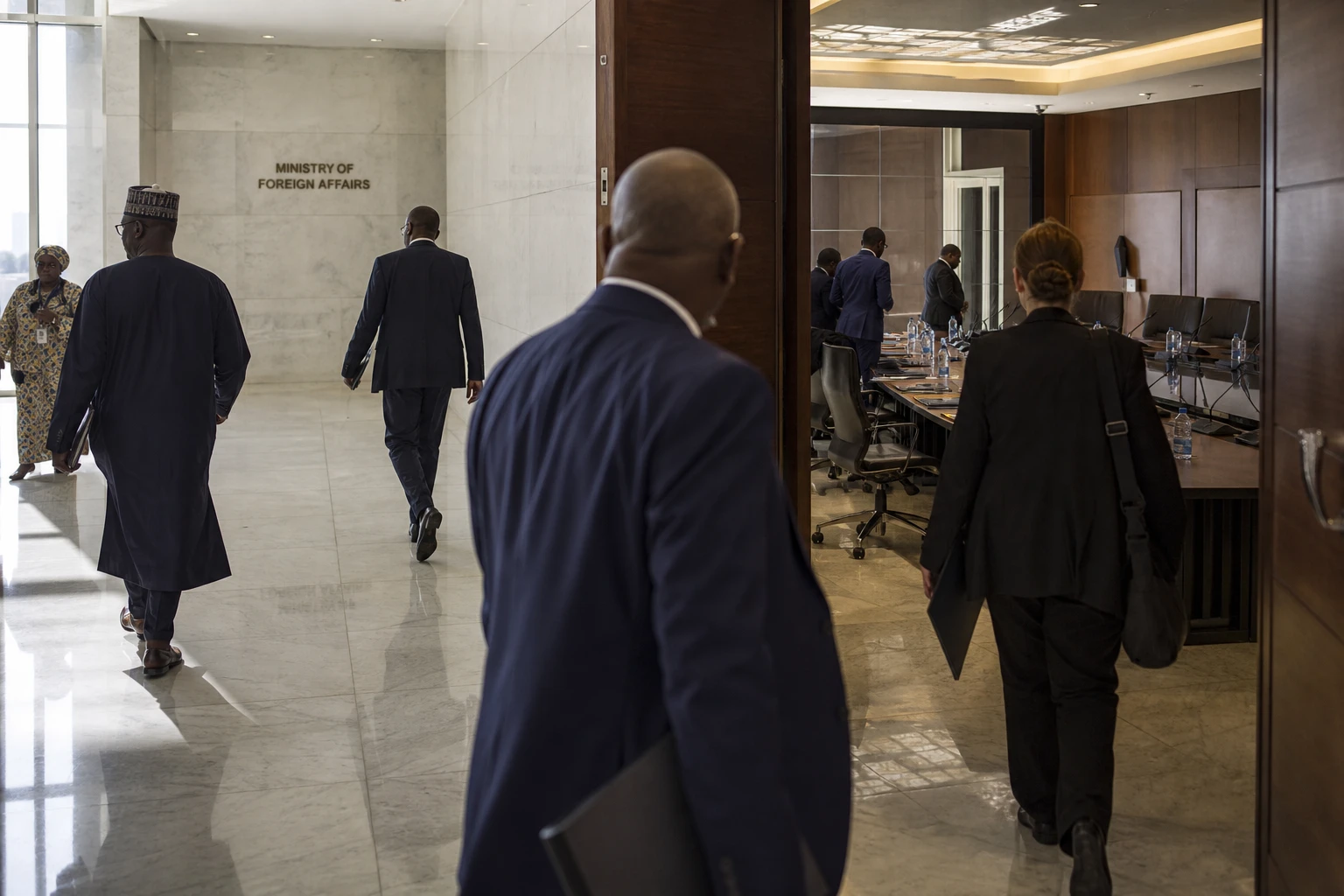
On 27 July in Abuja, Nigeria’s Minister of State for Foreign Affairs, Sola Enikanolaiye, received a South African delegation led by Ronald Lamola, Minister of International Relations and Cooperation, who had been sent to ease tensions. According to Reuters, Abuja asked Pretoria to do more to prevent attacks on Nigerians and other African migrants, and said the recurrence of the violence raised questions about possible acquiescence by law enforcement. Lamola replied that Cyril Ramaphosa’s government firmly opposed xenophobia, racism and discrimination.
Nigerian authorities have not disputed South Africa’s right to prosecute people suspected of offences. They are, however, calling for such cases to be dealt with through the courts, not mob violence. Reuters reported that at least four people had been killed in the latest wave, while Nigerian authorities cited 1,490 evacuations of nationals since the episode began. Nigeria’s foreign ministry had already announced the arrival in Lagos on 11 June of an initial group of 258 evacuees.
This is not an isolated episode. In May 2026, the Associated Press had already reported that 130 Nigerians wanted to return home after fresh anti-immigration protests in South Africa. In early July, the agency also reported the deaths of two Nigerian nationals in anti-migrant violence. In other words, the diplomatic channel remains open, but the crisis has become entrenched.
Close economic ties, but an uneven relationship
The relationship between the two capitals is rooted first and foremost in concrete interests. Pretoria still regards Abuja as its leading export market in Africa. South Africa’s trade ministry said in April 2025 that Nigeria remained the main African destination for South African exports, and noted that bilateral trade continued to be driven by oil and gas imported by South Africa.
South Africa’s corporate footprint in Nigeria is clearly visible. MTN Nigeria remains the most prominent asset in that presence. In its 2025 results, MTN Group confirmed that its Nigerian subsidiary remained a major driver of its performance. Stanbic IBTC, meanwhile, announced that its total assets had reached 8.6 trillion naira at the end of 2025. These figures show that diplomatic tensions do not translate only into statements; they also affect balance sheets and investor confidence.
Nigeria and South Africa also have a robust commercial relationship. South African customs data for 2024, available through Pretoria’s official statistics, place Nigeria among the country’s major bilateral partners. In 2025, South Africa’s trade ministry stressed the need to broaden the basis of trade beyond hydrocarbons, citing automotive, pharmaceutical, agricultural and green energy sectors. Reliance on a handful of sectors makes the relationship more profitable, but also more vulnerable to political shocks.
When the streets get involved, companies become symbolic targets
The precedent remains fresh in both countries. In 2019, protests in Nigeria targeted Shoprite stores and MTN facilities, prompting temporary closures and the recall of an ambassador. The message is clear: during xenophobic crises, South African companies operating in Nigeria often pay a symbolic price, even when they employ mostly Nigerians.
The same dynamic resurfaced in 2026. Nigerian political reactions hardened at times, with proposals to suspend permits or nationalise businesses raised in public debate, although none was adopted. This matters because Nigeria is approaching sensitive political milestones, and the authorities know that a muted response to violence against fellow citizens would be poorly received. In this kind of crisis, diplomacy must therefore manage three fronts at once: protecting nationals, defending economic interests and handling public opinion.
In Pretoria, the challenge is different but just as tangible. The South African government must show that it can control violence carried out in the name of combating irregular immigration. If law enforcement appears passive, criticism no longer falls only on the streets. It reaches the state. That is precisely the point Nigeria sought to make in Abuja when it cited cases in which police appeared not to intervene.
A test for the AfCFTA and the credibility of South-South cooperation in Africa
This issue goes well beyond the Abuja–Pretoria relationship. It tests the ability of Africa’s largest economies to protect foreign nationals without undermining their own trade ties. It also shows that a more integrated continental market, sought by the AfCFTA, cannot advance without clear mechanisms for early warning, consular protection and dispute resolution. Nigeria has specifically called for an early-warning system and a stronger police presence in at-risk areas.
The issue also merits attention beyond street violence alone. If the commitments made in Abuja are implemented, the crisis could remain contained. If they stall, calls for economic reprisals and public displays of distrust could resurface. In a region where the movement of goods, capital and people is increasing, the smallest local incident can turn into a regional issue. Nigeria and South Africa offer a very concrete example: their interdependence is an asset, but also a potential fault line.



