Algeria
 Egypt
 Libya
 Morocco
 Sudan
 Tunisia
 Benin
 Burkina Faso
 Cabo Verde
 Côte d'Ivoire
 Ghana
 Guinea
 Guinea-Bissau
 Liberia
 Mali
 Mauritania
 Niger
 Senegal
 Sierra Leone
 The Gambia
 Togo
 Cameroon
 Central African Republic
 Chad
 DR Congo
 Equatorial Guinea
 Gabon
 Republic of the Congo
 São Tomé and Príncipe
 Burundi
 Comoros
 Djibouti
 Eritrea
 Ethiopia
 Kenya
 Madagascar
 Malawi
 Mauritius
 Mozambique
 Rwanda
 Seychelles
 Somalia
 South Sudan
 Tanzania
 Uganda
 Angola
 Botswana
 Eswatini
 Lesotho
 Namibia
 South Africa
 Zambia
 Zimbabwe
Insecurity blurs the lines
In central Nigeria, violence does more than kill. It displaces families, destroys fields, empties villages and fuels a battle over narratives. In Mangu, in Plateau State, this reality takes a brutal form: entire communities live to the rhythm of attacks, reprisals and mutual suspicion. Christian women and men are often exposed to danger there, but they are neither the only victims nor the only people affected by a crisis in which religion, land, livestock, banditry and the collapse of public protection are intertwined.
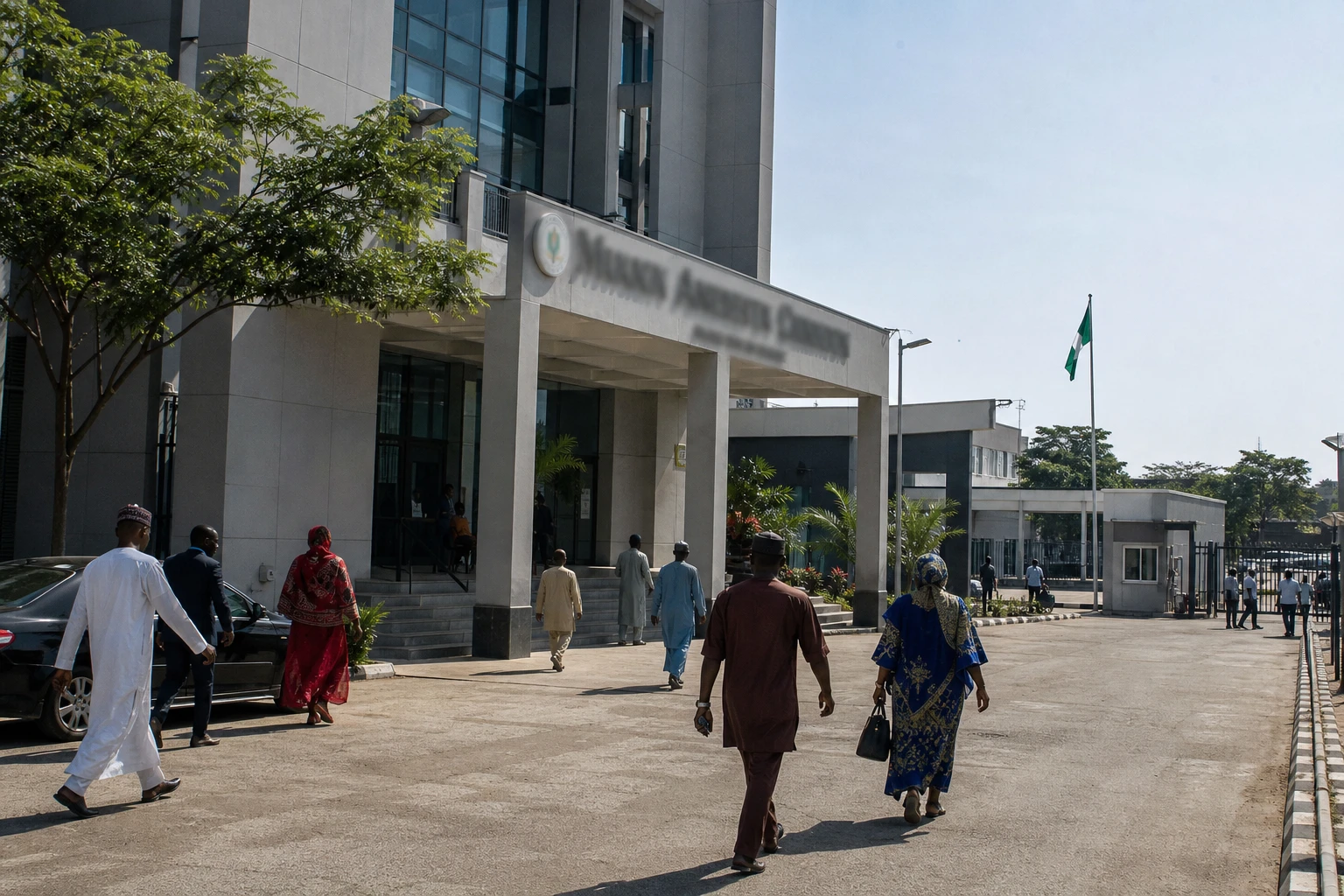
This debate goes beyond Nigeria. In Abuja, the authorities reject any strictly sectarian interpretation. Abroad, some elected representatives and organisations argue instead for a clearer designation of the persecution. Between these two readings, the population pays the heaviest price. Nigeria, Africa’s largest economy, also remains one of West Africa’s most sensitive hotspots for domestic security, in a regional space where ECOWAS is struggling to stem the flow of weapons, criminal groups and cross-border violence.
Plateau, Kaduna, Niger: the same map, different faces
On 17 and 18 August 2026, an attack on Bin-Per, in Kombun district, renewed alarm in Plateau State. Armed men struck at night, house by house, according to local accounts. At least 24 bodies were buried the following day, while some sources on the ground reported 25 or 26 deaths, with no definitive toll yet established. The Plateau State House of Assembly also cited 38 homes burned in Bin-Per and the neighbouring communities of Jwak and Murish.
A few days earlier, in Jwak Maitumbi, tensions had already erupted into clashes between young Mwaghavul men and Fulani herders. On 12 August, three people were killed before troops from Operation Enduring Peace, a military deployment tasked with containing crisis hotspots in the Middle Belt, intervened. Then, on 16 August, accounts diverged completely. On one side, residents described a deadly attack on worshippers on their way to Sunday service. On the other, a post followed by security services reported a reprisal targeting Fulani homes. No independent public evidence has yet resolved the conflicting accounts.
This uncertainty is no minor detail. In Plateau, as in Kaduna, Niger or parts of Borno, violence rarely follows a single logic. It is fuelled by farming and pastoral conflicts, communal reprisals, ransom operations and, in some places, the presence of jihadist groups. Another major difficulty is that victims often belong to already vulnerable Christian or Muslim communities, making each attack politically explosive, but not always straightforward to classify in law.
Crisis figures and the battle over their meaning
The issue took on an international dimension after the publication of the 2026 World Watch List. The NGO Open Doors says it recorded 4,849 Christians killed worldwide because of their religious identity during the period from 1 October 2024 to 30 September 2025. According to the same source, 3,490 of those deaths occurred in Nigeria, as did 2,293 of the 3,302 kidnappings recorded worldwide. The organisation also estimates that around 16 million Christians have been displaced by violence and conflict in sub-Saharan Africa.
These figures have nevertheless fuelled a longstanding methodological controversy. The political scientist Marc-Antoine Pérouse de Montclos points out that some deaths attributed to religious persecution are also linked to banditry, land disputes, rivalries between herders and farmers, or criminal dynamics that extend beyond the question of religious affiliation alone. This caution does not deny attacks on believers. It calls for case-by-case distinctions between what is driven by faith, land, money or revenge.
The Nigerian Catholic Church takes a similarly cautious approach. The Bishop of Sokoto, Matthew Hassan Kukah, rejects the term “genocide” for the country as a whole and stresses a central point: international law considers not only the number of victims, but also intent, systematic patterns and targeting. His position does not erase the murders of Christians. It is a reminder that Muslims in Nigeria also suffer heavy losses in the same areas where security has broken down.
Abuja under pressure, West Africa in the background
In Abuja, the official response remains focused on general insecurity and the fight against armed groups. In June 2026, the United Nations Special Rapporteur on freedom of religion or belief, Nazila Ghanea, visited the country and warned of the impact of insecurity, violence and impunity on religious freedom. A few weeks later, the European Parliament adopted a resolution on the persecution of Christians in Nigeria, linked in particular to the Kawel massacre, by 510 votes to one, with 86 abstentions.
This sequence confronts the Nigerian government with two fronts. At home, it must protect villages in the Middle Belt, secure rural roads and restore a state presence in places where residents often see security forces arrive only after attacks. Diplomatically, it must prevent the issue from being captured by simplistic outside narratives, particularly those that reduce the crisis to a single religious conflict. Nigeria, governed from Abuja, knows that this interpretation could affect its relations with Western partners, as well as its own national cohesion.
The stakes extend beyond Nigeria. In the Sahel, the Lake Chad basin and several countries in West and Central Africa, violence against civilians takes similar forms: village attacks, kidnappings, ransom demands, forced displacement and the destruction of livelihoods. Open Doors also ranks Mali, Burkina Faso, the Democratic Republic of the Congo and Mozambique among the worst-affected countries, but with different dynamics. This comparison is a reminder that there is no single African religious crisis, but rather a number of local conflicts in which weak states, armed economies and social divisions reinforce one another.
Ultimately, the question facing Nigeria is one of practical protection. How can another village like Bin-Per be prevented from becoming the next name on a long list? How can places of worship, markets, schools and grazing land be secured without trapping communities in a sterile sectarian narrative? Until those answers are complete, victims will continue to appear in casualty figures while too often remaining absent from public policy.