
 Algeria
 Egypt
 Libya
 Morocco
 Sudan
 Tunisia
 Benin
 Burkina Faso
 Cabo Verde
 Côte d'Ivoire
 Ghana
 Guinea
 Guinea-Bissau
 Liberia
 Mali
 Mauritania
 Niger
 Nigeria
 Senegal
 Sierra Leone
 The Gambia
 Togo
 Cameroon
 Central African Republic
 Chad
 DR Congo
 Equatorial Guinea
 Gabon
 Republic of the Congo
 São Tomé and Príncipe
 Burundi
 Comoros
 Djibouti
 Eritrea
 Ethiopia
 Kenya
 Madagascar
 Malawi
 Mauritius
 Mozambique
 Rwanda
 Seychelles
 Somalia
 South Sudan
 Tanzania
 Uganda
 Angola
 Botswana
 Eswatini
 Lesotho
 Namibia
 Zambia
 Zimbabwe
When protecting nationals becomes a political signal
For Nigeria, the issue is not merely diplomatic. It concerns the safety of its nationals, the value of its investments abroad and the image of a country that claims a leading role in West Africa. In Abuja, the response from parliamentarians also reflects a tougher stance on repeated violence against African migrants in South Africa.
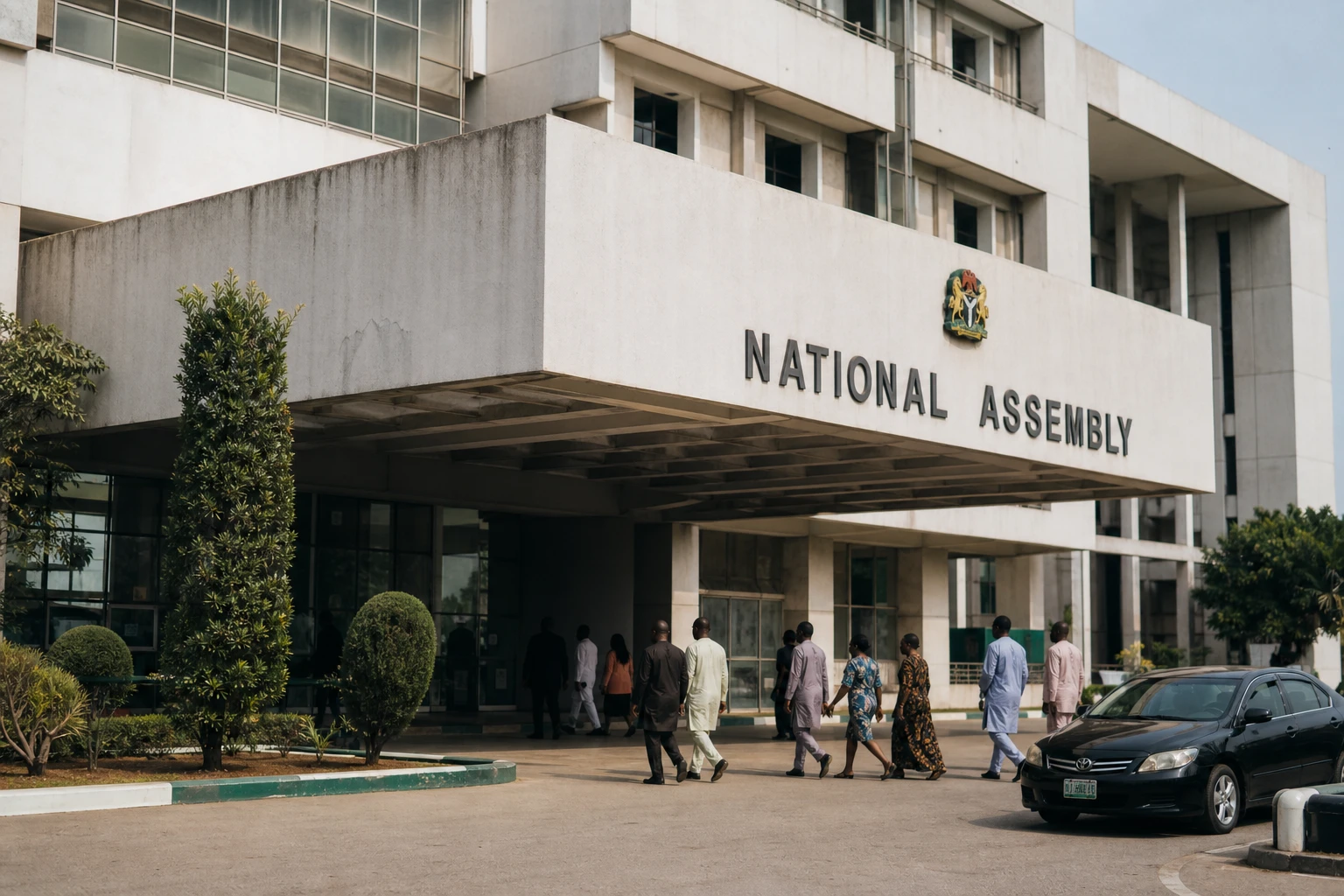
The decision applies to the federal capital, Abuja, and was taken by the leadership of the Senate and the House of Representatives, in a country that remains, alongside Pretoria, one of the continent’s leading political powers. It comes amid a broader context in which the movement of people, capital and students between African countries has become a tangible issue of sovereignty, far beyond the rhetoric of continental integration.
What Nigeria’s National Assembly has decided
On Friday 11 September 2026, Nigeria’s National Assembly suspended all official visits to South Africa until further notice. It also ordered a boycott of conferences, seminars, workshops, meetings and other parliamentary activities organised, hosted or sponsored by South African legislative authorities. The measure also covers virtual exchanges, which will now require express authorisation from the parliamentary leadership.
According to information made public in Abuja, the decision was prompted by continued reports of xenophobic attacks, intimidation, property destruction and violence targeting Nigerians and other Africans living in South Africa. Parliament said it had acted under the authority of Senate President Godswill Akpabio and House of Representatives Speaker Abbas Tajudeen.
The suspension is not presented as a break with Pretoria. On the contrary, Abuja’s message stresses the continuity of the historical, diplomatic and human ties between the two countries. But it makes cooperation conditional on mutual respect, the protection of people and the effective prosecution of those responsible for violence.
Why the crisis is back in the spotlight
Nigeria’s decision comes after several months of tensions in South Africa. Anti-immigrant protests have gathered momentum, notably in Durban and other urban areas. Anti-immigration groups set 30 June 2026 as an informal deadline for undocumented foreigners to leave. The date had no legal force, but it served as a rallying point for violent demonstrations and intimidation.
Several African and international media outlets have reported casualties and mass departures. Africanews reported that hundreds of foreigners were seeking a way to leave the country, while other sources cited at least four deaths amid the anti-immigrant violence in June 2026. SABC News later estimated that the crisis had prompted the departure or repatriation of more than 53,000 African migrants in one month.
Against this backdrop, Nigeria evacuated nationals from Johannesburg to Lagos. Nigeria’s Ministry of Foreign Affairs confirmed the first repatriation flight on 9 June, fully funded by the state. On 30 June, it announced the arrival of a second flight carrying 269 returnees. Then, on 14 July, Abuja said it had evacuated 1,490 Nigerians from South Africa. Nigerian authorities later raised that total to 1,699 in September, according to figures reported in the press.
The practical stakes for Abuja, Pretoria and migrants
For Nigerians living in South Africa, the parliamentary decision has immediate symbolic significance. It means the issue is no longer being monitored solely by diplomats and consulates, but also by legislative institutions. For traders, students, workers and families, the message is clear: Abuja wants to show that it no longer regards the attacks as isolated incidents.
For Pretoria, the stakes are different. South Africa remains the continent’s largest economy and a magnet for migrants from several African countries. But it also has to contend with unemployment above 30%, pressure on public services and political movements that capitalise on social anger by blaming foreigners for structural problems. This is where the issue shifts from security to social and economic concerns.
Abuja’s response also signals a change in approach. For a long time, crises involving violence against African nationals were handled through consular or bilateral channels. Now Nigeria’s parliament is also using a form of institutional pressure. This gesture will not solve anything on its own. But it raises the political cost of inaction for South Africa and puts the protection of migrants at the centre of public debate.
The debate ultimately goes beyond the Nigeria-South Africa relationship. It touches on the credibility of free movement in Africa, the African Charter on Human and Peoples’ Rights and the integration ambitions pursued by the African Union and AfCFTA, the African Continental Free Trade Area. Strong economic integration requires people to be protected, goods to be secure and rules to be enforced. Without that, African mobility remains vulnerable to cycles of fear and retaliation.
What to watch in the coming days
What happens next will depend first on Pretoria’s response to the diplomatic and political pressure coming from Abuja. Developments in the violence on the ground, investigations announced by South African authorities and any further wave of repatriations of African nationals will also need to be watched. The issue remains unresolved because it touches on security, parliamentary diplomacy and the place of migrants in urban African economies.
For Nigeria, the challenge is twofold: to protect its citizens without turning the crisis into a lasting rupture with South Africa. For the continent, the episode is a reminder that credible integration is measured not only by the agreements signed, but also by states’ ability to protect people moving from one African country to another.



