Algeria
 Egypt
 Libya
 Morocco
 Sudan
 Tunisia
 Benin
 Burkina Faso
 Cabo Verde
 Côte d'Ivoire
 Ghana
 Guinea
 Guinea-Bissau
 Liberia
 Mali
 Mauritania
 Niger
 Senegal
 Sierra Leone
 The Gambia
 Togo
 Cameroon
 Central African Republic
 Chad
 DR Congo
 Equatorial Guinea
 Gabon
 Republic of the Congo
 São Tomé and Príncipe
 Burundi
 Comoros
 Djibouti
 Eritrea
 Ethiopia
 Kenya
 Madagascar
 Malawi
 Mauritius
 Mozambique
 Rwanda
 Seychelles
 Somalia
 South Sudan
 Tanzania
 Uganda
 Angola
 Botswana
 Eswatini
 Lesotho
 Namibia
 South Africa
 Zambia
 Zimbabwe
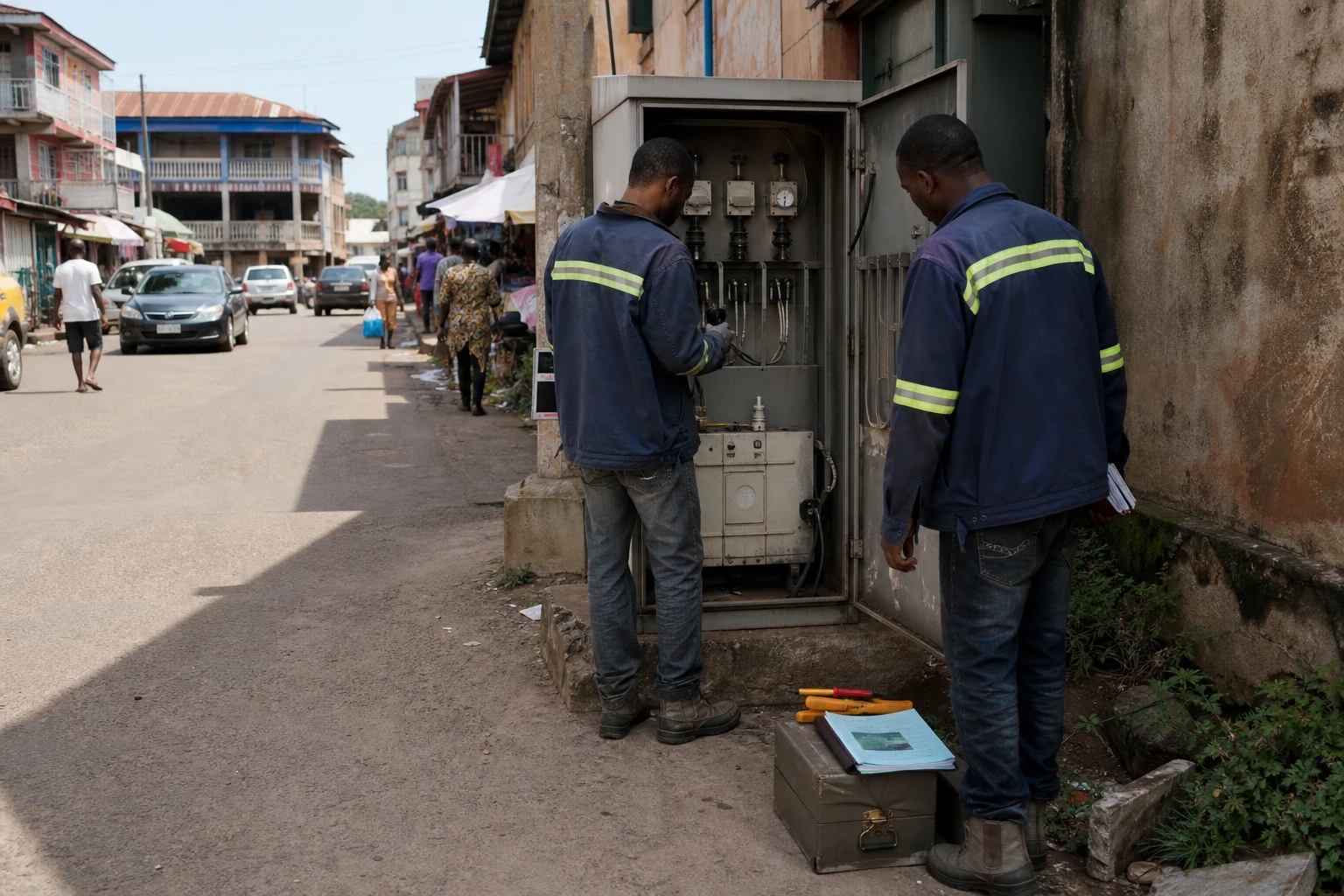
In Abuja, the legal victory against Sunrise Power is not yet enough to pour the first concrete at Mambilla. It does, however, remove a major obstacle surrounding one of Nigeria’s most ambitious energy projects.
A dispute spanning nearly two decades
On 17 September 2026, an arbitral tribunal constituted under the auspices of the International Chamber of Commerce in Paris rejected claims brought by Sunrise Power and Transmission Company against the Federal Republic of Nigeria. The company had claimed, among other things, $400 million under a settlement agreement reached with Abuja in 2020, including interest, according to information provided by the Nigerian authorities.
The dispute dates back to 2003. That year, Sunrise obtained a document relating to the development of the Mambilla hydroelectric power station in Taraba State, under a build-operate-transfer model. The company subsequently relied on this document to challenge the selection of a Chinese consortium to take over the project.
The Nigerian government has always disputed the legal force of the agreement. It argued, in particular, that the necessary approvals from the Federal Executive Council, the body that approves major decisions of the federal executive, had not been obtained.
In 2017, Abuja signed a contract worth about $5.8 billion with China Gezhouba Group Corporation, Sinohydro and CGCOC Group. The plan provided for a 3,050-megawatt power station, four dams, underground works and an electricity transmission line of about 700 kilometres. The project was to be 85% financed by China Exim Bank, with Nigeria contributing the remaining 15%.
The arbitration initiated by Sunrise nevertheless undermined this arrangement. Talks with the Chinese bank slowed, and construction never really began. In 2020, Abuja and Sunrise had tried to end the dispute. The agreement provided for a payment of $200 million, as well as an additional sum in the event of default. The failure to pay these amounts led to a new proceeding.
A favourable ruling, but a project still to be structured
The arbitral tribunal found that the officials who concluded the 2020 agreements did not have sufficient authority to bind the Nigerian state without presidential approval. The authorities also said that the award had taken account of issues relating to corruption and Nigerian public policy.
The decision substantially reduces the immediate financial risk associated with the settlement agreement. It does not, however, bring the entire legal battle to a close. A separate proceeding, concerning the rights Sunrise claims over the original project, still involves more than $2.7 billion in compensation and interest, according to the Nigerian presidency.
The ruling also does not confirm that the Chinese funding announced in 2017 is still available on the same terms. Publicly available information describes an agreement in principle rather than a loan agreement that has been definitively signed. This distinction is crucial for a project estimated to cost about $5.8 billion.
The technical plans are also still in flux. The Programme for Infrastructure Development in Africa prospectus describes Mambilla as a 3,050-megawatt project that is still at the structuring stage. This means that funding, studies, contracts and the allocation of risks have not been finalised.
The project has also undergone several changes in scale. In 2021, an official at Nigeria’s Ministry of Power spoke of reducing capacity to 1,500 megawatts to improve its financial viability. More recent documents revert to a capacity of 3,050 megawatts. The Nigerian presidency, for its part, referred to a 3,960-megawatt version in its communication on the arbitration. These discrepancies show that the project’s precise scope must still be clarified before construction can resume.
Implications for the electricity grid and local communities
For Nigeria, Mambilla is more than a major infrastructure project in Taraba State. A power station with a capacity of several thousand megawatts could boost national generation and ease pressure on a grid marked by technical losses, outages and constraints on electricity transmission.
The impact will nevertheless depend on the country’s ability to transmit the power generated to centres of consumption. The planned transmission line is therefore just as important as the dams themselves. Without a robust grid, additional installed capacity does not automatically translate into improvements for households, businesses or public services.
The benefits would first be felt in areas near the construction site, through jobs, contracts for local businesses and new infrastructure. But communities in Taraba could also face displacement, changes in land use and tensions over access to water. These issues will need to be addressed in environmental and social studies, and then through compensation mechanisms.
At national level, the project forms part of efforts to diversify the electricity mix. Nigeria remains heavily dependent on gas for electricity generation, while hydropower can provide dispatchable renewable energy. It is, however, exposed to hydrological fluctuations, geotechnical risks and the high costs of long-term infrastructure.
The next battle will be financial and institutional
The September 2026 award strengthens Abuja’s legal position. It does not replace an investment decision, a loan agreement or a construction timetable. The government must now clarify the status of the 2017 contract, update the technical studies and confirm the financing structure.
Nigeria will also need to convince lenders that responsibilities are clearly divided between the state, the contractors, the future operator and electricity buyers. The last of these issues is crucial: the power station’s revenues will depend on distributors and large consumers being able to pay for the electricity supplied.
The case is also of interest to ECOWAS, the Economic Community of West African States, even though Mambilla remains a national project. The strength of Nigeria’s grid matters for regional electricity trading and the stability of the West African market. For the African Union, the project chiefly illustrates a recurring challenge: turning an announced strategic infrastructure project into an asset that is actually financed, built and operated.
The arbitration ruling therefore opens a window of opportunity. The next decisive milestone will be less legal than financial: confirmation of funding, a final choice of capacity and publication of a credible timetable for resuming work.