
 Algeria
 Egypt
 Libya
 Morocco
 Sudan
 Tunisia
 Benin
 Burkina Faso
 Cabo Verde
 Côte d'Ivoire
 Ghana
 Guinea
 Guinea-Bissau
 Liberia
 Mali
 Mauritania
 Niger
 Senegal
 Sierra Leone
 The Gambia
 Togo
 Cameroon
 Central African Republic
 Chad
 DR Congo
 Equatorial Guinea
 Gabon
 Republic of the Congo
 São Tomé and Príncipe
 Burundi
 Comoros
 Djibouti
 Eritrea
 Ethiopia
 Kenya
 Madagascar
 Malawi
 Mauritius
 Mozambique
 Rwanda
 Seychelles
 Somalia
 South Sudan
 Tanzania
 Uganda
 Angola
 Botswana
 Eswatini
 Lesotho
 Namibia
 South Africa
 Zambia
 Zimbabwe
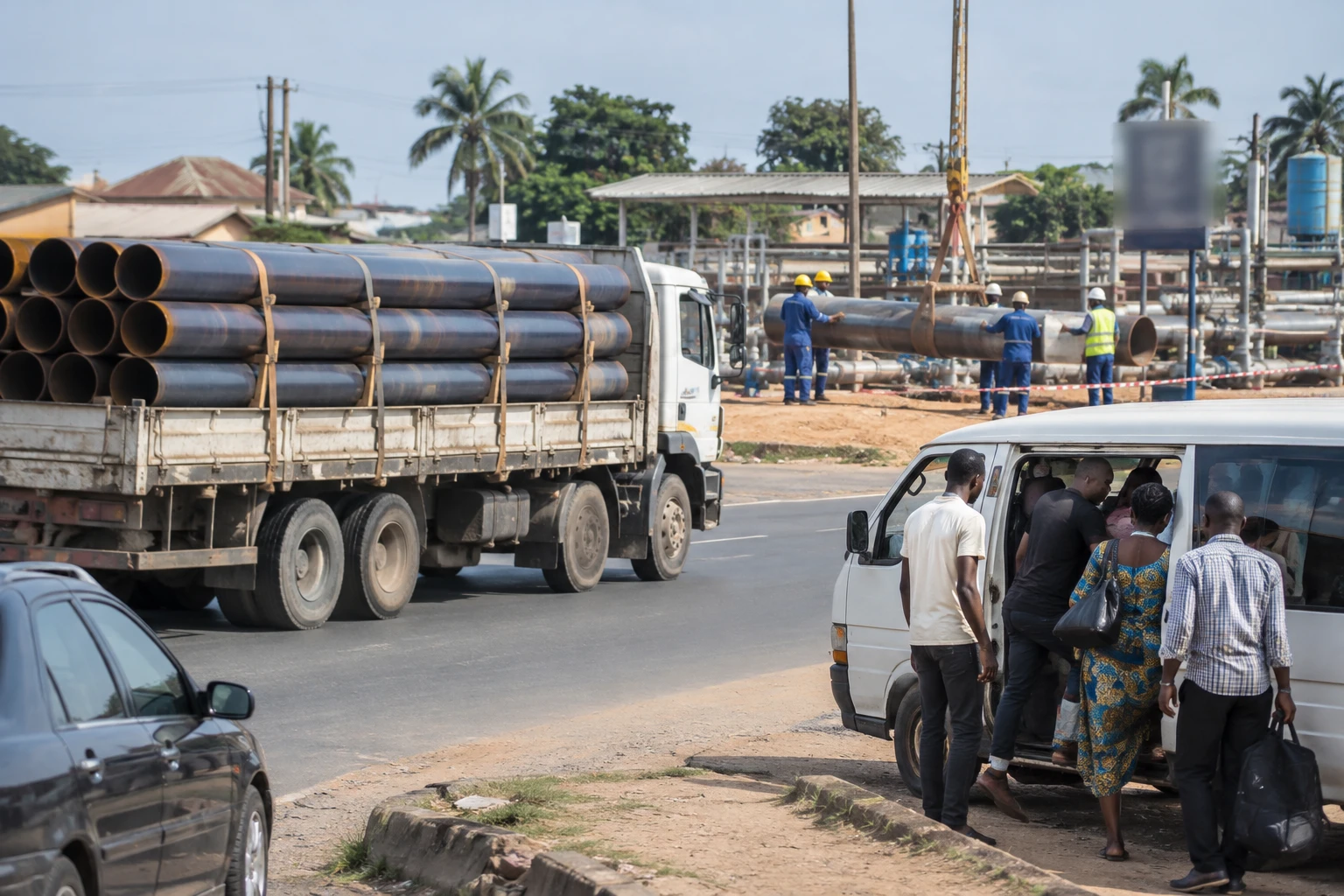
Keeping more of the value generated by the oil and gas industry in Nigerian workshops, jobs and businesses is the aim behind Bola Tinubu’s appeal to international oil companies. In Abuja, that ambition is also taking shape in a construction project in Edo State, where a Nigerian company is building equipment to strengthen gas transmission.
Domestic firms face major contracts
On 22 October 2026, Nigeria’s president received Leemon Ikpea, founder of Lee Engineering Group, in Abuja, the country’s capital. According to the presidency, Tinubu urged the majors operating in the country to open up more markets to Nigerian companies capable of delivering complex projects.
The issue goes beyond how contracts are allocated. In a sector where major projects depend on international supply chains, locally awarded contracts can support skilled employment, technical training and the manufacture of equipment in the country. But companies must have the financing and expertise needed to meet operators’ requirements.
This policy is part of “Nigeria First”, which promotes domestic suppliers and equipment made in Nigeria. It also builds on the 2024 directives on local content and reducing contracting times and costs. The policy must, however, meet two objectives: widening domestic participation without undermining competitiveness or slowing investment.
The gas pipeline as an industrial test
Lee Engineering is building two compression stations in Edo State. The facilities are intended to increase gas pressure in the Escravos-Lagos pipeline network. According to the presidency, the network’s expansion raised its theoretical capacity from 1.1bn to 2.3bn standard cubic feet per day; the compressors are needed to make full use of that capacity.
The difference between theoretical capacity and the volume actually transported is significant. The information provided gives neither the stations’ commissioning date nor the volume of gas that will subsequently flow through them. The stated capacity alone therefore does not guarantee additional supplies for power stations and industries.
Some of the components are being manufactured at Lee Engineering’s industrial site in Warri, Delta State. This local production illustrates the ambition to retain a greater share of the project’s value in the country. However, it does not by itself show the precise share of Nigerian jobs, purchases and skills involved across the entire project.
The Escravos-Lagos pipeline is also connected to the West African Gas Pipeline, which transports Nigerian gas to Benin, Togo and Ghana. If available supply increases and the infrastructure works as planned, the improvement could benefit consumers and industries in Nigeria as well as regional energy trade.
An ambitious target, with results to monitor
The Nigerian Content Development and Monitoring Board (NCDMB), the public body responsible for promoting and monitoring local content in the sector, is targeting 70% by 2027. It has announced that the share of Nigerian content in the projects it monitors rose from 56% in 2024 to 61% in the third quarter of 2025. Several Nigerian media outlets have also reported the 61% figure, based on data presented by the agency.
These percentages do not necessarily mean that domestic companies carry out 61% of all oil and gas activity. The indicator covers projects monitored by the NCDMB. To assess progress, it will also be necessary to examine how it is calculated, which contracts are included and what share actually goes to Nigerian suppliers and workers.
Financing is another challenge. In December 2025, the NCDMB and the Bank of Industry announced a $100m fund to invest in local companies in the sector. Equity financing can help some businesses grow without relying solely on conventional loans. Its impact will depend, however, on the terms of access and on companies’ ability, particularly that of smaller firms, to present projects suitable for financing.
The NCDMB has also announced a certificate linked to payment of the 1% contribution to the Nigerian Content Development Fund, which was due to become necessary for obtaining certain permits from 1 January 2026. The available information does not establish whether this requirement has in fact come into force. Its implementation will therefore need to be confirmed before its effects can be assessed.
Regional impact will depend on results
For communities and workers in producing areas, the issue is tangible: whether contracts create lasting jobs and whether more spending stays in the local economy. For companies, it is about finding suppliers able to meet deadlines, costs and technical standards. Nigerian businesses, meanwhile, must turn market opportunities into lasting capabilities, beyond any single project.
Across West Africa, these choices also affect security of supply and gas trade between neighbouring countries. ECOWAS, the Economic Community of West African States, provides the regional framework for this co-operation, although infrastructure and transport agreements remain decisive in practice.
The next step will therefore be less about the number of announcements than about their translation into awarded contracts, delivered equipment and gas actually transported. The Edo project offers an example to watch; local-content figures and suppliers’ access to finance will help show whether the stated ambition is spreading beyond major companies.



