Algeria
 Egypt
 Libya
 Morocco
 Sudan
 Tunisia
 Benin
 Burkina Faso
 Cabo Verde
 Côte d'Ivoire
 Ghana
 Guinea
 Guinea-Bissau
 Liberia
 Mali
 Mauritania
 Niger
 Senegal
 Sierra Leone
 The Gambia
 Togo
 Cameroon
 Central African Republic
 Chad
 DR Congo
 Equatorial Guinea
 Gabon
 Republic of the Congo
 São Tomé and Príncipe
 Burundi
 Comoros
 Djibouti
 Eritrea
 Ethiopia
 Kenya
 Madagascar
 Malawi
 Mauritius
 Mozambique
 Rwanda
 Seychelles
 Somalia
 South Sudan
 Tanzania
 Uganda
 Angola
 Botswana
 Eswatini
 Lesotho
 Namibia
 South Africa
 Zambia
 Zimbabwe
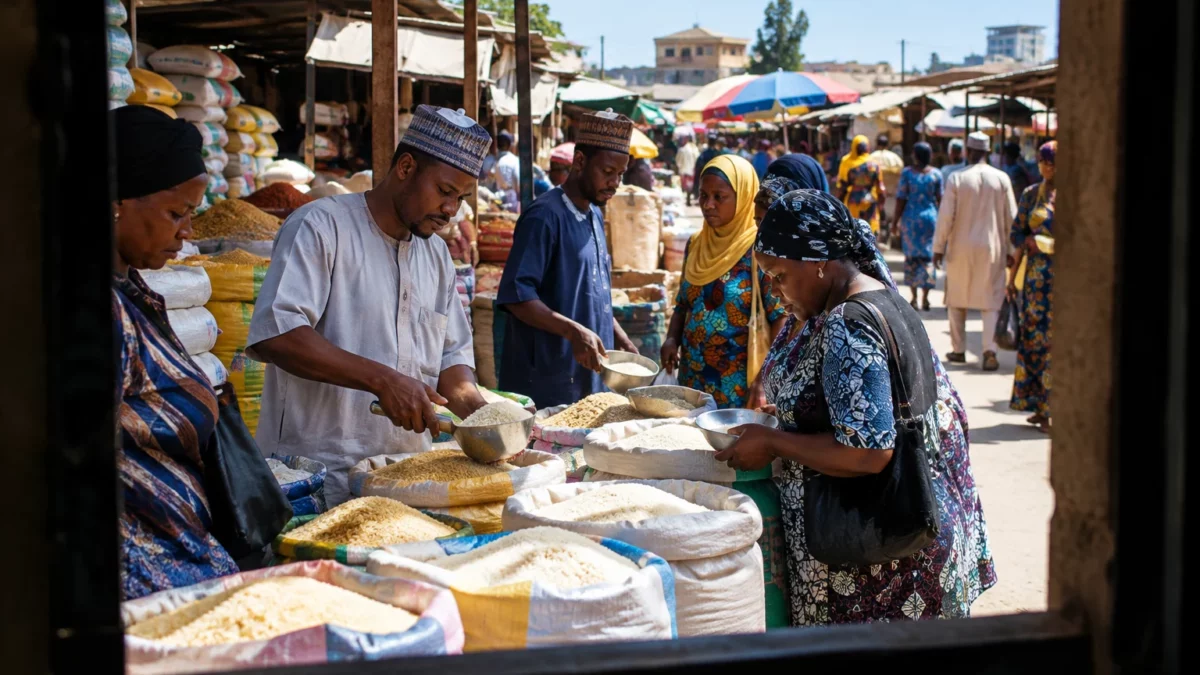
In Nigeria, the question of rice is not decided only in the fields. It is also decided in rice mills, where paddy must be processed, and in markets, where households weigh price against the grain’s origin. When these links weaken, the promise of producing more locally becomes harder to keep.
A sector squeezed by high costs and import competition
More than 90 of the country’s roughly 260 integrated rice mills are reported to have ceased operations, according to information published in Nigeria on 23 November 2026. This figure should be treated with caution: available public data do not yet make it possible to establish precisely how many mills are closed or operating only at reduced capacity. The US Department of Agriculture’s agricultural service, for its part, estimates that around 60% of Nigerian rice mills may not be operational. The two figures point to the same difficulty, but do not necessarily measure the same situation.
Processors face several pressures at once. Fertiliser costs weigh on producers, while diesel makes it more expensive to run facilities. When paddy is scarce or too costly, a rice mill cannot operate at full capacity. At the same time, imported rice, which is often cheaper, is becoming more attractive to buyers.
Trade projections confirm this continued dependence, without constituting a definitive tally of imports actually made. In May 2025, the US Department of Agriculture forecast that Nigeria would import around 3 million tonnes in 2026. A more recent estimate from its agricultural service puts imports at 2.9 million tonnes for the 2026/27 marketing year. These forecasts vary according to the period and calculation methods; they nevertheless point to significant reliance on overseas purchases.
Support for producers in question
The slowdown comes after years of public efforts to develop local production. Launched in 2015 by the Central Bank of Nigeria, the Anchor Borrowers’ Programme aimed to link smallholder farmers with processors and make it easier for them to access finance and inputs. It was also intended to improve market access and reduce dependence on imports. The Central Bank sets out these objectives in the programme’s official description.
The end or reduction of some forms of support therefore has knock-on effects, even if it is not the sole explanation for current difficulties. Without suitable financing or a guaranteed buyer, farmers face greater risks when investing in rice. Some may turn to crops such as sorghum or sesame, depending on prices and local conditions. Rice mills, deprived of a regular supply, then operate below capacity.
This economic choice does not amount simply to abandoning the sector. For a farm, changing crops can be a way to protect income in the face of high costs and uncertain markets. But, across the country, these dispersed decisions reduce the volumes available to processors and make harvest planning more difficult.
Implications for prices and food security
Local and imported rice meet different needs. A competitively priced imported product can help supply markets and offer consumers more choice. But if imports were to displace Nigerian producers and processors over the long term, they could also weaken local capacity needed to meet future demand.
For households, price remains decisive, particularly when food budgets are under pressure. For producers, profitability depends on the cost of seeds, fertiliser, energy and transport, as well as the possibility of selling the harvest. Processing companies, meanwhile, need to secure enough paddy and sell their rice. A policy that supports just one link is therefore not enough to stabilise the entire chain.
The AFEX report, from the Nigerian agricultural commodities exchange, cited in the available information, forecast a sharp fall in production in the next marketing season. The figure given — nearly two million tonnes less — should remain attributed to that estimate until its methodology and scope are confirmed by a second independent source. Forecasts from the US agricultural department also point to risks of a decline, particularly linked to production costs and a reduction in harvested area.
A trajectory to watch beyond Nigeria
Nigeria is West Africa’s largest market by population. Its choices on imports and production can therefore affect trade with its neighbours, including through informal commercial channels. ECOWAS, the Economic Community of West African States, provides a framework for regional cooperation, but does not eliminate price differences, national policies or logistical challenges.
Across the continent, this situation illustrates a shared challenge: developing agricultural sectors without making food unaffordable for consumers. Monitoring should focus on the actual activity of rice mills, upcoming harvests, input costs and import volumes. It will also be important to see whether credit and supply schemes for producers are restored or replaced by more sustainable mechanisms. For now, projections point to dependence on imports; on their own, they are not enough to conclude that local production targets are definitively out of reach.