Algeria
 Egypt
 Libya
 Morocco
 Sudan
 Tunisia
 Benin
 Burkina Faso
 Cabo Verde
 Côte d'Ivoire
 Ghana
 Guinea
 Guinea-Bissau
 Liberia
 Mali
 Mauritania
 Niger
 Senegal
 Sierra Leone
 The Gambia
 Togo
 Cameroon
 Central African Republic
 Chad
 DR Congo
 Equatorial Guinea
 Gabon
 Republic of the Congo
 São Tomé and Príncipe
 Burundi
 Comoros
 Djibouti
 Eritrea
 Ethiopia
 Kenya
 Madagascar
 Malawi
 Mauritius
 Mozambique
 Rwanda
 Seychelles
 Somalia
 South Sudan
 Tanzania
 Uganda
 Angola
 Botswana
 Eswatini
 Lesotho
 Namibia
 South Africa
 Zambia
 Zimbabwe
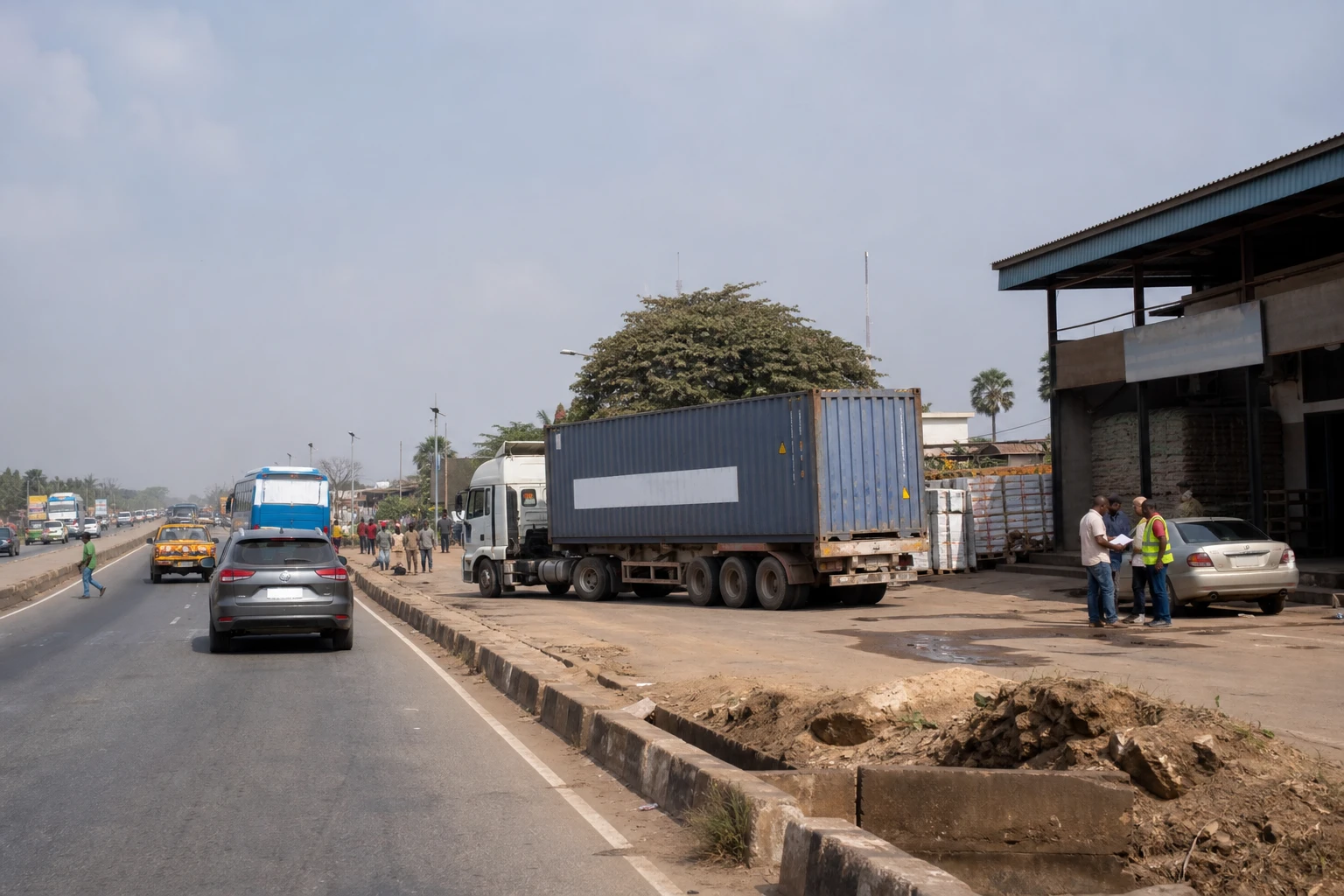
In Ogun, Nigeria is preparing a new maritime and industrial corridor east of Lagos. The stakes go beyond building a quay: the aim is to bring ports, factories and markets closer together in a country where congestion around established terminals continues to drive up the cost of transporting goods.
Ogun aims to link industrial production with maritime access
The Ogun State Government and DP World signed memorandums of understanding in Paris on 24 September 2026 to develop the Gateway Deep Seaport and the Blue Marine Special Economic Zone. The ceremony was attended by Nigerian President Bola Ahmed Tinubu and several federal officials from the maritime sector.
According to Nigerian authorities, the two projects are expected to attract more than $7 billion in initial investment. They are conceived as an integrated development: the port is intended to facilitate the movement of goods in and out, while the special economic zone is to host industrial, logistics and export activities.
The future port is planned for Ogun Waterside, in the south-east of the state. The plans presented envisage a draught of 18 metres and around four kilometres of quays. These specifications would allow it to handle large vessels, subject to the completion of works, technical studies and regulatory approvals.
The associated special economic zone is to cover 10,000 hectares. It could host processing plants, warehouses, maritime services and businesses targeting Nigerian, West African and continental markets.
A project within Lagos’s orbit
Ogun occupies a distinctive position in Nigeria’s economy. The state lies within the sphere of influence of Lagos, the country’s main commercial and financial centre, while also having extensive industrial land. It is home to cement plants, manufacturing facilities and logistics platforms.
The project therefore has a specific objective: to reduce the disconnect between production sites and export infrastructure. Today, a significant share of goods destined for the Nigerian market or for export passes through the Apapa and Tin Can Island facilities in Lagos. These ports remain vital, but their road access is regularly under heavy strain.
The project’s success will therefore depend less on the maritime facility alone than on its connections. Roads, rail, electricity, storage and customs procedures will have to work together. The section of the Lagos-Calabar Coastal Highway running through Ogun is presented as one of the future links in this network.
For businesses, this connectivity could reduce delivery times and road transport costs. It could also create new economic activity for workers and neighbouring communities. However, the benefits will depend on the quality of jobs, Nigerian companies’ access to public contracts, and the management of land and environmental impacts.
Nigeria expands port capacity
The Gateway Deep Seaport is not an isolated initiative. Abuja is seeking to diversify the country’s port network after decades of concentration around Lagos. The Federal Ministry of Marine and Blue Economy lists several deep-water port projects, including at Badagry, Ondo, Olokola, Burutu, Ibaka, Agge and Bakassi.
The strategy also includes upgrading existing infrastructure and developing inland dry ports. A dry port is a land-based facility connected to maritime terminals, where goods can be cleared through customs, stored or transferred without remaining in the coastal area.
In 2026, the Nigerian Ports Authority said financing for the modernisation of Apapa and Tin Can Island was progressing. It also confirmed progress on the Snake Island project in Lagos, developed with the MSC Group. The project includes a container terminal with a 910-metre quay and an announced initial depth of 16.5 metres.
These investments show that the government is not relying on a single new port. Rather, it is seeking to build a network of complementary platforms. Lagos’s terminals would retain their historic role, while Lekki, Badagry, Snake Island and future sites in Ogun could increase overall capacity and distribute traffic more effectively.
The main challenge is moving from agreements to construction
Nigeria has a vast domestic market and an expanding industrial base. It can also draw on the African Continental Free Trade Area, which aims to facilitate trade between African economies. But these advantages are not enough to guarantee the viability of a major port project.
The first challenge will be financial. A memorandum of understanding sets out an intention and a framework for cooperation, but it does not replace definitive contracts, financial close or the guarantees lenders need. The effective mobilisation of capital will therefore provide the first measure of the credibility of the announced timetable.
The second challenge concerns access. A high-performing port cannot operate sustainably if lorries remain stuck on the roads, rail is not operational or electricity supply remains unstable. Coordination between Ogun State, the federal government, the Nigerian Ports Authority and private operators will be decisive in this regard.
Finally, several Nigerian port projects have faced prolonged delays. This experience calls for a cautious reading of announcements. The next steps to watch will be environmental studies, regulatory approvals, the signing of concession agreements and construction of connecting infrastructure.
Implications for West Africa
If the project is completed, Ogun could strengthen Nigeria’s role in the logistics chains of ECOWAS, the Economic Community of West African States. The port would serve not only Nigerian industries: it could also help move goods to neighbouring markets, provided that borders, regional roads and trade procedures keep pace.
Competition will nonetheless be real. The ports of Lomé, Tema, Abidjan and Cotonou are also expanding capacity and seeking to attract the same container and transit flows. To establish itself, Ogun will therefore have to offer reliable turnaround times, competitive costs and efficient links to production zones.
The signing on 24 September 2026 thus opens a new phase rather than bringing matters to a close. The real test will be turning the agreement into a construction site, and then turning the construction site into an operational industrial platform. Only then can the Gateway Deep Seaport become a lasting catalyst for Ogun, Lagos and the Nigerian economy.