Algeria
 Egypt
 Libya
 Morocco
 Sudan
 Tunisia
 Burkina Faso
 Cabo Verde
 Côte d'Ivoire
 Ghana
 Guinea
 Guinea-Bissau
 Liberia
 Mali
 Mauritania
 Niger
 Nigeria
 Senegal
 Sierra Leone
 The Gambia
 Togo
 Cameroon
 Central African Republic
 Chad
 DR Congo
 Equatorial Guinea
 Gabon
 Republic of the Congo
 São Tomé and Príncipe
 Burundi
 Comoros
 Djibouti
 Eritrea
 Ethiopia
 Kenya
 Madagascar
 Malawi
 Mauritius
 Mozambique
 Rwanda
 Seychelles
 Somalia
 South Sudan
 Tanzania
 Uganda
 Angola
 Botswana
 Eswatini
 Lesotho
 Namibia
 South Africa
 Zambia
 Zimbabwe
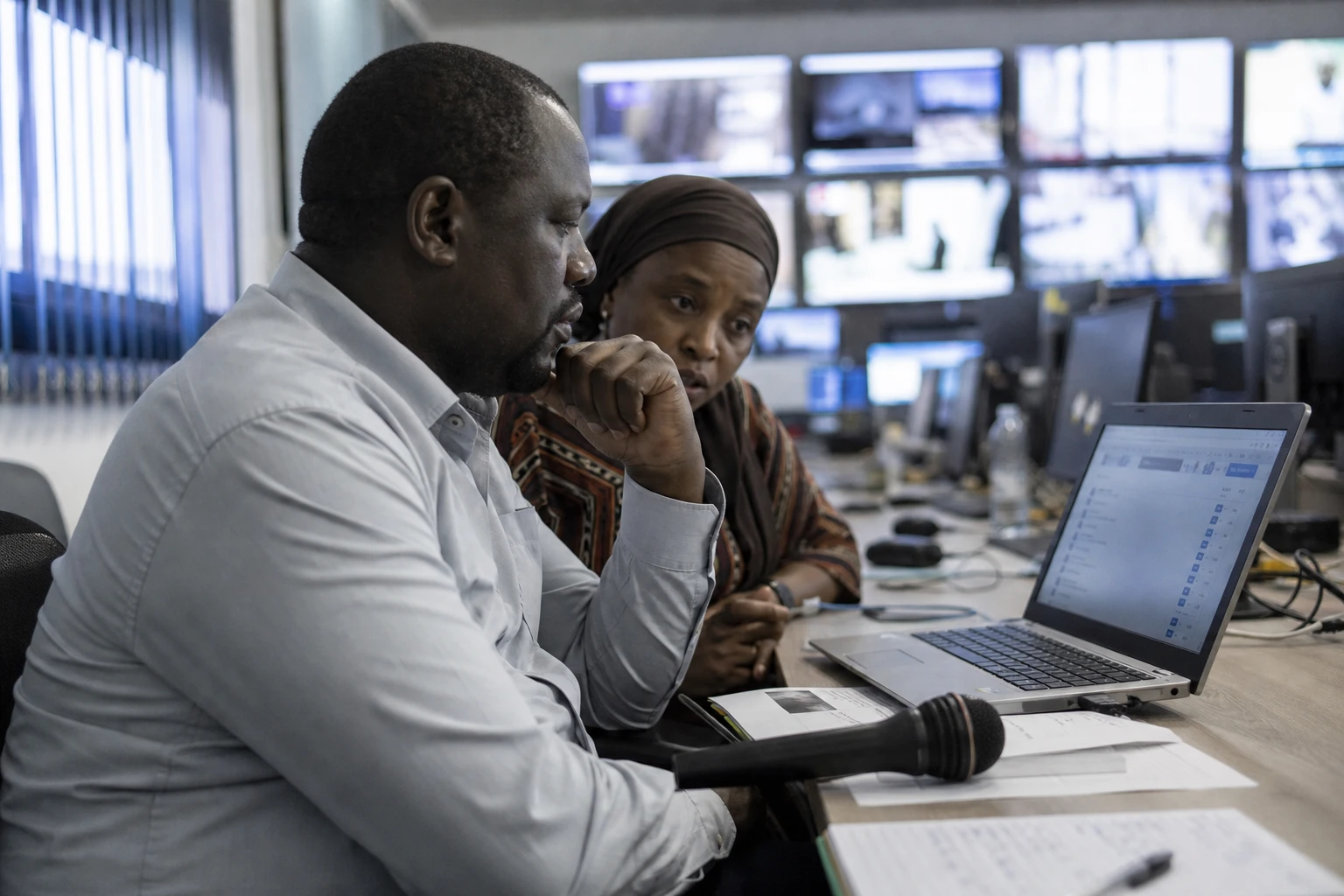
In Niamey, plot rumours chiefly reveal the fragility of the moment
In a tense capital, an accusation made on television can carry almost as much weight as an investigative report. In Niger, where the Niamey junta has governed since the coup of 26 July 2023, the battle is not being fought only in the barracks. It is also being fought over the narrative, loyalty and sovereignty.
The episode is all the more sensitive because it comes as the country is already locked in a prolonged standoff with ECOWAS, the Economic Community of West African States, and after Niger’s effective withdrawal from the bloc on 29 January 2025. In this context, every word about France, Benin, Côte d’Ivoire or Chad carries considerable weight, far beyond Niamey.
What public television showed
On 1 September, Niger’s public television broadcast the testimony of an officer identified as Captain Roger Gabriel, of the 1st Parachute Battalion. He recounted events linked to the mutiny of 28 and 29 August, around Niamey’s Air Base 101, located within Diori Hamani International Airport.
In his account, the officer said he had refused to support the mutineers when he realised a coup attempt was under way. He then made allegations against associates of former president Mohamed Bazoum, Chadian officers, as well as France, Benin and Côte d’Ivoire. He also said he had received calls from France, Belgium and Dubai, and a message attributed to the head of Chad’s air force.
These claims have not been independently verified. They were reported as statements by the officer, with no public evidence available at this stage to confirm the chain of responsibility. Nigerien authorities have not published a detailed official comment on the accusations, and no official response had been made public at that point by Paris, N’Djamena, Cotonou or Abidjan.
The crisis itself, by contrast, has been documented by several international media outlets and news agencies. AP, Reuters, AFP and others reported gunfire and explosions in Niamey on the night of 28–29 August, with clashes around Base 101 and sensitive buildings in the capital. The military authorities later said they had regained control of the situation.
Niger, Niamey and the weight of regional alliances
To understand the significance of this affair, it is necessary to return to the regional context. Since the July 2023 coup, Niger has broken with some of its former security partners, then distanced itself from ECOWAS before formally leaving the organisation alongside Mali and Burkina Faso. This sequence has reshaped the landscape across West Africa.
Niamey has since sought other support, notably within the Alliance of Sahel States, alongside Bamako and Ouagadougou. This realignment has reinforced a bloc-against-bloc dynamic. It has also hardened rhetoric about external threats, particularly whenever France is mentioned; the former military power had a presence in Niger until the 2023 rupture.
Recent history also explains the sensitivity surrounding Benin and Côte d’Ivoire. In autumn 2023, the Nigerien junta had already accused France of planning an intervention through several West African countries, citing Benin and Côte d’Ivoire in particular. Paris denied the allegations. They fuelled an atmosphere of suspicion that continues to shape exchanges between Niamey and its neighbours.
Chad’s position is delicate for another reason. Chad remains a central military player in the Sahel and the Lake Chad Basin. Its president, Mahamat Idriss Déby, has complex ties to regional security issues. When N’Djamena is named in connection with a mutiny in Niamey, the implications quickly extend beyond a simple diplomatic dispute.
The real stakes: army cohesion, the credibility of the government and public perception
At its core, this affair says something first and foremost about Niger’s army itself. A mutiny, even one contained, signals fractures in the chain of command. The military government therefore has an interest in showing that it is in control of the situation and has identified internal as well as external networks. In a period of military transition, this show of force is also a demonstration of legitimacy.
But the effect may be ambivalent. The broader the accusations, the harder they may appear to substantiate. If public evidence does not follow, suspicions of a diversion take hold. In that case, security rhetoric may rally the regime’s hard core while undermining its credibility among some of the urban population, administrative elites and regional partners.
For Nigeriens, the tangible impact lies elsewhere. Crises of this kind slow the formal economy, disrupt transport, make investors more cautious and increase the political cost of each institutional crisis. In Niamey, the administrative capital and a military hub, the shock is immediate. In the regions, it mainly fuels uncertainty, while armed insecurity is already a reality in several parts of the country.
How the authorities communicate therefore matters almost as much as the facts themselves. An unsubstantiated public accusation can serve to close ranks. It can also open an unnecessary diplomatic front if it casts the net too wide. By naming Chad, Benin, Côte d’Ivoire and France, Niger risks widening a crisis that is already regional.
What to watch now in West Africa
This episode goes beyond Niger alone. It sheds light on a West Africa where security balances are being reshaped, juntas are speaking more about sovereignty, and regional organisations are struggling to restore a minimum level of trust between neighbours. ECOWAS has lost Niger, but it remains a key player in political mediation across the sub-region.
Three things will be worth watching in particular. First, whether Niamey publishes concrete evidence to support its accusations. Second, whether Chad, Benin, Côte d’Ivoire or France decide to respond officially. Finally, whether this episode leads to a further hardening of Nigerien rhetoric towards external partners, at a time when the junta is trying to govern a vast country under security and diplomatic pressure.
In Niger, as elsewhere in the Sahel, stability no longer depends solely on military victory over a mutiny. It also depends on the ability of those in power to produce evidence, contain rumours and prevent national security from becoming a permanent instrument of obfuscation.