Algeria
 Egypt
 Libya
 Morocco
 Sudan
 Tunisia
 Benin
 Burkina Faso
 Cabo Verde
 Côte d'Ivoire
 Ghana
 Guinea
 Guinea-Bissau
 Liberia
 Mali
 Mauritania
 Niger
 Nigeria
 Sierra Leone
 The Gambia
 Togo
 Cameroon
 Central African Republic
 Chad
 DR Congo
 Equatorial Guinea
 Gabon
 Republic of the Congo
 São Tomé and Príncipe
 Burundi
 Comoros
 Djibouti
 Eritrea
 Ethiopia
 Kenya
 Madagascar
 Malawi
 Mauritius
 Mozambique
 Rwanda
 Seychelles
 Somalia
 South Sudan
 Tanzania
 Uganda
 Angola
 Botswana
 Eswatini
 Lesotho
 Namibia
 South Africa
 Zambia
 Zimbabwe
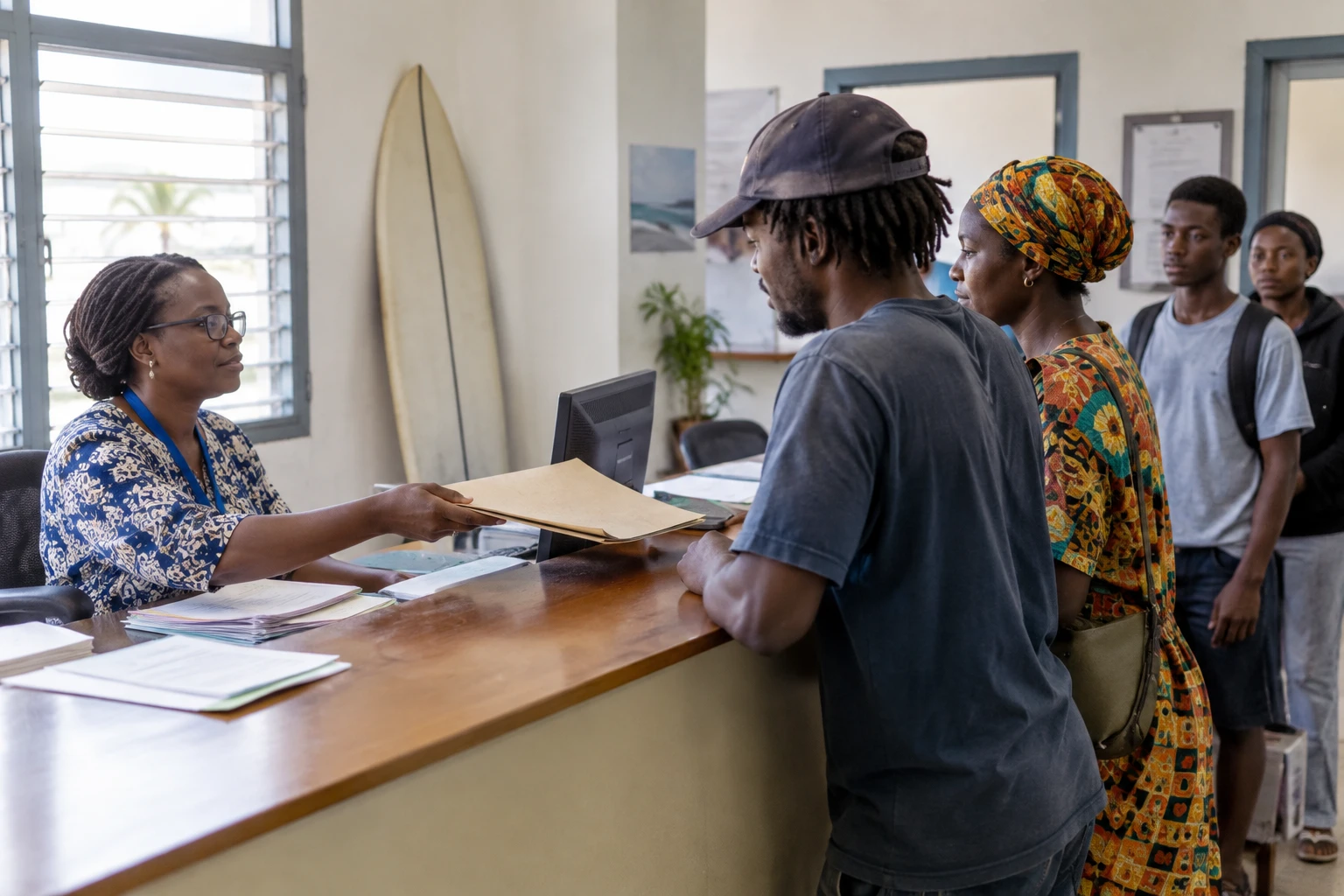
In Ngor, catching a wave sometimes starts on the sand, with a board that has to be shared. For children joining the free sessions run by Anda Surf, the challenge goes beyond learning a sport: it is also about overcoming barriers of cost, access and representation.
Learning to take off in Ngor
Every week, Ibra Samb and volunteers welcome girls and boys aged 7 to 14 to this beach on the outskirts of Dakar. The young surfers first practise the “pop-up”, the move that takes them quickly from lying down to standing. Then they head into the water.
Samb knows the obstacles at first hand. As a child, he watched surfers head for the waves, unable to afford the equipment he needed. With friends, he trained on pieces of plywood salvaged near the pirogues. Today, he combines paid lessons with free weekly sessions for children in his neighbourhood.
His 13-year-old niece, Katy Samb, is among the young people who dream of going further. She describes the ocean as a place of confidence and freedom. Her coach’s advice is also about focus and self-control: look in the direction you want to go, rather than at your board.
This local tradition is part of a Senegalese surf scene that has been taking shape for several years. Clubs, schools and professional surfers now coexist along the Dakar coast. The Senegalese Surfing Federation, established in 2017, is helping to organise the sport. Senegal has also emerged as a surfing hub in West Africa, within a continent-wide landscape where Morocco and South Africa have an established presence.
The cost of equipment is the main obstacle
The growth of clubs does not mean that access has become equal. Boards are expensive and in short supply. At Anda, young surfers sometimes have to wait their turn or share equipment. Wetsuits and suitable clothing add to the expense for families.
For those aiming to compete, costs mount up: training, travel, accommodation and visa procedures. These expenses make international events harder to access. The top-level circuits also remain largely dominated by athletes with substantial resources and support structures.
The problem is not limited to equipment. In Senegal, private schools and lessons for visitors can help sustain the sport, but they are no substitute for regular access for neighbourhood children or a sporting pathway to competitions. Free initiatives such as Samb’s open a door; on their own, they cannot fund the rest of the journey.
This issue also concerns representation. For a long time, people in Ngor saw surfing as a sport practised mainly by foreigners and wealthy people. The presence of Senegalese surfers, local instructors and young girls in the water is changing that image. In Dakar, initiatives such as Black Girls Surf have already helped raise the profile of female surfers and encourage families to support their daughters.
The Games bring visibility, not a podium
The timing is significant: Senegal is hosting the Youth Olympic Games from 31 October to 13 November 2026, the first edition of the competition to be held in Africa. Surfing is one of the ten engagement sports, dedicated to discovery and participation. It is not among the 25 sports contested for medals.
This distinction matters. Demonstrations and activities can draw attention to African surfers and the waves off Senegal’s coast. But they are not an Olympic event in which local athletes could win a medal. Media visibility therefore guarantees neither sustained funding, accessible equipment nor invitations to international competitions.
The organisers designed the Games programme to take greater account of the local context, with stronger representation for African countries. For surfing, the challenge now is to sustain this interest beyond the event: support clubs, train coaches and make it easier for athletes to take part in regional and global circuits.
From a first lesson to a lasting pathway
Across West Africa, the experience of Ngor raises a practical question: how can a coastal sport become an accessible pathway without being reserved for visitors or a minority of families? The answer also depends on partnerships between clubs, federations, local authorities and private-sector players. It requires linking discovery to training, and then to competition.
Water safety and quality also matter. Marine pollution, particularly discharges and plastic waste, threatens the health of people who use the beaches and the appeal of the sites. For surfers, fishers, residents and tourism businesses, protecting the coastline is therefore a shared interest, even if their activities and priorities do not always coincide.
For Katy and the other young pupils, a professional future remains uncertain. But the weekly session gives them a first place to practise and role models they can identify with. Ibra Samb’s dream is to see the young people he coaches qualify one day for the World Tour, the leading international circuit. The next measure of progress will not simply be the number of boards on the sand: it will be whether Senegalese talent, girls and boys alike, can continue to develop.