Algeria
 Egypt
 Libya
 Morocco
 Sudan
 Tunisia
 Benin
 Burkina Faso
 Cabo Verde
 Côte d'Ivoire
 Ghana
 Guinea
 Guinea-Bissau
 Liberia
 Mali
 Mauritania
 Niger
 Nigeria
 Senegal
 Sierra Leone
 The Gambia
 Togo
 Cameroon
 Central African Republic
 Chad
 DR Congo
 Equatorial Guinea
 Gabon
 Republic of the Congo
 São Tomé and Príncipe
 Burundi
 Comoros
 Djibouti
 Eritrea
 Ethiopia
 Madagascar
 Malawi
 Mauritius
 Mozambique
 Rwanda
 Seychelles
 Somalia
 South Sudan
 Tanzania
 Uganda
 Angola
 Botswana
 Eswatini
 Lesotho
 Namibia
 South Africa
 Zambia
 Zimbabwe
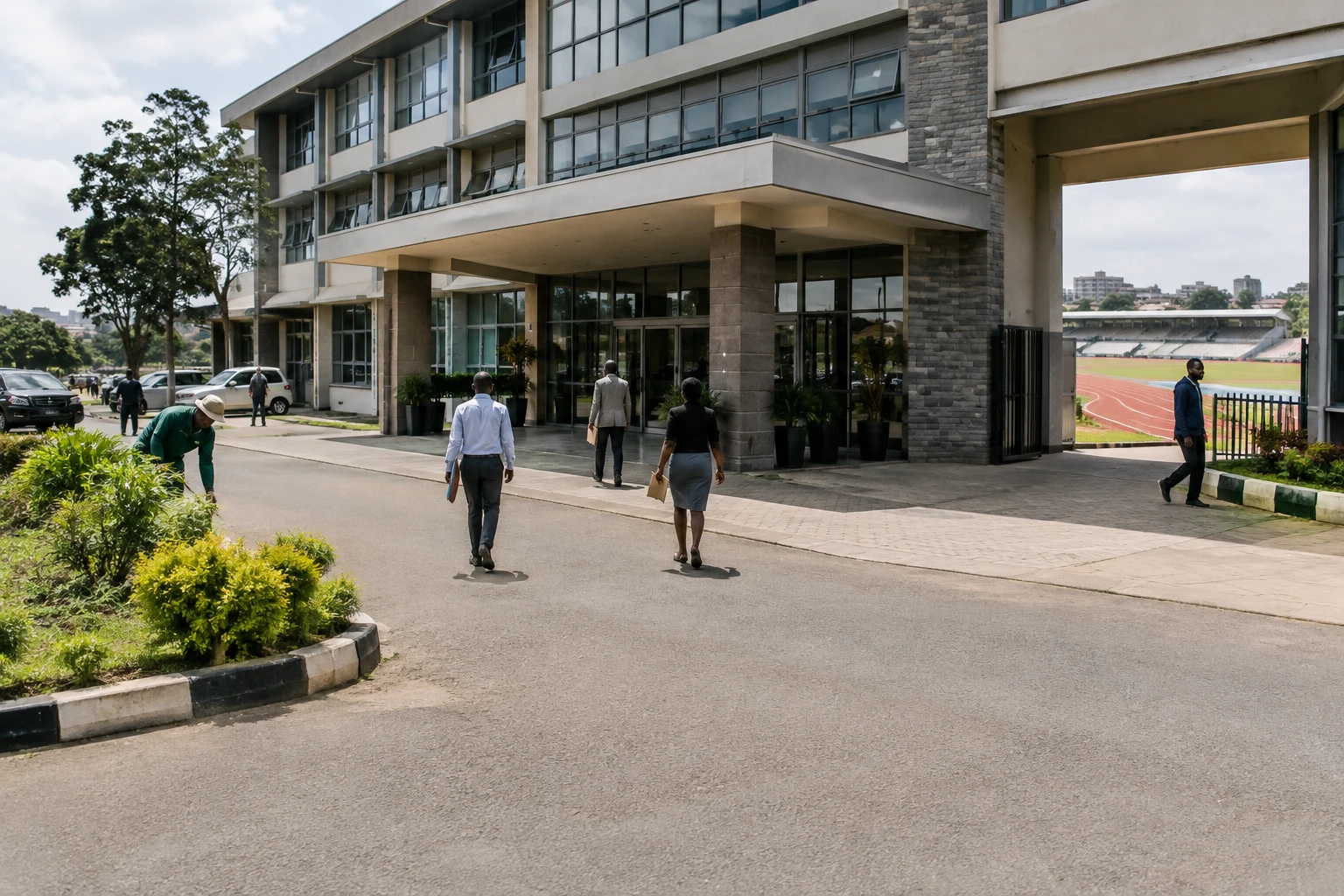
For Nairobi, hosting the World Athletics Championships in 2029 is about more than filling a stadium. Kenya will have to show that it can stage a demanding global event while turning the spotlight into lasting expertise and credible safeguards for sporting integrity.
A first World Championships for Africa, a regional challenge
On 15 September 2026, World Athletics awarded Nairobi the 2029 World Championships. It will be the first edition of the competition to be held on the African continent. Munich will host the 2031 edition. The decision puts Africa on the calendar of major athletics events, following editions in Asia and Europe. World Athletics confirms Nairobi as host for 2029.
The choice carries considerable symbolic weight. Kenya is an athletics powerhouse, particularly in distance running. Yet its sporting reputation alone is no guarantee of a flawless event. The authorities will have to coordinate construction, transport, accommodation for delegations, security and medical services. They will also need to meet the expectations of athletes and spectators, beyond the competition itself.
This undertaking is part of a broader East African programme. Kenya, Uganda and Tanzania are jointly preparing to host the 2027 Africa Cup of Nations football tournament. Cooperation between the three countries could support the sharing of experience and resources. It also brings a nearer deadline: investments and teams mobilised for football will have to contribute to preparing subsequent events, without blurring lines of responsibility. The Football Kenya Federation has presented regional coordination under the banner “Pamoja”, meaning “together” in Swahili. The Football Kenya Federation sets out regional preparations for the 2027 Africa Cup of Nations.
Facilities, but also expertise
Kasarani Stadium in Nairobi is expected to be a major venue for sporting events. Kenyan authorities have discussed renovation work as part of preparations for the 2027 Africa Cup of Nations. A modernised venue could leave a useful asset for national teams, clubs and local organisers. But a renovated stadium alone does not constitute a legacy.
World Athletics president Sebastian Coe has argued for a material and human legacy. During a visit to Kenya and a meeting with President William Ruto, he stressed that substantial work would still be required to organise the event. He described a complex competition spanning nine days and bringing together about 2,000 athletes across 46 disciplines. These figures and the schedule are those given by Coe as part of preparations for the event. World Athletics reports on talks between Coe and the Kenyan president.
For the experience to remain useful after 2029, the country will need to train people able to manage operations, facilities, accommodation, media and relations with federations. These skills could benefit national and regional competitions. They will remain in Kenya, however, only if local jobs, training and contracts have a genuine place in the arrangements, rather than the event relying exclusively on international contractors.
The benefits will also vary between groups. Nairobi businesses in transport, hospitality and catering could gain from the influx of visitors. Residents, meanwhile, will also judge the project by its costs, access to facilities and the impact of construction on travel. In regions where many athletes train, the question will be whether investment reaches beyond the capital and venues seen on television.
Sporting integrity, a key test of credibility
Anti-doping is another sensitive issue. Since 2017, more than 140 Kenyan athletes have been suspended by the Athletics Integrity Unit (AIU), the independent body responsible for investigating violations and enforcing anti-doping rules in the sport. The AFP and several press reports published in October 2026 cite this figure. It should be understood as a number of suspensions, not as a measure of the proportion of athletes affected or as evidence against the entire Kenyan delegation. The AFP examines the anti-doping issues surrounding the 2029 event.
Coe said the government had increased funding for anti-doping efforts and that signs of progress were emerging. That assessment does not settle the debate. In early October 2026, World Anti-Doping Agency president Witold Bańka called on Kenya to demonstrate that it could guarantee a clean competition. The Anti-Doping Agency of Kenya, for its part, reaffirmed its commitment to strengthening testing and prevention. These statements point to shared responsibility between national authorities, oversight bodies and sporting organisations, as well as the need to verify progress over time. Kenya’s national news agency reports on commitments announced by national officials.
A higher number of cases does not automatically mean doping is increasing: it may also reflect more testing and better detection. Conversely, statements of intent alone do not demonstrate that the system is effective. Credibility will depend on independent testing, follow-up investigations and fair procedures for athletes. Runners must not be conflated with networks or officials who may facilitate violations.
A responsibility that extends beyond Nairobi
Hosting the championships could strengthen East Africa’s place in world sport, provided the benefits are not limited to the capital’s image. For Kenya, the challenge is to turn a prestigious award into well-maintained infrastructure, local expertise and confidence in testing. For African athletics, the event will open a new stage, but it will also be seen as a test of the ability of continental and national institutions to run leading competitions.
The next steps are therefore practical: progress on work at Kasarani, funding and responsibilities for the organising committee, preparations for the 2027 Africa Cup of Nations with Uganda and Tanzania, and measurable results from anti-doping programmes. Nairobi’s success will not be decided only during the nine days of competition. It will be measured by what remains after the closing ceremony.