Algeria
 Egypt
 Libya
 Morocco
 Sudan
 Tunisia
 Benin
 Burkina Faso
 Cabo Verde
 Côte d'Ivoire
 Ghana
 Guinea
 Guinea-Bissau
 Liberia
 Mali
 Mauritania
 Niger
 Nigeria
 Senegal
 Sierra Leone
 The Gambia
 Togo
 Cameroon
 Central African Republic
 Chad
 DR Congo
 Equatorial Guinea
 Gabon
 Republic of the Congo
 São Tomé and Príncipe
 Burundi
 Comoros
 Djibouti
 Eritrea
 Ethiopia
 Madagascar
 Malawi
 Mauritius
 Mozambique
 Rwanda
 Seychelles
 Somalia
 South Sudan
 Tanzania
 Uganda
 Angola
 Botswana
 Eswatini
 Lesotho
 Namibia
 South Africa
 Zambia
 Zimbabwe
When African cities are no longer designed from elsewhere
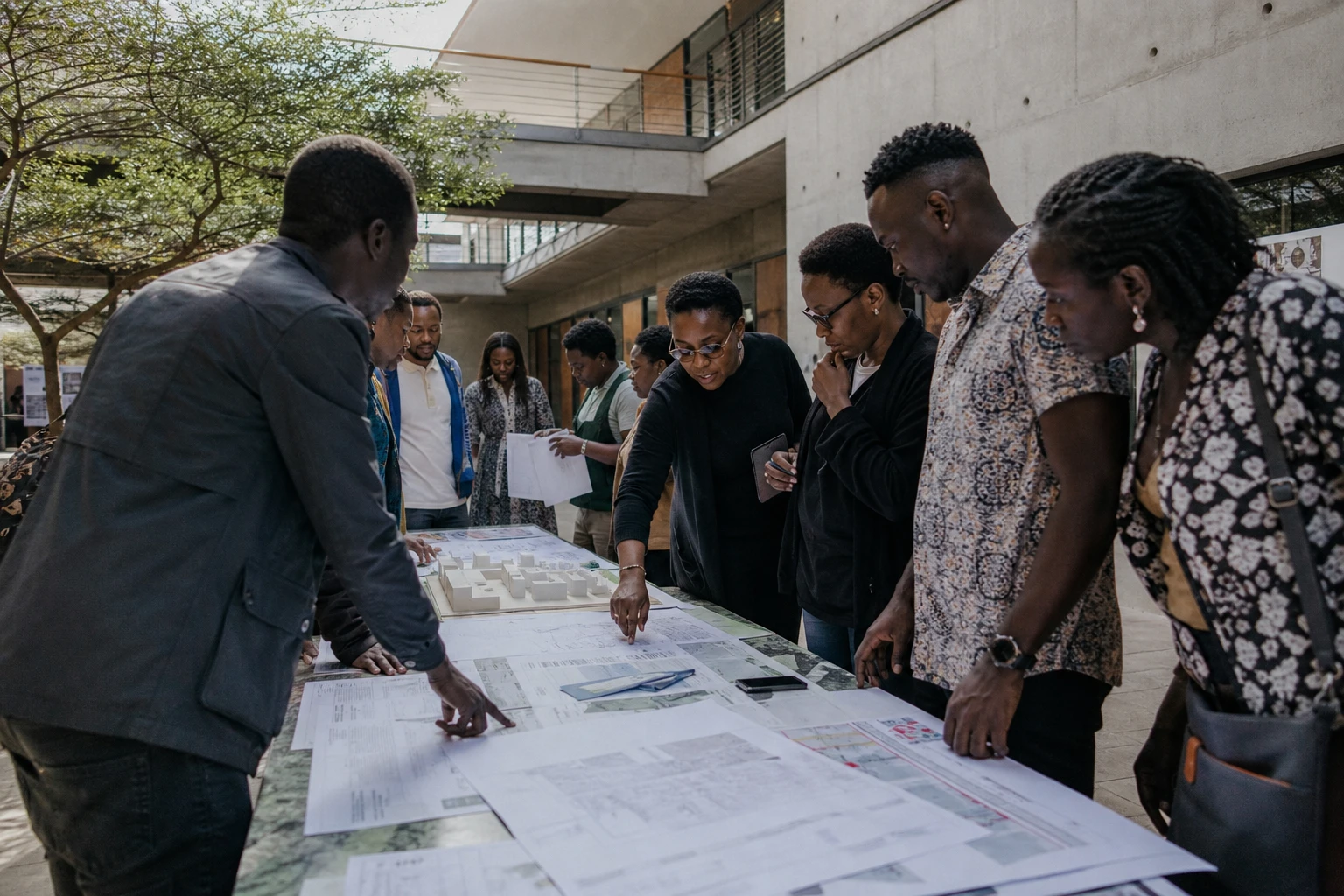
In Nairobi, one question runs through the workshops, models and debates: who decides what African cities look like, and how they are used? Behind architecture lies a very practical struggle. It concerns housing, mobility, water, energy and the place given to residents in rapidly growing cities. Since 7 September 2026, Kenya has been hosting the first Pan-African Architecture Biennale, conceived as a continental platform born in Africa and for Africa.
The event is being held in Nairobi, the Kenyan capital, already familiar with major gatherings on housing and urban transformation. In April 2026, the city hosted the second Africa Urban Forum, an African Union platform devoted to housing and sustainable urbanisation. This convergence is no coincidence. Nairobi has long served as a regional anchor for urban policy, with the presence of UN-Habitat’s headquarters and an ecosystem of urban planners, architects and public institutions focused on East Africa.
The biennale, organised with the Architectural Association of Kenya, presents itself as the first continental event dedicated to the built environment, architecture and spatial practices. Its theme, “Shifting the Center: From Fragility to Resilience”, calls for a change in perspective. The message is clear: Africa should no longer be merely studied, exported in images or treated as a testing ground for models from elsewhere. It should produce its own references, tools and urban narratives.
What Nairobi says about Kenyan and African cities
The issue is particularly pertinent in Kenya. The country remains marked by rapid but uneven urbanisation. The country’s housing programme, prepared with UN-Habitat, notes that 31.2% of the population lived in urban areas in 2019 and that, at this rate, nearly one in two Kenyans could be living in a city by 2050. The same document also points out that Nairobi accounts for a major share of national urban activity, while secondary cities are still struggling to absorb growth.
This pressure is visible in informal settlements, daily commutes and demand for affordable housing. Local and international institutions describe a city where infrastructure is struggling to keep pace with demographic growth. The challenge is therefore not merely aesthetic. It is social and economic. A poorly planned city lengthens journeys, drives up land prices, strains water and sanitation networks, and pushes lower-income households further away from jobs. Conversely, a well-designed city can support productivity, public health and social cohesion.
It is precisely this link between architecture and governance that the organisers want to bring back to the fore. The programme announced in Nairobi spans five days of debates, workshops and presentations on resilience, ecologies of repair, living archives and the memory of building knowledge. In short, the question is not simply how to build more. It is also how to build better, using materials, methods and forms suited to African contexts.
Urban sovereignty as much as design
The political significance of this biennale is considerable. In Africa, the city has become a field of sovereignty. It concentrates investment, jobs, land tensions and climate-related choices. When the African Union convenes discussions in Nairobi on adequate housing and resilient cities, it is also talking about Agenda 2063, the continent’s long-term development framework. The biennale is part of the same movement: making urbanisation a lever for regional integration, rather than merely a symptom of crisis.
For Kenya, the stakes extend beyond the capital. Urban policies are now also being shaped in Mombasa, Kisumu, Nakuru and county headquarters, where devolution has given local authorities more weight. In this context, architecture is no longer the preserve of housing estates or landmark buildings. It touches the street, the school, the bus station, the market and social housing. That is where a city’s quality is measured.
The biennale’s presence in Nairobi also resonates across the continent. It confirms that East Africa wants to help shape African urban standards, alongside other active hubs in Southern Africa, West Africa and the Congo River region. Above all, it is a reminder that, as the continent’s cities absorb the world’s fastest population growth, there can be no single model for the response. The task is continental, but the solutions will be local, technical and political at the same time. What follows will depend on professional partnerships, land policies and public decisions that this first edition will have helped bring into view.