Algeria
 Egypt
 Libya
 Morocco
 Sudan
 Tunisia
 Benin
 Burkina Faso
 Cabo Verde
 Côte d'Ivoire
 Ghana
 Guinea
 Guinea-Bissau
 Liberia
 Mali
 Mauritania
 Niger
 Nigeria
 Senegal
 Sierra Leone
 The Gambia
 Togo
 Cameroon
 Central African Republic
 Chad
 DR Congo
 Equatorial Guinea
 Gabon
 Republic of the Congo
 São Tomé and Príncipe
 Burundi
 Comoros
 Djibouti
 Eritrea
 Ethiopia
 Kenya
 Madagascar
 Malawi
 Mauritius
 Mozambique
 Rwanda
 Seychelles
 Somalia
 South Sudan
 Tanzania
 Uganda
 Angola
 Botswana
 Eswatini
 Lesotho
 Namibia
 Zambia
 Zimbabwe
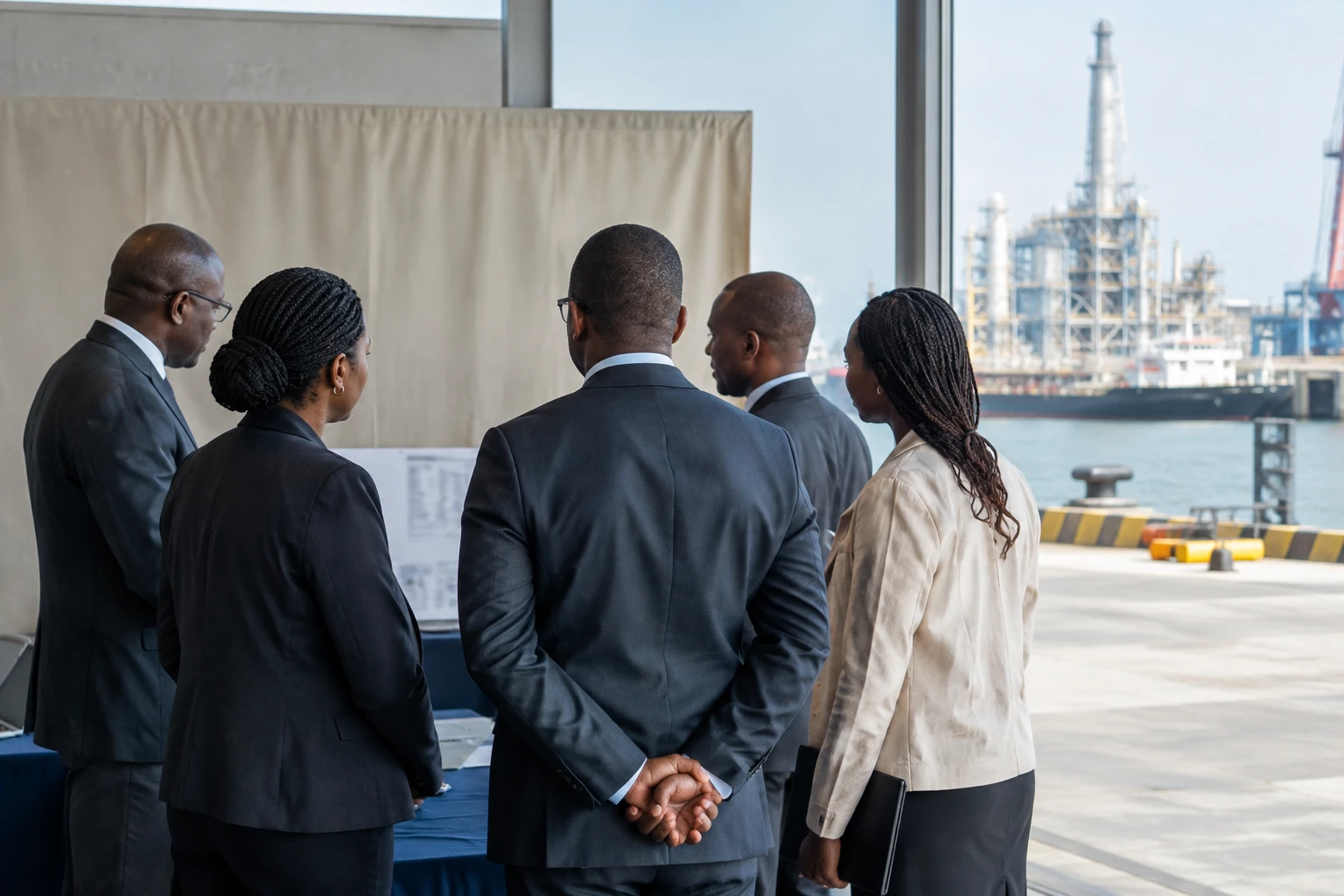
For Mozambique, the stakes in gas are measured not only by cargoes bound for distant markets. They also lie in the pipelines capable of supplying nearby factories and, eventually, the needs of the domestic market.
In Maputo, state-owned company Empresa Nacional de Hidrocarbonetos (ENH) is seeking partners to connect two coastal hubs to the gas corridor to South Africa. The project has a long-term aim: to better link Mozambican resources with consumers in the region, as existing supplies need to evolve.
A new link between Beira, Inhassoro and Secunda
Estimated to cost about $250 million, the proposed infrastructure would include floating storage and regasification units in Beira and Inhassoro. Regasification turns natural gas transported at low temperatures in liquefied form into gas that can be used in a network. A pipeline of about 140 kilometres would connect these facilities to the ROMPCO network.
The network already carries Mozambican gas to the Secunda industrial complex in South Africa. ENH’s proposal is therefore part of an existing corridor, rather than an entirely new export system. The company is in discussions with potential investors, including Sasol and ROMPCO, but their participation has not been confirmed.
On 19 October, ENH chief executive Rudencio Morais said the company wanted the facilities to be operational in 2030 or 2031. He linked this timetable to the Mozambique LNG, Rovuma LNG and Coral North projects. Sasol said it was too early to specify the nature or scale of any potential investment. ROMPCO had not commented on the discussions at the time the information was published.
Regional dependence to be reshaped
For several years, gas extracted from the Pande and Temane onshore fields in Mozambique has contributed to supplies for South African industry. The resources are exploited by Sasol, and their reserves are expected to decline in the coming years. Pretoria is therefore seeking to prepare alternative sources, while Mozambicans want to increase the value derived from their resources and infrastructure.
The project comes amid a regional context in which access to reliable energy remains a challenge for industries and electricity networks. It also aligns with South African efforts to diversify supplies: in May 2026, port authority Transnet signed a 25-year agreement with Ukwanda LNG to develop a regasification terminal at the Port of Ngqura. This separate project shows that the two countries are preparing new supply routes, without prejudging how they may coordinate in future.
At the institutional level, Mozambique and South Africa are members of the Southern African Development Community (SADC), a regional organisation that promotes economic co-operation. Energy exchanges between the two countries are part of this interdependence: Mozambique supplies gas, while South African industrial demand can support investment in cross-border infrastructure.
Between export markets and Mozambique’s needs
The prospect of a regional link also raises the question of how gas will be allocated. The major projects in the Rovuma Basin in the north of the country are largely geared towards exporting liquefied natural gas (LNG). Oil legislation that came into force in June 2026 stipulates that at least 25% of oil and gas production, including LNG, must be reserved for the domestic market.
This rule alone does not guarantee that gas will reach households, local businesses or power stations. Distribution networks, supply contracts and infrastructure capable of serving the regions concerned are also needed. The benefits may therefore differ between stakeholders: South African industries are seeking continuity of supply, while Mozambican businesses and consumers expect tangible gains for their own economy.
ENH is part of a group of state-owned companies granted an exclusive 30-year concession in 2025 to develop and operate gas infrastructure in Mozambique. This responsibility gives the state a central role in choosing partners and deciding how the gas is used. It also makes financing, network access terms and guarantees of domestic supply decisive factors.
A timetable still conditional
For now, the investment remains at the discussion stage. The announced cost, proposed route and 2030 or 2031 target describe a project yet to be built, not a final financing decision. The next steps will depend on agreement among partners, technical studies and the installation of the planned facilities.
The project’s significance extends beyond Mozambique’s borders: it could help link national resources to demand in southern Africa. But its value will also be judged by its ability to support uses in Mozambique. This balance between exports, regional integration and local supply will determine whether the corridor becomes a shared economic lever or primarily a transit route to neighbouring markets.