Algeria
 Egypt
 Libya
 Morocco
 Sudan
 Tunisia
 Benin
 Burkina Faso
 Cabo Verde
 Côte d'Ivoire
 Ghana
 Guinea
 Guinea-Bissau
 Liberia
 Mali
 Mauritania
 Niger
 Nigeria
 Senegal
 Sierra Leone
 The Gambia
 Togo
 Cameroon
 Central African Republic
 Chad
 DR Congo
 Equatorial Guinea
 Gabon
 Republic of the Congo
 São Tomé and Príncipe
 Burundi
 Comoros
 Djibouti
 Eritrea
 Ethiopia
 Kenya
 Madagascar
 Malawi
 Mauritius
 Rwanda
 Seychelles
 Somalia
 South Sudan
 Tanzania
 Uganda
 Angola
 Botswana
 Eswatini
 Lesotho
 Namibia
 South Africa
 Zambia
 Zimbabwe
In Maputo, climate issues are no longer confined to emergency management. Mozambique is now seeking to bring prevention, adaptation and the energy transition together in a single national roadmap running to 2035.
A strategy designed to move from emergency response to anticipation
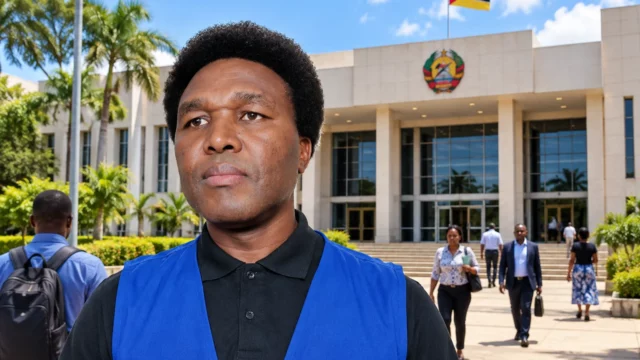
A five-day technical workshop opened on 14 September in Ponta do Ouro, in Maputo Province. It was intended to enable the pre-validation of the updated version of the National Strategy for Adaptation and Mitigation of Climate Change, known by the acronym ENAMMC.
The document is not yet the country’s definitive policy. It must first pass through the necessary institutional stages. But its framework has already been set out: objectives, indicators, administrative responsibilities, funding mechanisms and a national monitoring system.
The meeting brought together representatives of public institutions, provincial authorities and districts. The private sector, civil society organisations, universities and development partners also took part in the discussions. This diversity is intended to test the strategy beyond ministries and the capital.
Participants reviewed the results of the previous strategy. They also examined a draft action plan, a resource mobilisation strategy and a communications mechanism. The aim was to reach technical agreement on priorities and the conditions for their implementation.
Mozambique faces multiple risks
The country must contend with a combination of threats. Cyclones regularly hit its long coastline. Flooding affects river basins and urban areas. In the centre and south, droughts are putting pressure on rain-fed agriculture and water resources.
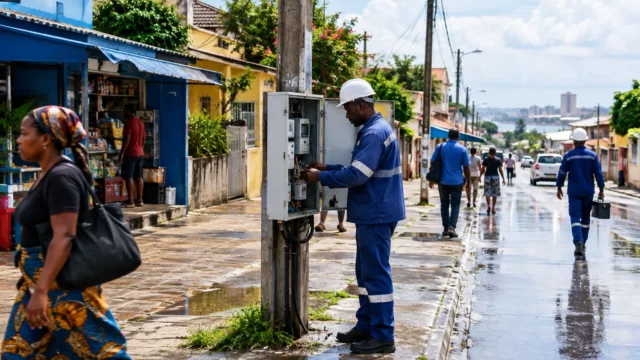
Coastal erosion and rising sea levels are adding further pressure on cities, port infrastructure and communities living near the coast. These risks do not have the same effects everywhere. Rural provinces depend more heavily on crops and livestock. Cities, meanwhile, concentrate electricity networks, roads, housing and economic activity exposed to flooding.
Cyclones Idai and Kenneth, in 2019, highlighted the scale of the potential damage. The assessment carried out after Idai put the damage at about $1.4 billion and reconstruction needs in several provinces at several billion dollars. These figures measure direct losses. They do not fully reflect lost income, population displacement and disruption to public services.
The situation remains fluid. A recent analysis by the United Nations Office for Disaster Risk Reduction forecasts a worsening drought risk in central and southern Mozambique in the second half of 2026, due to the expected El Niño phenomenon. Cyclones and localised flooding remain possible during the rainy season, however.
In this context, adaptation means first reducing damage before disaster strikes. This involves early warning systems, better urban planning, more resilient buildings, ecosystem protection and more reliable access to water. It also requires weather information to reach districts and farms, not just central government agencies.
Priorities that directly affect households
The updated strategy aims to put vulnerable communities at the centre of public action. This focus covers food security, access to water, housing, infrastructure and the protection of livelihoods.
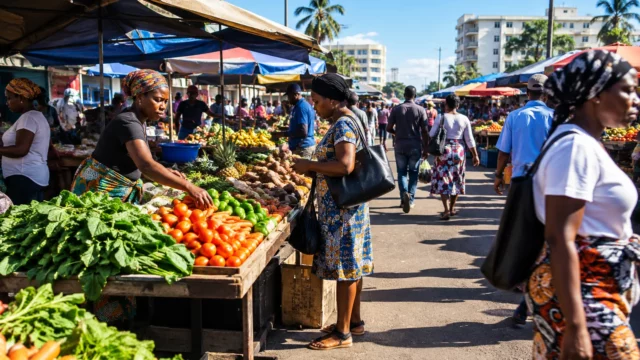
For small-scale producers, the stakes are tangible. Short-cycle seeds, drought-resistant varieties, small-scale irrigation infrastructure and better soil management can reduce losses after a climate shock. The FAO is already supporting such initiatives in Mozambique, particularly in conservation agriculture and water harvesting.
Women and children can face specific effects. When harvests decline or water sources become more distant, domestic workloads often increase. Children are at greater risk of interrupted schooling, waterborne diseases and displacement. An effective climate policy must therefore incorporate social protection, health, education and gender equality.
Mitigation is the other strand of the strategy. It seeks to limit emissions without holding back Mozambique’s development. The sectors identified include clean energy, energy efficiency, sustainable transport, climate-smart agriculture and sustainable forest management.
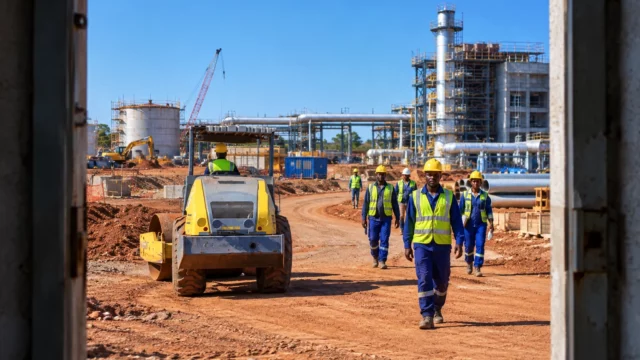
The challenge will be to reconcile these goals with the country’s economic needs. Mozambique wants to expand access to electricity, develop its infrastructure and diversify its economy. The question will therefore not only be how to reduce emissions. It will also be necessary to ensure new investments do not create infrastructure that cannot be protected against climate hazards.
Funding and implementation will be decisive
The African Development Bank is supporting the preparation of the strategy through the African NDC Hub and the Africa Climate Change Fund. The funding forms part of a broader commitment in Mozambique, particularly in agriculture, transport, energy, water, sanitation and disaster preparedness.
The African Development Bank’s 2023-2028 country strategy paper already emphasises infrastructure and the transformation of agricultural value chains. The new ENAMMC will therefore need to be consistent with national development policies and ongoing investments.
Implementation remains the critical issue. A strategy can set precise objectives without producing results if responsibilities overlap, budgets arrive late or districts lack the necessary resources. The African Development Bank emphasised this risk during the workshop: adoption of the document must not be seen as the culmination of the process, but as the start of its implementation.
Climate finance will also be under scrutiny. The authorities will need to identify priority projects, measure results and demonstrate how resources are used. For communities, success will be measured less by the number of meetings held than by the speed of warnings, the resilience of roads, the availability of water and the ability to resume economic activity after a disaster.
Implications beyond Mozambique’s borders
Mozambique is a member of the Southern African Development Community, or SADC, which brings together countries facing shared risks: droughts, floods, cyclones and changing rainfall patterns. The regional organisation has a climate cooperation framework and a disaster risk management plan for 2022-2030.
Consistency between Mozambique’s future strategy and SADC mechanisms will be important. Rivers cross borders. Agricultural markets depend on the same seasons. Cyclones sometimes affect several countries. Early warning systems, weather data and response mechanisms would therefore benefit from regional coordination.
The next question will be when the strategy is officially approved and how its indicators will be incorporated into public budgets. It will also be important to track the role given to provinces, districts, producers and local businesses. For Mozambique, the 2035 horizon will be credible only if national planning is quickly translated into action in the most exposed areas.