Algeria
 Egypt
 Libya
 Morocco
 Sudan
 Tunisia
 Benin
 Burkina Faso
 Cabo Verde
 Côte d'Ivoire
 Ghana
 Guinea
 Guinea-Bissau
 Liberia
 Mali
 Mauritania
 Niger
 Nigeria
 Senegal
 Sierra Leone
 The Gambia
 Togo
 Cameroon
 Central African Republic
 Chad
 DR Congo
 Equatorial Guinea
 Gabon
 Republic of the Congo
 São Tomé and Príncipe
 Burundi
 Comoros
 Djibouti
 Eritrea
 Kenya
 Madagascar
 Malawi
 Mauritius
 Mozambique
 Rwanda
 Seychelles
 Somalia
 South Sudan
 Tanzania
 Uganda
 Angola
 Botswana
 Eswatini
 Lesotho
 Namibia
 South Africa
 Zambia
 Zimbabwe
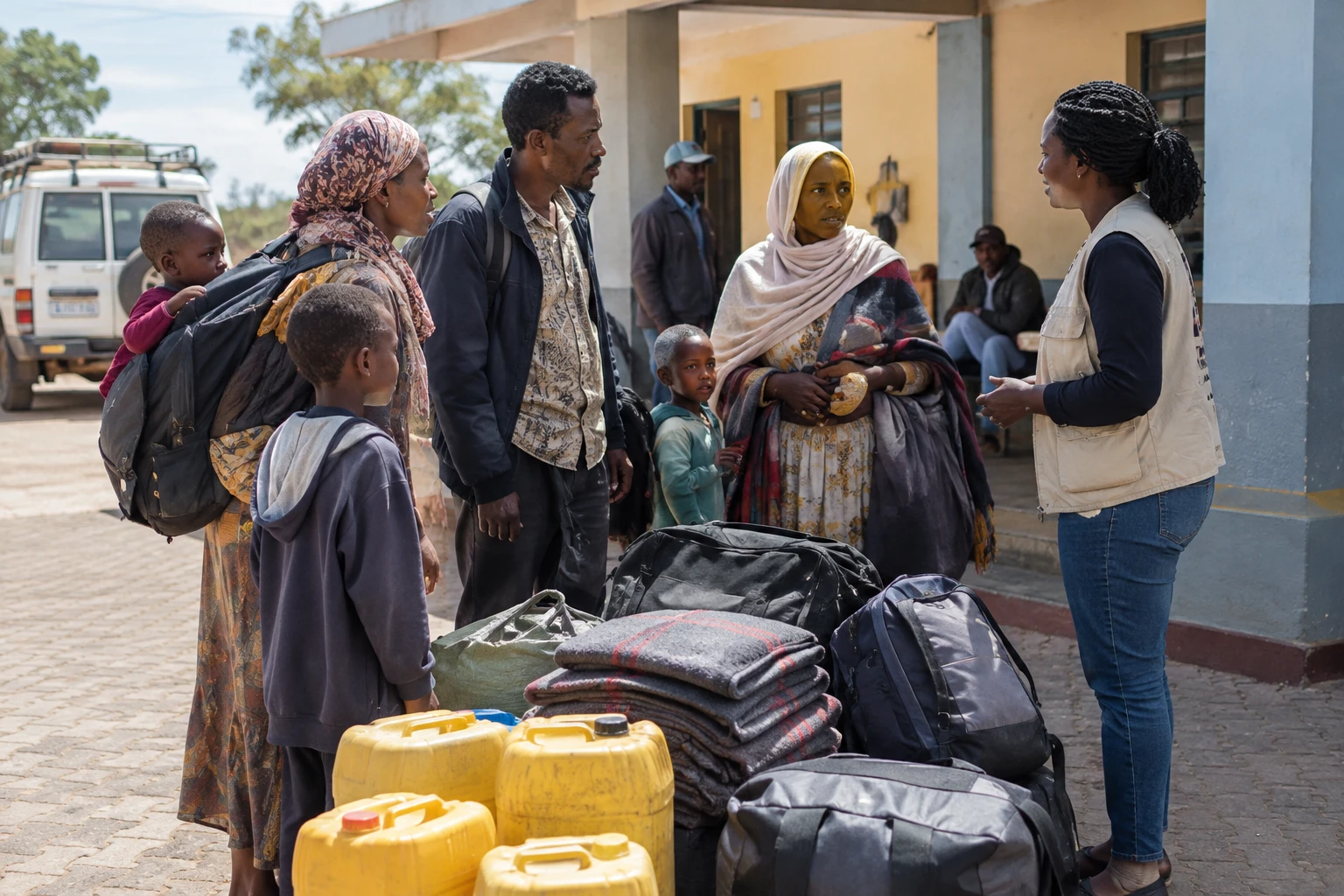
In Moyale, a dispute over an administrative boundary can quickly upend the lives of families on both sides of the line between Ethiopia and Kenya. Since 21 October, clashes in southern Ethiopia have driven residents to seek refuge in Kenya’s Marsabit County, while humanitarian needs are growing.
An internal border that remains disputed
Moyale is a border town shared by Ethiopia and Kenya. On the Ethiopian side, its administration is linked to the Oromia and Somali regions, two federal entities whose boundaries remain contested in some areas. The town is also in a zone where family ties, trade and pastoral movements cross administrative borders.
The dispute did not begin this week. The demarcation between Oromia and the Somali region has previously fuelled tensions and displacement. A study of administrative border conflicts in Ethiopia notes that disagreements over the boundary have not been fully resolved, despite earlier attempts to settle them. These local issues are part of a federal system in which regions have their own authorities and institutions.
Moyale is also an important crossing point between Ethiopia and Kenya. The town’s security therefore concerns residents, traders and authorities in both countries. Regionally, it also affects trade in the Horn of Africa and relations between neighbours within the Intergovernmental Authority on Development (IGAD), a regional organisation that includes Ethiopia and Kenya.
Clashes and tolls that remain uncertain
Security forces from the Oromia and Somali regions clashed, according to accounts gathered locally. A dispute over the Somali region’s flag, raised in an area administered by Oromia, is said to have contributed to the escalation. The African news agency APA also reported the killing of a 13-year-old girl on 18 October, after which tensions are said to have worsened.
The human toll remains difficult to establish. On 24 October, AFP reported that conflict-monitoring organisation ACLED had recorded at least five further deaths after the girl’s killing. AFP said, however, that it had been unable to verify the toll independently. Ethiopia’s federal authorities had not yet publicly commented at the time of publication. Figures attributed to sources must therefore be distinguished from independently confirmed facts.
Available accounts describe a situation extending beyond Moyale town centre. APA mentioned violence reported in several localities in the Borana Zone of Oromia, as well as destruction and looting reported by residents. Some of this information is based on local accounts. It is not, on its own, enough to provide a comprehensive toll of the damage or the people affected.
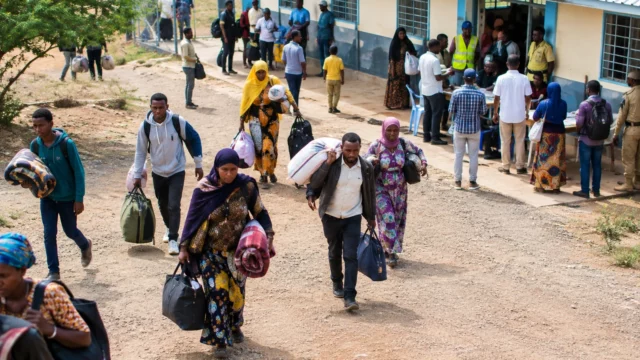
Figures for departures to Kenya vary widely. On 22 October, Kenyan police reported hundreds of arrivals through several crossing points in Moyale. The following day, the Kenya Red Cross announced an initial response targeting 1,000 households, without establishing the total number of displaced people. On 24 October, AFP reported an estimate of at least 10,000 people who had crossed the border, attributed to a Red Cross official cited by Kenyan television. In the absence of a consolidated independent count, these figures should not be presented as a definitive toll.
In Kenya, local communities are also providing shelter
In Marsabit County, some families who arrived on the Kenyan side have found shelter with relatives or local residents. Others are receiving support in temporary shelters set up with help from the Kenya Red Cross and the authorities. Reported needs include clean water, food, tents, blankets, medical care and sanitation facilities.
The humanitarian response is focused particularly on children, pregnant or breastfeeding women, older people and people with disabilities. The Red Cross has announced initial assistance for 1,000 households and says the scale of needs still has to be assessed. This initial programme therefore does not measure the total number of arrivals; it reflects the response capacity announced so far.
The consequences are not confined to those who have crossed the border. Residents who remain in affected areas may lose their homes and possessions or access to markets. Local trade may also be disrupted when gunfire and displacement make some routes less safe. Host families, in turn, are sharing already limited resources with new arrivals.
A local issue with regional repercussions
The Moyale crisis comes as Ethiopia faces other areas of tension, particularly in the north of the country and in Oromia. This national context does not mean the current clashes can be reduced to a single conflict: causes, actors and dynamics differ from one region to another. It does, however, show how local tensions can overlap with broader political and security issues.
For Addis Ababa, the immediate challenge is to contain the clashes and protect civilians while clarifying administrative responsibilities on the ground. For the Kenyan authorities, it is a matter of organising the reception of arrivals without overburdening local services and the resources of Marsabit communities. A lasting de-escalation will also depend on dialogue between regional authorities, federal officials and the populations concerned.
The developments to watch are the number of arrivals in Kenya, verification of the human toll and the resumption of trade in Moyale. Cooperation between Ethiopia and Kenya will be crucial to meeting needs on both sides of the border. In the longer term, implementing a locally accepted agreement on administrative boundaries remains central to preventing symbols or administrative decisions from reigniting tensions.
For available information, see the reports on the clashes in Moyale, the update on arrivals in Kenya and the information on the toll attributed to ACLED.