Algeria
 Egypt
 Libya
 Morocco
 Sudan
 Tunisia
 Benin
 Burkina Faso
 Cabo Verde
 Côte d'Ivoire
 Ghana
 Guinea
 Guinea-Bissau
 Liberia
 Mauritania
 Niger
 Nigeria
 Senegal
 Sierra Leone
 The Gambia
 Togo
 Cameroon
 Central African Republic
 Chad
 DR Congo
 Equatorial Guinea
 Gabon
 Republic of the Congo
 São Tomé and Príncipe
 Burundi
 Comoros
 Djibouti
 Eritrea
 Ethiopia
 Kenya
 Madagascar
 Malawi
 Mauritius
 Mozambique
 Rwanda
 Seychelles
 Somalia
 South Sudan
 Tanzania
 Uganda
 Angola
 Botswana
 Eswatini
 Lesotho
 Namibia
 South Africa
 Zambia
 Zimbabwe
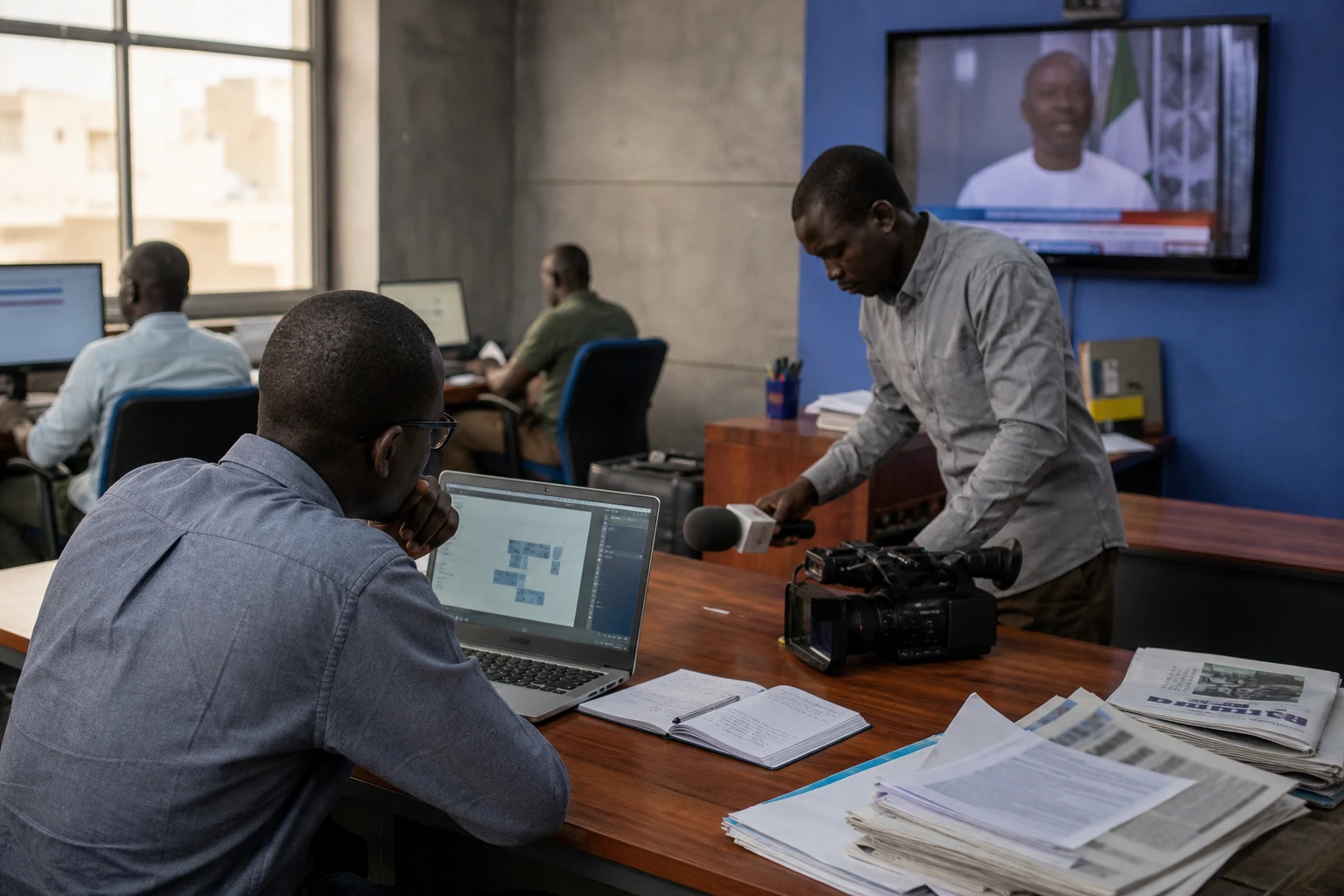
A release that says something about the moment in Mali
In Bamako, the release from prison of a political figure does not simply close a legal case. It also puts a broader question back on the table: how can national unity be discussed in a country where political space has narrowed considerably, critical voices have been weakened and the transition remains marked by distrust?
In this context, the release of former Malian Prime Minister Moussa Mara on Saturday 1 August 2026 was closely followed in the capital. Several relatives, activists and political figures went to his home in Bamako to welcome him back to his family. That same day, he had completed a one-year prison sentence linked to a case that began with a message of support for political prisoners.
An already sharply restricted political landscape
Mali remains under the leadership of the transition authorities that emerged from the coups of 2020 and 2021. Since then, political life has been constrained by a series of decisions that have reshaped the public sphere. In May 2025, political parties and organisations of a political nature were dissolved, further reducing the scope for organised dissent.
This sequence of events is not confined to domestic affairs. The country left ECOWAS, alongside Burkina Faso and Niger, on 29 January 2025, a departure that has upended West African balances. At the same time, Bamako is now part of the Confederation of Sahel States, or AES, with its two Sahelian partners. This regional realignment is changing interlocutors, rules on movement and the diplomatic balance of power around Mali.
What is known about the Moussa Mara case
Moussa Mara, a former head of government and Malian political figure, was arrested on 1 August 2025 after expressing support on social media for people detained for their opinions. Cross-checked reports indicate that he was subsequently prosecuted before Bamako’s specialised cybercrime court and sentenced to one year in prison, along with a fine of 500,000 CFA francs, in the initial proceedings, a sentence upheld on appeal.
His release came after he had served the sentence. The timeline cited by several independent sources converges on one simple point: he had been detained since 1 August 2025 and was released a year later, following a conviction linked to an expression of political solidarity deemed punishable by the authorities.
In a video published after his release, the former prime minister called for greater humanity, empathy and reconciliation, while stressing that truth was the lasting foundation of national unity. He also offered words of forgiveness. These points have featured prominently in accounts of his release, but the video itself remains the main record of his remarks.
A call for unity in a country under strain
Moussa Mara’s message carries particular weight because it comes after a year marked by political hardening. In Mali, public debate now takes place not only in political parties or on the streets, but also in courts, through administrative restrictions and in the regulation of online expression. Political actors have less room to manoeuvre. For citizens, caution has become instinctive.
The former prime minister’s case thus illustrates a central tension: the authorities want to project the image of a state in control of the political landscape, while opponents and defenders of freedoms see a narrowing of democratic space. The consequences are not abstract. They affect parties, associations, journalists and, more broadly, Malians who were still trying to sustain an already fragile pluralism.
The reference to lawyer Mountaga Tall, whose disappearance was reported last spring and mentioned in several accounts of the case, also points to another sensitive issue: the safety of political activists and the circulation of information about missing people. On this point, the available information has not been sufficiently corroborated to conclude anything beyond the fact that his absence was publicly reported.
A Malian case that goes beyond Mara alone
This sequence of events goes beyond one man’s journey. It encapsulates another stage in Mali’s transformation since the start of the transition: the concentration of power, the reshaping of regional alliances and tighter control of the political sphere. For Bamako, the challenge is twofold: to preserve internal cohesion without permanently stifling channels for dialogue; and to exert influence in the new Sahelian architecture without losing sight of the expectations of the urban population, people in the country’s interior and the diaspora.
At the West African level, the case also serves as a reminder that leaving ECOWAS has not erased interdependencies. Trade, mobility, families and economies remain connected. The situation in Mali therefore continues to resonate regionally, particularly as the AES seeks to establish itself as a political and security framework, and eventually an economic one.
The next point to watch is not only judicial. It is political. It concerns the scope still available to opposition groups, the evolution of restrictions imposed on parties, and the ability of the transition authorities to offer a credible future beyond security control. In a Mali already entering a new regional configuration, every gesture towards a political figure takes on significance that extends far beyond that person’s own fate.