Algeria
 Egypt
 Libya
 Morocco
 Sudan
 Tunisia
 Benin
 Burkina Faso
 Cabo Verde
 Côte d'Ivoire
 Ghana
 Guinea
 Guinea-Bissau
 Liberia
 Mali
 Mauritania
 Niger
 Nigeria
 Senegal
 Sierra Leone
 The Gambia
 Togo
 Central African Republic
 Chad
 DR Congo
 Equatorial Guinea
 Gabon
 Republic of the Congo
 São Tomé and Príncipe
 Burundi
 Comoros
 Djibouti
 Eritrea
 Ethiopia
 Kenya
 Madagascar
 Malawi
 Mauritius
 Mozambique
 Rwanda
 Seychelles
 Somalia
 South Sudan
 Tanzania
 Uganda
 Angola
 Botswana
 Eswatini
 Lesotho
 Namibia
 South Africa
 Zambia
 Zimbabwe
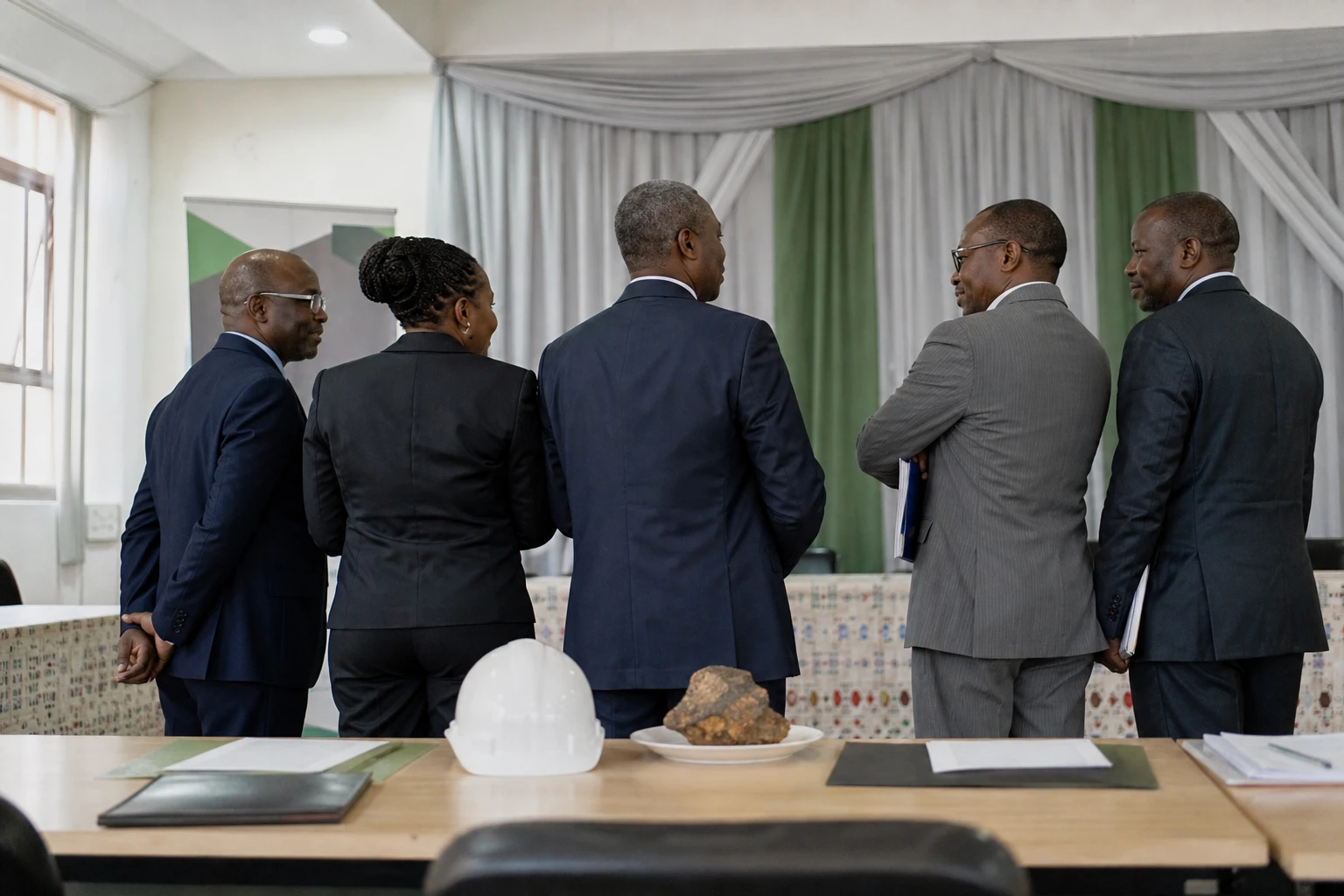
Cameroon was expected to soon join the ranks of bauxite producers. But at Minim-Martap, in the Adamawa region, the ore remains underground. The project now faces two linked obstacles: funding for construction and a standoff involving its Australian operator, Canyon Resources.
A strategic mining project for Cameroon
Minim-Martap is being developed in Cameroon by Camalco, a subsidiary of Canyon Resources. The deposit is one of the country’s leading mining projects. Bringing it into production is intended to diversify an economy still heavily dependent on hydrocarbons, agriculture and exports of minimally processed raw materials.
The project is in Adamawa, an inland region far from major ports. Its development therefore depends as much on extraction as on the ability to transport the ore to the coast. Building the mining road and acquiring rail wagons are consequently central to the business model.
At regional level, the project is also of interest to the Economic and Monetary Community of Central Africa, CEMAC. The organisation brings together Cameroon, Gabon, Equatorial Guinea, the Central African Republic, Congo and Chad, among others. For Cameroon, a structured bauxite industry would boost export revenues and trade with its neighbours.
A2MP’s takeover bid expires without sufficient support
On 23 September 2026, Canyon Resources confirmed that the takeover bid launched by A2MP Investments had failed. The offer, which expired on 21 September at 7pm Sydney time, did not reach the 75% shareholding threshold required for it to proceed.
A2MP, already Canyon’s majority shareholder, offered A$0.05 per share to acquire the stock it did not yet hold. The group was seeking full control of the company behind the Minim-Martap project.
Acceptances received under the offer are now considered null and void. The shareholders concerned are therefore free to deal with their shares again. A2MP nevertheless remains Canyon’s majority shareholder. The offer’s failure does not mean it is withdrawing from the Cameroonian project.
The proposed price had drawn strong criticism. In its independent assessment, BDO Corporate Finance Australia put its preferred value at A$0.32 per share. The firm considered A2MP’s offer “neither fair nor reasonable” to minority shareholders.
The difference in valuation points to a fundamental disagreement. A2MP believes that the value assigned to some of Minim-Martap’s resources is based on volumes that would not be mined soon. Canyon’s independent committee, by contrast, argues that the project has long-term potential and recommends rejecting the offer.
Funding remains the main point of tension
The project has an CFAF82 billion syndicated credit facility, equivalent to about $140 million. AFG Bank Cameroon is its lead arranger. The facility is intended to fund some of the infrastructure needed to launch the mine and export the ore.
The bank has suspended further disbursements. It is seeking a review of the timetable, financial model and several technical parameters. A site visit by lenders is also among the conditions being considered before funding might resume.
As at 31 July 2026, about $75 million had already been drawn under the facility. The sums disbursed are not being challenged. However, the freeze on further disbursements limits Camalco’s ability to continue work at the pace originally planned.
The situation is particularly delicate because A2MP is involved at several levels. The group is Canyon’s majority shareholder. It is also the bidder seeking to acquire the remaining shares and one of the guarantors of the bank financing. This overlap of roles led Australia’s Takeovers Panel, the body responsible for disputes relating to takeover bids, to regulate communications between A2MP and AFG Bank.
This procedural decision does not release the loan. It changes neither its amount, interest rate, term nor associated guarantees. Its main aim is to prevent financial discussions between the different parties from creating an imbalance in the share-market contest.
Lower projected volumes and an uncertain timetable
Canyon has withdrawn its target of a first shipment in the fourth quarter of 2026. The initial schedule envisaged production of 1.2 million tonnes. Projections for 2027 now put the initial volume at 0.4 million tonnes.
This reduction is more than a simple industrial adjustment. It reflects the difficulties of raising the necessary capital, securing transport and confirming selling-price assumptions. It also reduces expected revenue at start-up, while infrastructure must be funded before the first exports.
The independent firm assessing Canyon also estimates that the project needs more than $300 million in funding under its base-case scenario. This exceeds the existing bank facility alone. Canyon must therefore identify new sources of funding or further scale back its initial operations.
Work on site has not stopped entirely. The company has reported that construction of the link between the mine and the rail terminal is continuing. The first wagons intended to transport the ore are also expected. These developments, however, are not enough to confirm an export date.
What the project means for Cameroon
For the Cameroonian state, the stakes go beyond the fate of a takeover bid in Australia. Bringing Minim-Martap into production is expected to generate mining revenues, create direct jobs and support transport, maintenance and subcontracting activities in Adamawa.
The effects will not be the same for all stakeholders. Formal businesses are looking for infrastructure and logistics contracts. Workers in the areas concerned hope for lasting jobs. Informal operators and local communities, meanwhile, are focused on access to land, movement and the project’s tangible benefits.
The government will also need to monitor the strength of the financing structure. A mine can have substantial geological resources without being immediately profitable. In Minim-Martap’s case, the central question is no longer just how much bauxite is available. It now concerns transport costs, equipment financing, commercial outlets and the operator’s ability to meet its commitments.
The next stage will hinge on discussions between Canyon, A2MP, AFG Bank and the other lenders. Cameroon will need to watch for whether a new timetable is formally presented, whether disbursements resume and whether production of 0.4 million tonnes is a realistic phase or a provisional target.
At the level of CEMAC and the continent, Minim-Martap is a reminder of a reality that is often underestimated: mining potential generates revenue only when it is backed by credible financing, operational infrastructure and stable project governance.