Algeria
 Egypt
 Libya
 Morocco
 Sudan
 Tunisia
 Benin
 Burkina Faso
 Cabo Verde
 Côte d'Ivoire
 Ghana
 Guinea
 Guinea-Bissau
 Liberia
 Mali
 Mauritania
 Niger
 Nigeria
 Senegal
 Sierra Leone
 The Gambia
 Togo
 Cameroon
 Central African Republic
 Chad
 DR Congo
 Equatorial Guinea
 Gabon
 São Tomé and Príncipe
 Burundi
 Comoros
 Djibouti
 Eritrea
 Ethiopia
 Kenya
 Madagascar
 Malawi
 Mauritius
 Mozambique
 Rwanda
 Seychelles
 Somalia
 South Sudan
 Tanzania
 Uganda
 Angola
 Botswana
 Eswatini
 Lesotho
 Namibia
 South Africa
 Zambia
 Zimbabwe
In Goma, a sporting journey becomes a symbol
In Goma, grief has taken on a particular dimension. Miguel Masaïsaï was not just a young cyclist from the Democratic Republic of the Congo. He also embodied a generation seeking to respond to violence with something other than silence or resignation. His bike journey, conceived as a message of peace, came to an abrupt end in northern Republic of the Congo, in Ouesso, on the road leading towards the Cameroonian border.
In eastern DR Congo, the shock resonates with particular force. For years, Goma has lived to the rhythm of displacement, armed tensions and repeated diplomatic efforts to silence the guns. The United Nations continues to point out that the region remains scarred by protracted conflict, mass displacement and a humanitarian crisis weighing on families, schools, trade and roads.
Miguel Masaïsaï had chosen sport as his public language. His project, presented as “Pedals for Peace”, was meant to link Goma to Rabat, Morocco, after a long journey across several African countries. In early September, the Congolese sports ministry had received the cyclist and encouraged him on this crossing of some 14,000 kilometres.
What we know about the tragedy
Information corroborated by several Congolese media outlets indicates that Miguel Masaïsaï died on Friday 18 September 2026 in a road accident in Ouesso, in northern Republic of the Congo. Several sources place the tragedy in the region bordering Cameroon. They also agree on one point: his journey was interrupted as he continued north across the continent.
The most detailed account, reported by Congolese media and the sports ministry, describes a bicycle breakdown followed by a taxi ride to reach a repairer. The vehicle was then reportedly involved in a fatal accident. At this stage, these details have been reported by press sources and witnesses quoted in the articles consulted; no detailed public inquiry has been highlighted in the information available.
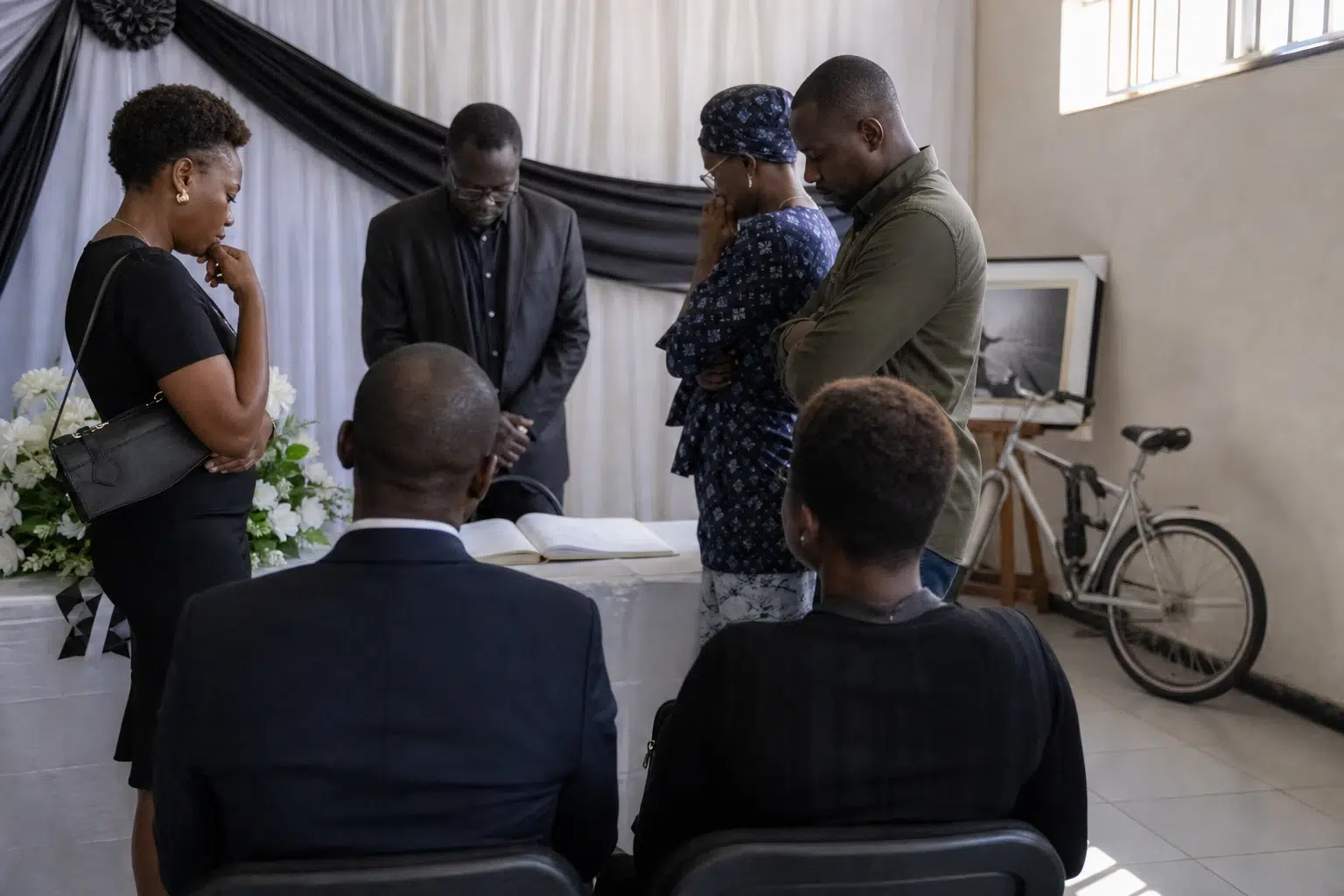
In Goma, the news prompted deep emotion. The young athlete’s family, friends and teammates paid tribute to him, gathering at the family home, which became a place of remembrance. The Ministry of Sports and Leisure also expressed its “profound sorrow” at his death. This double tribute, both personal and institutional, shows how Miguel had become more than just a club member or competitor.
An athlete shaped over time, not overnight
Miguel Masaïsaï’s sporting career was not limited to cycling. His family and those close to him recall that he had also practised swimming and running. Accounts published in Goma describe him as a disciplined athlete able to pass on his experience to younger people. This versatility matters because it says something about sport in the DR Congo as it is really experienced: a space for training, networking, learning and sometimes social mobility, far beyond the big football fixtures alone.
The sports ministry had already highlighted his route before the tragedy. According to the ministry, Miguel left Goma on 1 May 2026 and reached Kinshasa just over two months later, before setting off again towards the west and then the Republic of the Congo. This detail matters because it puts the journey in its true perspective: not a simple individual adventure, but an African crossing conceived as a long, demanding and logistically complex undertaking.
The choice of the slogan “Pedals for Peace” was in keeping with the circumstances in his country. In Goma, peace is not a diplomatic abstraction. It is the basic condition for going to school, trading, travelling and taking part in sport without seeing it as a luxury. The young cyclist’s message therefore resonated directly with the daily lives of people in the east, where insecurity has long shaped habits, the informal economy and movement between neighbourhoods, cities and borders.
Why this story goes beyond Goma
Miguel Masaïsaï’s death also highlights the role of sport as a grassroots diplomatic tool in Central Africa. In the region, borders are crossed by goods, families, workers and athletes. The young Congolese man’s journey between the DR Congo, the Republic of the Congo, Cameroon and, ultimately, Morocco told the story of this human movement better than any official speech.
This points to a broader issue for the DR Congo and its neighbours in the East African Community and the Great Lakes region: peace is not decreed only in foreign ministries. It is also built through civic gestures, local initiatives, sports clubs, youth networks and narratives that restore a place for hope. The African Union, the United Nations and regional mechanisms continue to push for a lasting ceasefire in the country’s east, but the lived experience of the population remains the true barometer of these processes.
For Miguel’s loved ones, the immediate priority is now human: repatriate his body, mourn his loss and preserve the purpose behind his journey. For Goma’s young people, his story leaves something beyond sadness. It leaves a point of reference. It shows that a young Congolese person can carry a continental message without losing local roots, and that sporting commitment can become a credible public voice, especially in a city where peace remains the foremost expectation.