Algeria
 Egypt
 Libya
 Morocco
 Sudan
 Tunisia
 Benin
 Burkina Faso
 Cabo Verde
 Côte d'Ivoire
 Ghana
 Guinea
 Guinea-Bissau
 Liberia
 Mali
 Mauritania
 Niger
 Nigeria
 Senegal
 Sierra Leone
 The Gambia
 Togo
 Cameroon
 Central African Republic
 Chad
 DR Congo
 Equatorial Guinea
 Gabon
 Republic of the Congo
 São Tomé and Príncipe
 Burundi
 Comoros
 Djibouti
 Eritrea
 Ethiopia
 Kenya
 Madagascar
 Malawi
 Mozambique
 Rwanda
 Seychelles
 Somalia
 South Sudan
 Tanzania
 Uganda
 Angola
 Botswana
 Eswatini
 Lesotho
 Namibia
 South Africa
 Zambia
 Zimbabwe
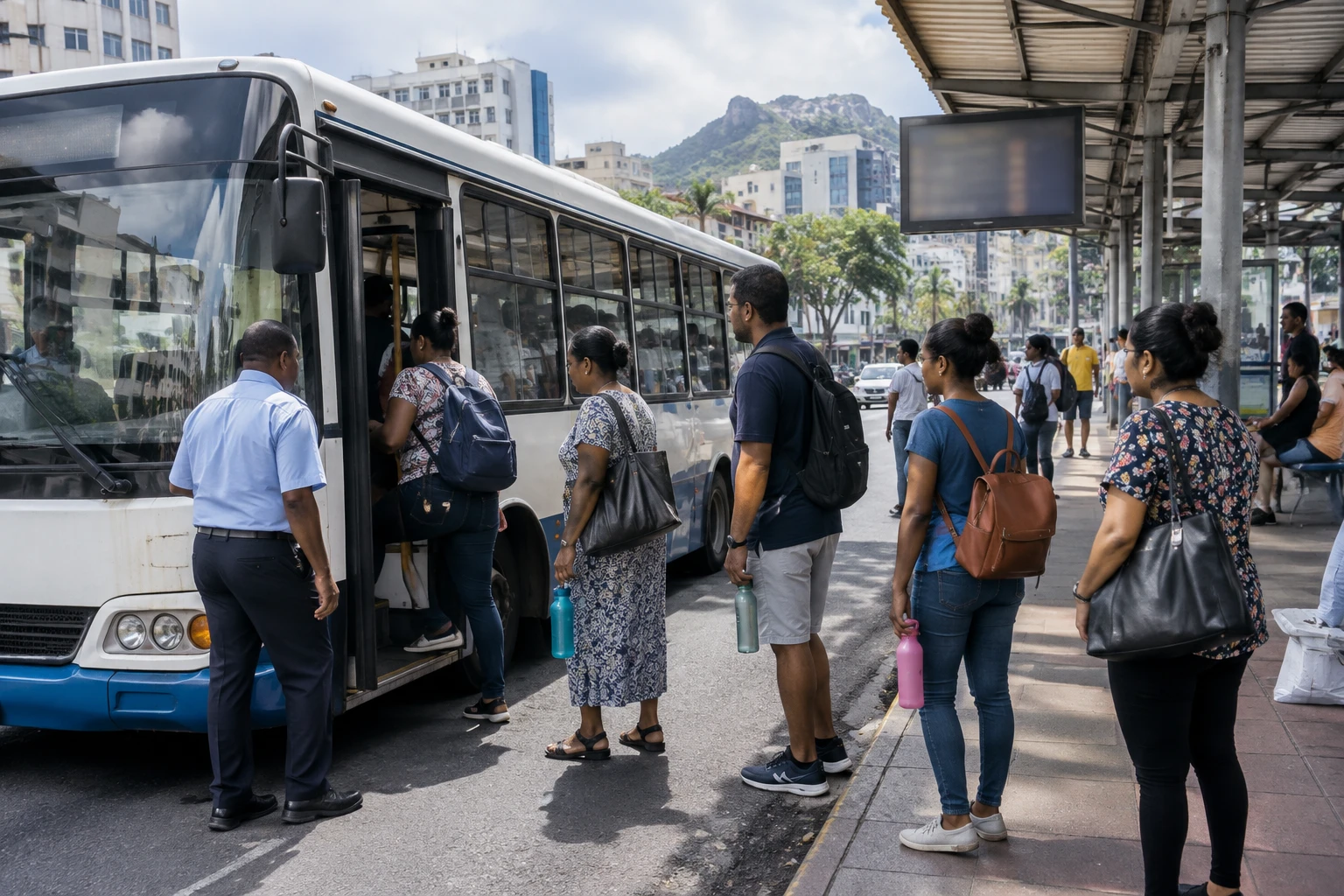
In Mauritius, protests began over an immediate need: water from the tap. Within days, concerns about supply and the cost of living had become entwined with anger over a woman being shot in an incident involving police. The crisis poses a practical question for the authorities: how can they restore calm without setting aside the grievances that brought residents on to the streets?
A shortage affecting daily life
Difficulties with water supply are directly affecting households, businesses and services. They also form part of a situation that the authorities have been monitoring for several months. In January 2025, the Mauritian cabinet had already noted revised water-distribution schedules because of a prolonged dry spell. This alone does not explain the current tensions, but it is a reminder that water management is a recurring issue, not simply a street-level incident.
The government has announced the deployment of nine boreholes to provide an additional 30,000 cubic metres of water to the area supplied by the Mare aux Vacoas reservoir, before the end of October 2026. Emergency services are also to help supply the affected localities. These measures may ease pressure in some areas, but their impact will depend on their implementation and on water actually reaching households.
The consequences are not evenly distributed. A household with a reserve or the means to buy water can more easily get through a supply cut than one that depends on the network. Businesses, schools and transport are also exposed when interruptions continue or roads become impassable.
Shooting raises tensions
Demonstrations began in the week before 13 October 2026, against a backdrop of shortages and a rising cost of living. On 9 October, a woman was shot and injured in Beau-Bassin–Rose-Hill, south-west of Port Louis, in an incident involving a police officer. The circumstances remain central to the investigation. Police said they had arrested the officer concerned and suspended three other officers, while the attorney-general’s office called for the investigation also to examine the role of members of the Special Mobile Force who were present.
After the incident, gatherings escalated in several localities. Roads were blocked with burning tyres and debris, and public buildings were damaged, according to media reports. The authorities deployed the Special Mobile Force, a paramilitary unit of the Mauritian police.
Prime Minister Navin Ramgoolam imposed a night-time curfew on Tuesday 13 October. It applied from 8.30pm to 6am the following day in several areas, including Port Louis. Police said on Wednesday that the situation was under control and that the measure had ended at 6am. Reports published on 15 October, however, refer to further night-time restrictions planned for certain areas. As the timetable is changing rapidly, the initial measure, lifted on Wednesday morning, should be distinguished from later decisions.
Figures for arrests differ between available accounts. Initial press reports do not provide a consolidated police tally. The figure of 94 arrests cited in some accounts could not be confirmed by a second reliable independent source and therefore cannot be presented as established. Similarly, details of possible prosecutions or a change to the age of criminal responsibility should be attributed to the authorities unless corroborated.
Balancing public safety and addressing grievances
The curfew is intended to limit movement and clashes at night. But it also affects residents who work late, small businesses and people who need to travel for essential reasons. School closures and transport disruptions affect families and workers, while damage to public facilities can complicate travel long after the unrest has ended.
The authorities face a dual challenge. They must prevent further violence and protect people, while providing visible responses to difficulties accessing water and the cost of living. The investigation into the shooting is also crucial: an independent and transparent process can help establish responsibility, while political statements are no substitute for judicial findings.
Mauritius is an island economy in which tourism and financial services play an important role. Localised unrest can affect travel and commercial activity, but it would be premature to infer a lasting impact on the economy or the country’s reputation. The situation should continue to be assessed through concrete indicators: the resumption of services, water availability, road conditions and the findings of the investigation.
An island issue with regional echoes
Port Louis is the capital of an island state that is a member of the Southern African Development Community (SADC) and the Indian Ocean Commission, which organises co-operation between several countries and territories in the south-western Indian Ocean. The crisis should therefore not be confused with those in other countries in the region: it is primarily a matter for Mauritian institutions and the national management of essential services.
It nevertheless highlights issues shared by island territories: dependence on limited water reserves, exposure to dry periods and the importance of networks capable of ensuring regular distribution. The announced boreholes, service interruptions and the way the authorities report on the investigation will provide benchmarks for assessing what happens next. In the short term, the priority remains to check that water is reaching affected neighbourhoods and that movement restrictions are not obscuring the persistence of everyday difficulties.