Algeria
 Egypt
 Libya
 Morocco
 Sudan
 Tunisia
 Benin
 Burkina Faso
 Cabo Verde
 Côte d'Ivoire
 Ghana
 Guinea
 Guinea-Bissau
 Liberia
 Mali
 Mauritania
 Niger
 Nigeria
 Senegal
 Sierra Leone
 The Gambia
 Togo
 Cameroon
 Central African Republic
 Chad
 DR Congo
 Equatorial Guinea
 Gabon
 Republic of the Congo
 São Tomé and Príncipe
 Burundi
 Comoros
 Djibouti
 Eritrea
 Ethiopia
 Kenya
 Madagascar
 Malawi
 Mozambique
 Rwanda
 Seychelles
 Somalia
 South Sudan
 Tanzania
 Uganda
 Angola
 Botswana
 Eswatini
 Lesotho
 Namibia
 South Africa
 Zambia
 Zimbabwe

In Mauritius, criminal justice reform affecting children is not simply a choice between leniency and firmness. The question is how to respond to violent acts without making prison an automatic response, and how to address the conditions that make them possible.
A reform still under consideration
The debate gathered pace after unrest in mid-October 2026. Protests linked to water shortages and the cost of living escalated into clashes and damage to property. An incident in which a woman was injured by police gunfire also fuelled anger. The authorities imposed a curfew and reported the arrest of several people, including minors, according to figures carried by the press.
Against this tense backdrop, the government considered amending the Children’s Act to lower the minimum age of criminal responsibility from 14 to 12. It did not, however, announce the immediate adoption of such an amendment. After consideration by the Cabinet, the executive opted for broader parliamentary consultation.
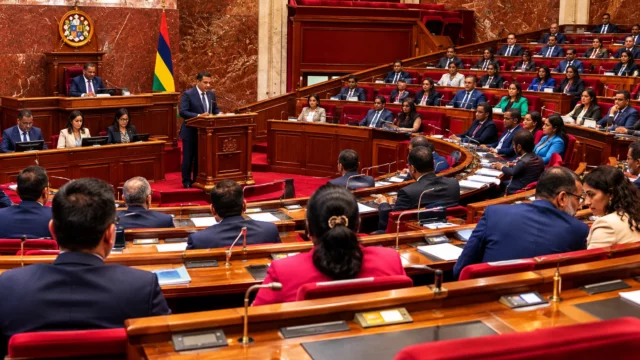
On 21 October, Prime Minister Navin Ramgoolam tabled a motion in the National Assembly proposing the creation of a select committee. The motion provides for a study of the causes of offences and violent behaviour among children, parental responsibility, the resources available to institutions responsible for their care, and whether the legal age should be revised. The committee could hear from specialists and request documents. At this stage, therefore, the proposal is to examine an option, not to decide that children should henceforth be prosecuted from the age of 12.
The distinction matters. The initial proposal immediately prompted concern among child rights advocates. The Ombudsperson for Children, Anita Ghoorah, reiterated her opposition to lowering the age and called for organisations working with children to be heard. If established, the committee will have to turn this controversy into an examination of the facts and the practical consequences.
The age threshold of 14 and children’s rights
The Children’s Act 2020 sets the minimum age of criminal responsibility in Mauritius at 14. The country also has a specialised children’s court, which has been operational since January 2022. These rules form part of an evolving national child protection framework, rather than being an isolated law-and-order measure.
Mauritius is a party to the United Nations Convention on the Rights of the Child. The UN Committee on the Rights of the Child recommends that states set the age at no lower than 14 and advises against lowering it. This international benchmark does not, by itself, settle every national debate, but it places any reform within a framework of rights and obligations. In 2023, during its review of Mauritius, UN experts noted that Mauritian law set the age at 14 and that detention should remain a measure of last resort.
Views expressed in the Mauritian debate are not uniform. Prisheela Mottee, of the NGO Raise Brave Girls, believes minors should be held accountable for their actions and that parents should take responsibility. She also stresses the need to put the child at the centre of reform and enable them to rebuild their lives. Clinical psychologist Émilie Rivet, meanwhile, warns of the limits of criminal judgement at an age when the ability to assess risks is still developing. She believes incarcerating children does not solve the problem.
These positions are not necessarily at odds over the need to protect the public and support young people. They differ over the best way to do so. Distinguishing between accountability, punishment and rehabilitation will be one of the challenges facing the parliamentary process.
Responses that go beyond punishment
Lowering the threshold could increase the number of children exposed to criminal prosecution. On its own, it does not specify what measures would be applied or whether they would involve detention. The government must therefore clarify the safeguards under consideration, alternatives to custody, and the capacity of protection, probation and support services.
The proposed motion also opens up a discussion of parents, particularly where they might encourage a child to commit an offence. This issue calls for precise criteria: an adult’s responsibility cannot automatically be inferred from a minor’s actions. The facts will have to be established, incitement distinguished from neglect, and any general rule prevented from penalising families without individual consideration.
The effects of reform would vary according to circumstances. Families with access to social services or a lawyer do not have the same resources as those living far from support services. Children who are out of school, living on the streets or already facing family difficulties may also have different needs. The motion specifically provides for an examination of institutions responsible for children in conflict with the law, abandoned children, those out of school and those living on the streets. This aspect will carry considerable weight in the assessment: expanding criminal responsibility without appropriate support risks shifting the problem rather than solving it.
A national debate with regional resonance
Mauritius is a member of the Southern African Development Community, or SADC, which brings together states in the region for economic and political co-operation. The Mauritian debate also forms part of a wider question for the continent: how to protect people from violence while ensuring children receive justice appropriate to their age. Legal frameworks and available resources vary from country to country; there is no single answer for Africa.
The next concrete step will be consideration of the motion and, if the committee is established, the appointment of its members and hearings with specialists. The quality of the process will depend on the place given to child welfare professionals, grassroots organisations and data on delinquency, as well as the publication of reasoned recommendations. For Port Louis and the island’s other regions, the issue is not limited to the figure of 12 or 14: it is about how to prevent violence, protect victims and enable minors to reintegrate into society.