Algeria
 Egypt
 Libya
 Morocco
 Sudan
 Tunisia
 Benin
 Burkina Faso
 Cabo Verde
 Côte d'Ivoire
 Ghana
 Guinea
 Guinea-Bissau
 Liberia
 Mali
 Niger
 Nigeria
 Senegal
 Sierra Leone
 The Gambia
 Togo
 Cameroon
 Central African Republic
 Chad
 DR Congo
 Equatorial Guinea
 Gabon
 Republic of the Congo
 São Tomé and Príncipe
 Burundi
 Comoros
 Djibouti
 Eritrea
 Ethiopia
 Kenya
 Madagascar
 Malawi
 Mauritius
 Mozambique
 Rwanda
 Seychelles
 Somalia
 South Sudan
 Tanzania
 Uganda
 Angola
 Botswana
 Eswatini
 Lesotho
 Namibia
 South Africa
 Zambia
 Zimbabwe
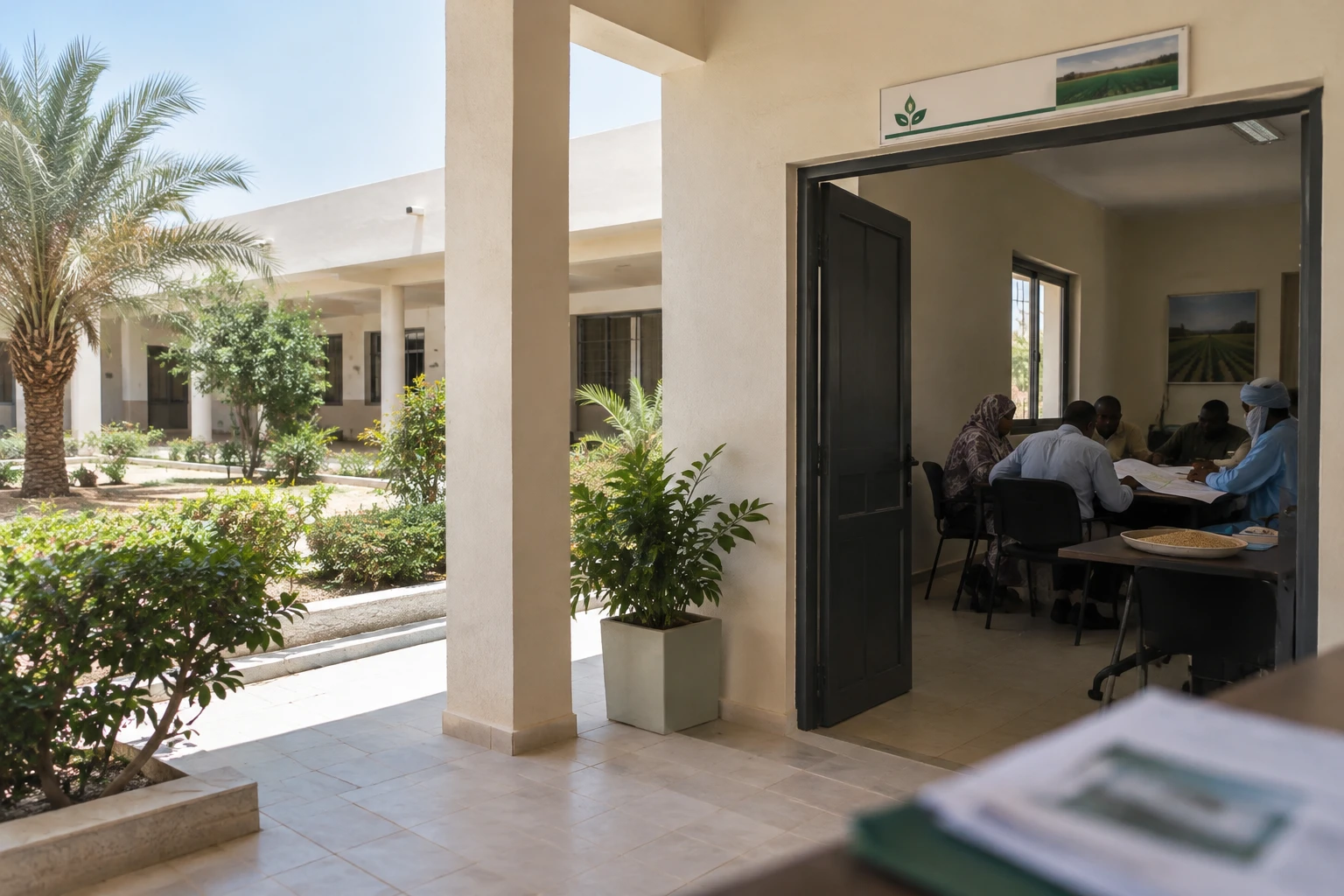
Producing more rice is not always enough to sell more of it on the domestic market. In Mauritania, rising harvests coexist with persistent imports. The central question is therefore less about volumes alone than about costs, quality and the ability to get locally produced rice to consumers.
A strategy shaped by production areas
Preparatory work on a National Rice Development Strategy began in Nouakchott on Monday 26 October 2026. The Ministry of Agriculture and Food Sovereignty is leading it with the National Rural Development Company (SONADER), the Japan International Cooperation Agency (JICA) and the Coalition for African Rice Development (CARD). The Mauritanian News Agency and Mauritanian media outlet Madar reported the opening of this first week of work.
The proposed roadmap is to cover ten years, in two phases. It aims to improve the productivity, quality and competitiveness of Mauritanian rice, with particular focus on the wilayas — administrative regions — of Trarza, Brakna, Gorgol and Guidimakha. The first sessions are to assess the sector and identify priorities. Quantified targets, funding and the implementation timetable remain to be specified.
Another milestone appears in local reports: the ministry’s secretary-general, Ahmed Salem Ould Larbi, is said to have set 2029 as the target for self-sufficiency. That date does not appear in the report by the public agency AMI consulted here, but it is cited by a Mauritanian media outlet. It should therefore be understood as a reported objective, rather than a target detailed in a strategy that has already been adopted.
Harvests are rising, but imports persist
Available agricultural data show production increasing, though not continuously. The FAOSTAT series accessible via Terra Cultiva puts output at 431,700 tonnes in 2024, down from a record 470,500 tonnes in 2023. That represents an annual fall of 8.2%, despite production being higher than in 2020. These figures describe agricultural production, but do not by themselves show how much is processed, stored or sold on the domestic market.
Imports also remain part of the supply mix. For 2024, the World Bank’s WITS database, based on trade data, records 36,164 tonnes of rice imported into Mauritania, worth about $19.8m. Thailand, India and South Korea were among the main suppliers. These figures do not confirm the higher volumes cited for 2025 in some publications: the periods and series are not directly comparable. It is therefore important not to infer an annual increase without corroborating data.
The coexistence of domestic production and imports is not automatically contradictory. Products may differ in variety, quality, price or seasonal availability. Stocks, processors’ needs and distribution channels also play a role. The data consulted do not, on their own, make it possible to measure the weight of each of these factors. The forthcoming strategy will need to shed light on this gap, rather than treating production alone as a measure of success.
From irrigation to storage, the links that need strengthening
The challenges identified affect the entire supply chain. Upstream, producers need more reliable water management, well-maintained irrigation infrastructure and regular access to seeds, inputs, credit and equipment. Further down the chain, harvesting, storage, processing and marketing affect losses, costs and the quality of the product offered to consumers.
Rice production is concentrated in the southern regions, near the Senegal River. Irrigation is therefore central. Infrastructure, its maintenance and water-sharing require lasting coordination. Mauritania shares the river basin with Senegal, Mali and Guinea through the Senegal River Basin Development Authority (OMVS). This regional cooperation is an important context for managing water resources, even though the national strategy remains to be developed and its coordination arrangements have yet to be specified.
The effects of an effective strategy would not be the same for everyone. Farmers and cooperatives would need practical access to inputs, irrigation and markets. Processors and traders would depend on reliable harvests, storage and quality. For households, the issue also concerns price and availability, particularly in cities far from production areas. The FAO says the authorities have already supported irrigated rice-growing through infrastructure rehabilitation and subsidies for certain inputs. The strategy will need to set out how these interventions can be sustained.
A national undertaking within a wider African effort
CARD, a cooperation coalition dedicated to developing rice-growing in Africa, supports countries in formulating and implementing national strategies. Mauritania is thus part of a continent-wide effort to strengthen local value chains while adapting solutions to national realities. The coalition and JICA have recently organised training courses attended by Mauritanian representatives, including on water management, seeds and post-harvest practices.
For Nouakchott, the challenge now is to turn the assessment into verifiable commitments: identified investments, defined responsibilities and monitored indicators. A ten-year strategy will not automatically reduce imports. Its impact will depend on its ability to make rice produced in Mauritania competitive and accessible without putting water resources under strain. The next steps to watch are the publication of quantified targets, estimates of funding needs and the role given to producers in decision-making.