Algeria
 Egypt
 Libya
 Morocco
 Sudan
 Tunisia
 Benin
 Burkina Faso
 Cabo Verde
 Côte d'Ivoire
 Ghana
 Guinea
 Guinea-Bissau
 Liberia
 Mali
 Niger
 Nigeria
 Senegal
 Sierra Leone
 The Gambia
 Togo
 Cameroon
 Central African Republic
 Chad
 DR Congo
 Equatorial Guinea
 Gabon
 Republic of the Congo
 São Tomé and Príncipe
 Burundi
 Comoros
 Djibouti
 Eritrea
 Ethiopia
 Kenya
 Madagascar
 Malawi
 Mauritius
 Mozambique
 Rwanda
 Seychelles
 Somalia
 South Sudan
 Tanzania
 Uganda
 Angola
 Botswana
 Eswatini
 Lesotho
 Namibia
 South Africa
 Zambia
 Zimbabwe
In Nouakchott, a power cut does more than plunge homes into darkness. It can also affect access to water, healthcare and business activity. It was against this backdrop that President Mohamed Ould Cheikh El Ghazouani reappointed Mokhtar Ould Djay after his government resigned, following fires at key facilities in the power grid.
A strained grid, a crisis with tangible effects
Fires at the Nouakchott-North and Nouakchott-West transformer substations highlighted the role of this equipment. They do not generate electricity: they help transform it and distribute it to neighbourhoods. Their outage therefore disrupted power supplies across large areas of the capital, with knock-on effects also reported in localities connected to the grid.
The government said technical teams had gradually restored service and deployed temporary facilities. The authorities also described water supplies and healthcare facilities as priorities during the outages. The power failure thus served as a reminder that a faulty electricity infrastructure can quickly affect public services and everyday activities, well beyond the energy sector alone.
Mauritania, a West African country, is not a member of ECOWAS. It belongs to the Arab Maghreb Union, a regional organisation whose activity remains limited, and maintains cooperative ties with its Sahelian neighbours. Even so, Nouakchott’s difficulties reflect a shared regional challenge: ensuring the continuity of networks on which essential services and urban economies depend.
Resignation brings no change at the prime minister’s office
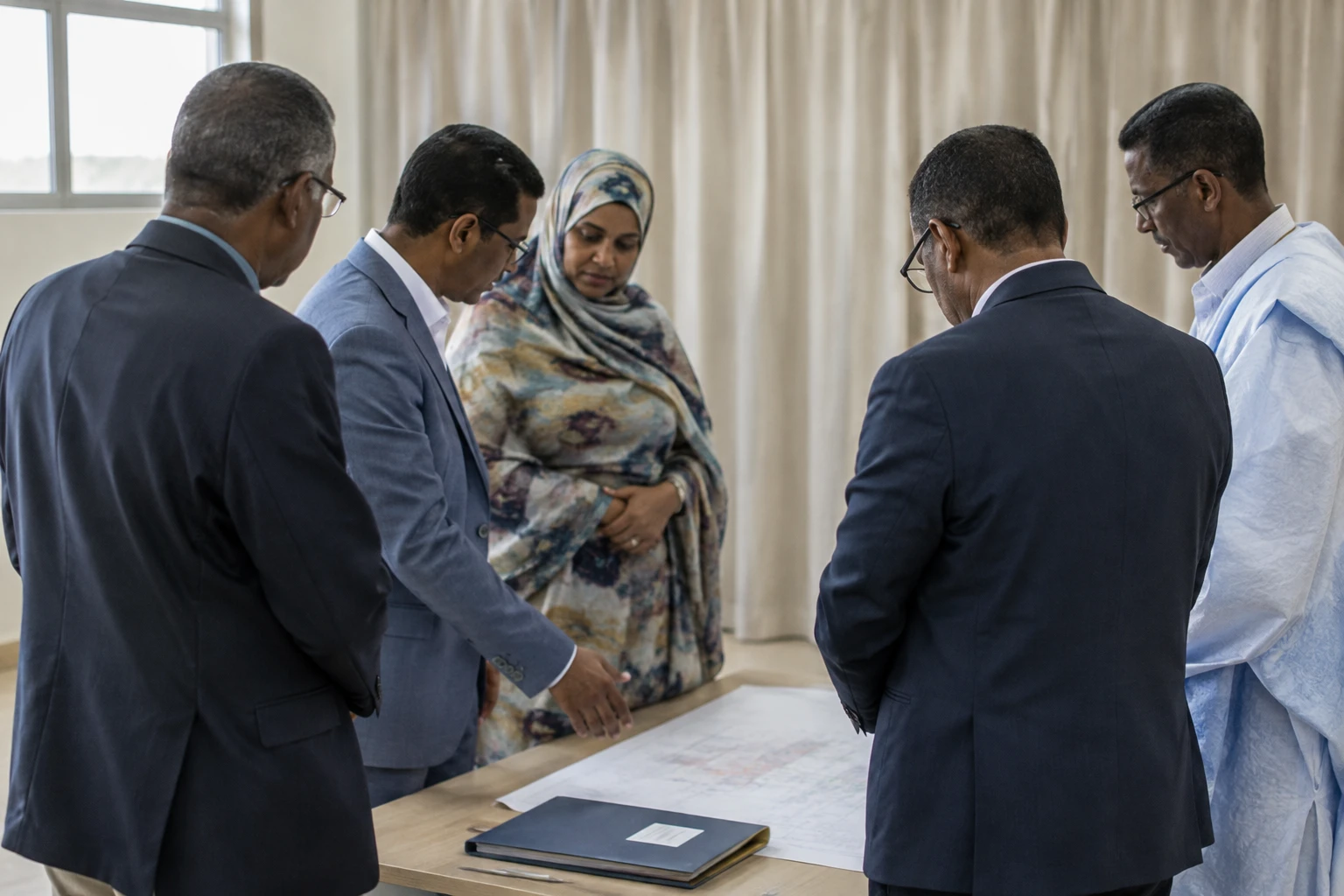
On 9 October 2026, after his government resigned, Mokhtar Ould Djay was tasked by the president with forming a new team. The decision came just hours after his resignation, which was itself linked to the report on the August fires submitted to the head of state. The prime minister, appointed in August 2024, therefore remains responsible for leading government policy, but must now propose a new cabinet line-up.
The presidency asked the incoming team to continue the presidential programme and address economic and social difficulties. Reappointing the head of government thus maintains political continuity at the top, while the formation of the cabinet may allow for changes. At this stage, the announced reshuffle should not be confused with a decision on the specific responsibilities linked to the fires.
The independent inquiry commission’s report, submitted to the president on 8 October, according to the Mauritanian News Agency, is to guide administrative and judicial follow-up. Information released by the authorities points to failings in prevention, electrical protection, oversight of works and emergency management. Overheating is presented as the most likely scenario. Published information does not cite evidence of sabotage or operational error. These conclusions should be attributed to the report and do not, in themselves, prejudge future decisions concerning individuals.
Beyond appointments, accountability is at stake
Mokhtar Ould Djay’s reappointment does not answer the central question for residents: what concrete measures will reduce the risk of further power cuts? The commission has made recommendations, and the president has called for them to be implemented. The government has referred to administrative follow-up based on established responsibilities, as well as legal proceedings if an offence is found to have occurred.
The expected response concerns not only decision-makers and grid operators. In Nouakchott, neighbourhoods served by the affected substations, small businesses and shops may face losses or interruptions to their operations. In areas connected to the capital, the consequences may also affect services that depend on electricity, including access to water. The impact therefore varies according to the area, the backup capacity available and the duration of the outages.
The Energy Ministry had said national teams restored power in stages, using temporary equipment and redistributing loads. This rapid response limited some of the consequences, but it is no substitute for the lasting repair of the substations or stronger maintenance. The focus is now on following up the recommendations, transparency over accountability and the ability of the facilities to withstand another incident.
A test of trust in institutions
The next step is to present the new government team and translate the recommendations into verifiable decisions. Mauritanians will be able to judge the response by concrete results: the rehabilitation of the substations, safety checks, preventive measures and continuity of services during an outage. Publishing precise information on the timetable and works would also help distinguish commitments from measures actually carried out.
This episode is also a reminder that energy security depends on more than generation. Transmission, transformation, distribution and maintenance are just as important. In a country where the capital accounts for a significant share of services and economic activity, grid resilience is a national concern. Keeping the prime minister in office provides continuity for the executive; whether the crisis leads to lasting change will depend on the implementation of the recommendations.