Algeria
 Egypt
 Libya
 Morocco
 Sudan
 Tunisia
 Benin
 Burkina Faso
 Cabo Verde
 Côte d'Ivoire
 Ghana
 Guinea
 Guinea-Bissau
 Liberia
 Mali
 Niger
 Nigeria
 Senegal
 Sierra Leone
 The Gambia
 Togo
 Cameroon
 Central African Republic
 Chad
 DR Congo
 Equatorial Guinea
 Gabon
 Republic of the Congo
 São Tomé and Príncipe
 Burundi
 Comoros
 Djibouti
 Eritrea
 Ethiopia
 Kenya
 Madagascar
 Malawi
 Mauritius
 Mozambique
 Rwanda
 Seychelles
 Somalia
 South Sudan
 Tanzania
 Uganda
 Angola
 Botswana
 Eswatini
 Lesotho
 Namibia
 South Africa
 Zambia
 Zimbabwe
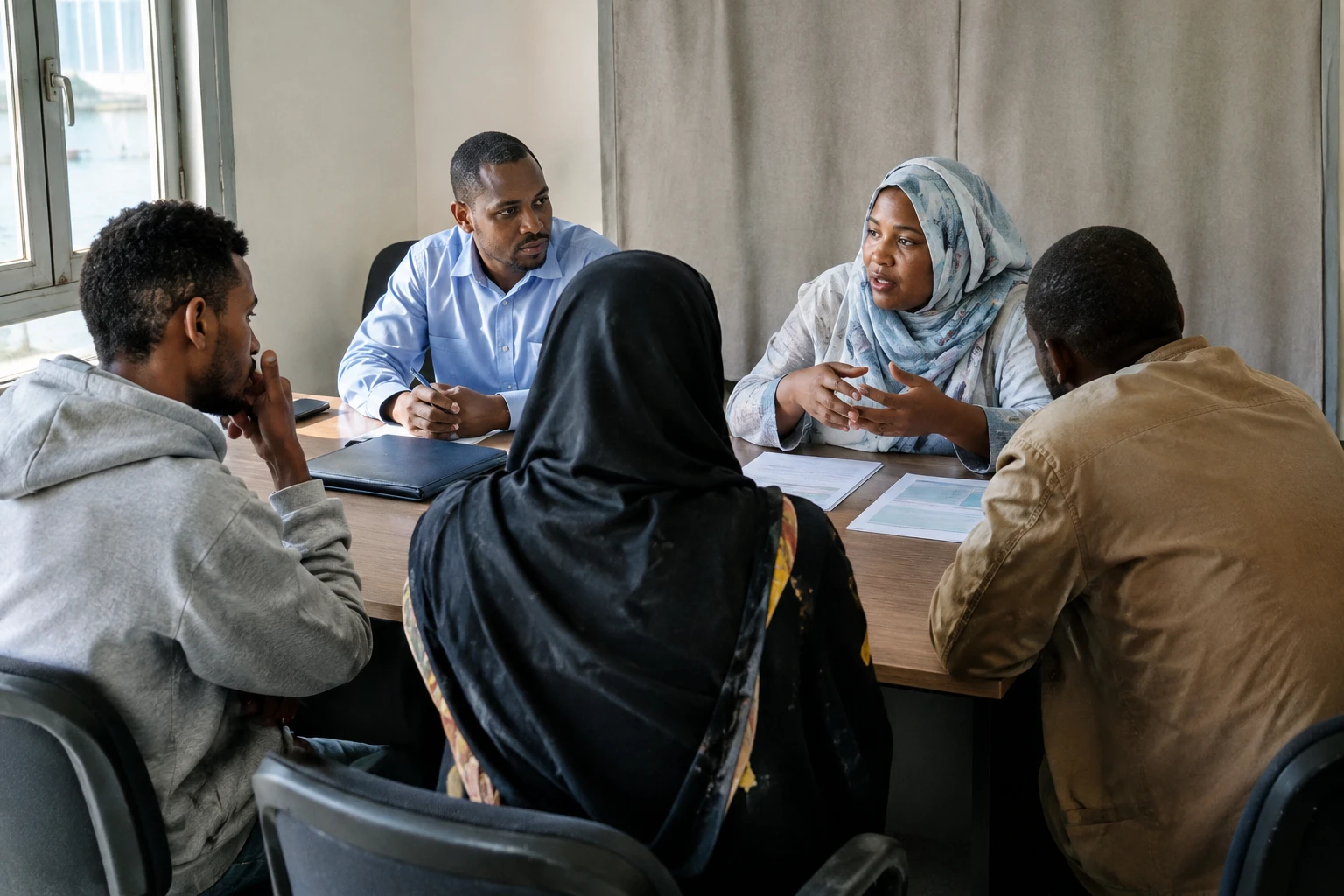
A boat that had set off from Gambia was intercepted at sea as it headed towards the Canary Islands. For the 204 people on board, including children and women, the rescue marks the start of another stage: assistance on land and an uncertain future, between return, protection and continuing the journey.
An Atlantic route shared by several countries
The crossing to the Canary Islands links the coastlines of West Africa with the Spanish archipelago, along a long and dangerous maritime route. Departure points vary according to the season and enforcement activity. Gambia, Senegal and Mauritania are part of this regional geography, while passengers may come from countries further afield.
This movement cannot be reduced to an individual decision taken at the water’s edge. It involves transport networks, intermediaries, families and authorities in several countries. Opportunities to live and work, economic constraints and personal circumstances influence people’s choices, and no single motive can be attributed to an entire group.
Mauritania, a West African country whose capital is Nouakchott, occupies a central position on the Atlantic coast. It is not a member of ECOWAS, the West African integration organisation, but belongs to the Arab Maghreb Union. On migration routes, however, the practical issues extend beyond the borders of these organisations: they also concern Gambia, Senegal, Guinea, Côte d’Ivoire, Spain and European institutions.
Figures corroborated, but what happens next is less clear
On Tuesday 27 October, the Mauritanian coastguard announced that it had taken charge of a boat from Barra, in Gambia. It was carrying 204 people: 143 Senegalese, 48 Gambians, seven Guineans and six Ivorians. A separate Mauritanian publication reported the same numbers and point of departure. The coastguard report carried by Info Plus specifies that the operation took place at about 11am. The regional agency Madar confirms the main figures.
A breakdown of the passengers lists 28 minors and 19 women. Among the Senegalese passengers were 20 minors and seven women. The Gambian group included eight minors and ten women; the Guinean and Ivorian passengers each included one woman. This breakdown, detailed in the statement carried locally, clarifies totals that had been reported less fully.
The authorities described the operation as maritime surveillance and rescue. However, the published information does not specify the exact location of the interception, the passengers’ health or their administrative status after coming ashore. It is therefore not possible at this stage to say that all were transferred to a particular reception centre, or that their return to their countries has already been decided.
The interception came a few days after another operation announced by the coastguard. On 21 October, a boat from Bargny, Senegal, carrying 191 people, was intercepted. The Senegalese media outlet Seneweb reported the group’s national composition, while a separate Mauritanian report also noted the operation. These two interceptions in quick succession point to sustained activity on this route, but are not enough on their own to establish an annual trend in departures.
Rescue at sea and protection on land
Intercepting a boat can prevent a crossing from continuing in perilous conditions. But rescue does not resolve the question of protection after landing. People have different needs: minors may require particular attention, while adults must be able to explain their circumstances and any protection needs they may have.
Caution is also needed when considering the administrative process that follows. The available information does not document the procedures initiated for individuals, or whether they have effective access to legal or consular assistance. A return cannot be treated as a mere formality when the person concerned says they fear risks in their country. General statements about procedures must be distinguished from how they are applied to each passenger.
For the Mauritanian authorities, control of the waters serves security objectives and efforts to combat smuggling networks. For those intercepted, it means their journey stops and they become immediately dependent on public services and reception arrangements. Coastal communities, particularly around Nouadhibou, may also face logistical and health needs, although no operational details have been published for this group.
Pressure on a departure point or route can also shift routes without ending departures. The International Organization for Migration describes the West African Atlantic route as a network of changing pathways linking several stretches of coastline to the Canary Islands. Its analysis of migration routes to Europe highlights the continuity of these movements since they resumed. This finding is a reminder not to confuse an increase in interceptions with the disappearance of the phenomenon.
A regional issue that continues after interception
The sequence of operations on 21 and 27 October puts cooperation between coastal countries at the centre of the issue. Follow-up concerns more than patrols: it also involves identification, informing relatives, protecting minors, access to healthcare and consular coordination. The authorities in countries of origin and transit have distinct roles, as do their Spanish and European partners.
Across the continent, the Canary Islands route is a reminder that migration policies are not measured solely by the number of boats prevented from leaving or rescued at sea. They are also judged by how people’s rights and needs are assessed after they come ashore. In the case of this interception, the next questions are concrete: where the 204 passengers were taken, what assistance is being offered to them and what decisions will be made in each case.