Algeria
 Egypt
 Libya
 Morocco
 Sudan
 Tunisia
 Benin
 Burkina Faso
 Cabo Verde
 Côte d'Ivoire
 Ghana
 Guinea
 Guinea-Bissau
 Liberia
 Mali
 Mauritania
 Niger
 Nigeria
 Senegal
 Sierra Leone
 The Gambia
 Togo
 Cameroon
 Central African Republic
 Chad
 DR Congo
 Equatorial Guinea
 Gabon
 Republic of the Congo
 São Tomé and Príncipe
 Burundi
 Comoros
 Djibouti
 Eritrea
 Ethiopia
 Kenya
 Madagascar
 Malawi
 Mauritius
 Mozambique
 Rwanda
 Seychelles
 Somalia
 South Sudan
 Tanzania
 Angola
 Botswana
 Eswatini
 Lesotho
 Namibia
 South Africa
 Zambia
 Zimbabwe
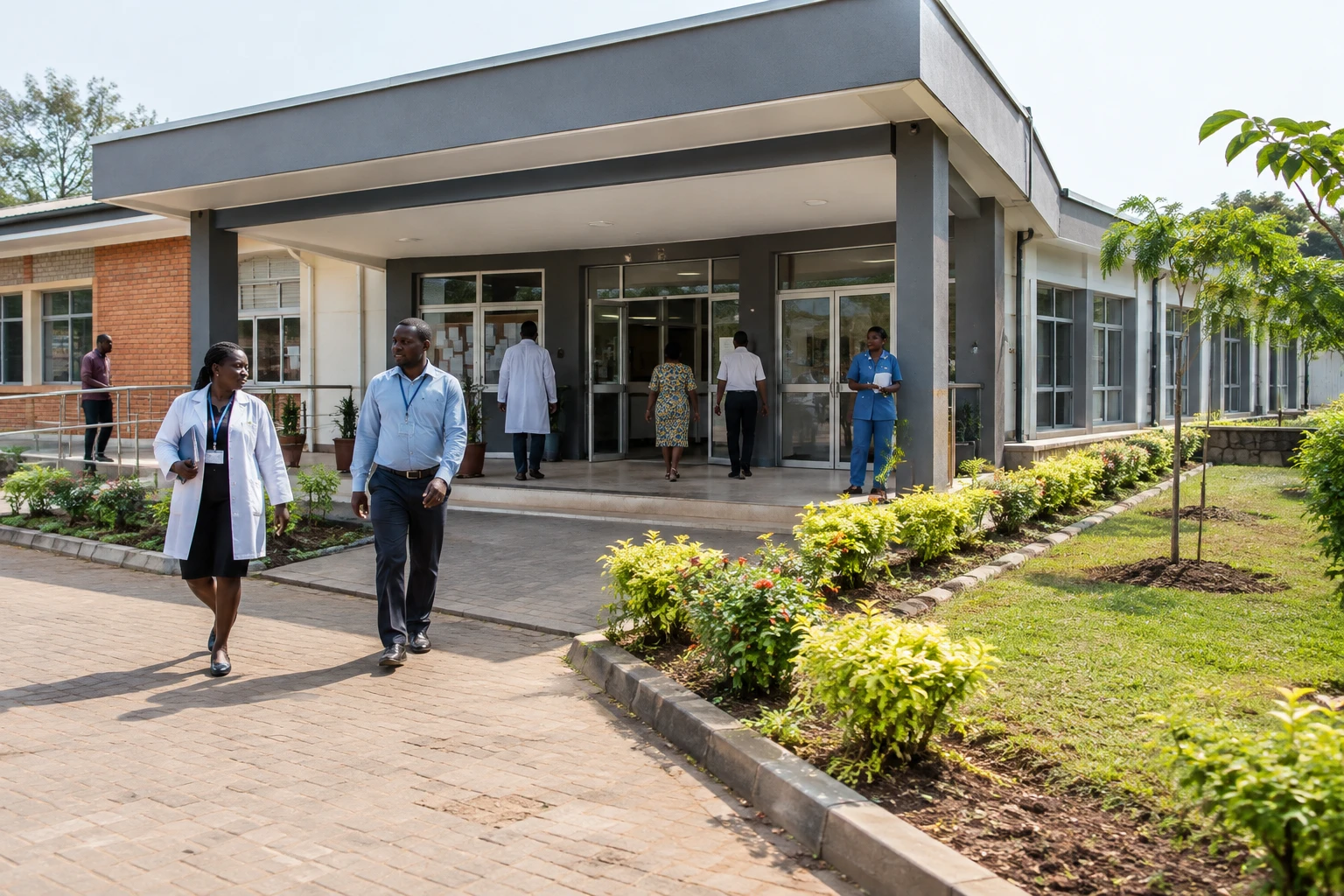
A vaccine can be ready for study without being ready to protect the population. That is the purpose of the trial launched in Masaka, in south-western Uganda: first, to check that a candidate against the Bundibugyo Ebola virus is safe and triggers an immune response.
A first step in research in Masaka
The first volunteers received a dose on 6 October 2026. The phase 1 study is being conducted by the Ugandan unit of the Medical Research Council and the Uganda Virus Research Institute, alongside the London School of Hygiene & Tropical Medicine and the University of Oxford. The candidate, called ChAdOx1 BDBV, was developed by Oxford researchers.
At this stage, researchers are primarily assessing the vaccine’s tolerability and its ability to trigger an immune response. A phase 1 trial cannot yet establish that the product protects against the disease. Nor does it measure its effectiveness on a large scale.
The Masaka study follows an initial human trial launched in the UK in July. The Ugandan volunteers are to be followed for twelve months, according to information provided by the research team. Recruitment was due to continue until November.
This research addresses a specific gap: no licensed vaccine is available against the Bundibugyo strain. Ervebo, used against another species of Ebola virus, cannot be considered proven protection against this one. Research is also exploring other avenues, including an mRNA candidate developed by Moderna.
A regional outbreak, distinct national situations
The Democratic Republic of the Congo is facing a sharp rise in the outbreak. Figures recorded as of 12 October showed 9,144 confirmed cases and 4,410 deaths across seven provinces. These figures are reported by Congolese health authorities and carried by independent epidemiological monitoring systems.
The current outbreak was declared in May 2026. It has spread particularly in Ituri and North Kivu, in eastern DRC, where access to healthcare, surveillance and the monitoring of people exposed to the virus are major challenges. The cumulative figures show the scale of the emergency, but do not, on their own, tell us who can quickly access testing or care.
Uganda, for its part, declared its local outbreak over on 28 July, after 42 days without a new confirmed locally transmitted case. The official end of the outbreak does not eliminate the regional risk. On 6 October, Kenya confirmed an imported case linked to travel from the DRC via Kampala and then to Nairobi. Cross-border movement is a reminder that surveillance must track mobility, without conflating the figures from different countries.
The Bundibugyo strain had already been identified in Uganda in 2007-08. That outbreak involved 131 confirmed, probable or suspected cases and 42 deaths. This precedent gives the country direct experience of the disease, but does not guarantee that a new outbreak can be contained under the same conditions.
What the trial could change — and what it cannot yet promise
For scientific teams, the immediate goal is to produce reliable data on safety and the immune response. If the results are favourable, they could justify further evaluation. It will still be necessary to establish whether the vaccine really protects, for how long and under what conditions of use.
For people in affected areas, the trial therefore does not replace the public health measures already needed: quickly identifying cases, protecting healthcare workers, tracing contacts and facilitating access to care. In regions where travel is difficult or insecurity is present, these operations can be more challenging. Community trust and the quality of local information also matter in the response.
Choosing Masaka makes it possible to evaluate the candidate in Uganda, within a clinical research infrastructure already mobilised for health trials. This does not mean participants are exposed to the virus to test the vaccine’s effectiveness: the study involves volunteers and monitors their health and immune response.
A challenge for East Africa and African responses
The crisis extends beyond national borders. Uganda and Kenya are members of the East African Community, a regional bloc where movement and trade make health coordination and rapid information-sharing essential. The African Union, through the Africa Centres for Disease Control and Prevention (Africa CDC), is also involved in coordinating the response.
This coordination does not rely solely on vaccine development. It also depends on laboratory capacity, surveillance at borders and in communities, and continuity of health services. The Congolese, Ugandan and Kenyan authorities must each respond to their own situation, while sharing relevant data at regional level.
The next decisive step for the Masaka candidate will be publication of the phase 1 results. Until then, it is a promising avenue of research, not a tool already available against the outbreak. The distinction is essential: in the face of a disease with no licensed vaccine against Bundibugyo, the public health emergency is moving faster than scientific evaluation, which must remain rigorous.