Algeria
 Egypt
 Libya
 Morocco
 Sudan
 Tunisia
 Benin
 Burkina Faso
 Cabo Verde
 Côte d'Ivoire
 Ghana
 Guinea
 Guinea-Bissau
 Liberia
 Mali
 Mauritania
 Niger
 Nigeria
 Senegal
 Sierra Leone
 The Gambia
 Togo
 Central African Republic
 Chad
 DR Congo
 Equatorial Guinea
 Gabon
 Republic of the Congo
 São Tomé and Príncipe
 Burundi
 Comoros
 Djibouti
 Eritrea
 Ethiopia
 Kenya
 Madagascar
 Malawi
 Mauritius
 Mozambique
 Rwanda
 Seychelles
 Somalia
 South Sudan
 Tanzania
 Uganda
 Angola
 Botswana
 Eswatini
 Lesotho
 Namibia
 South Africa
 Zambia
 Zimbabwe
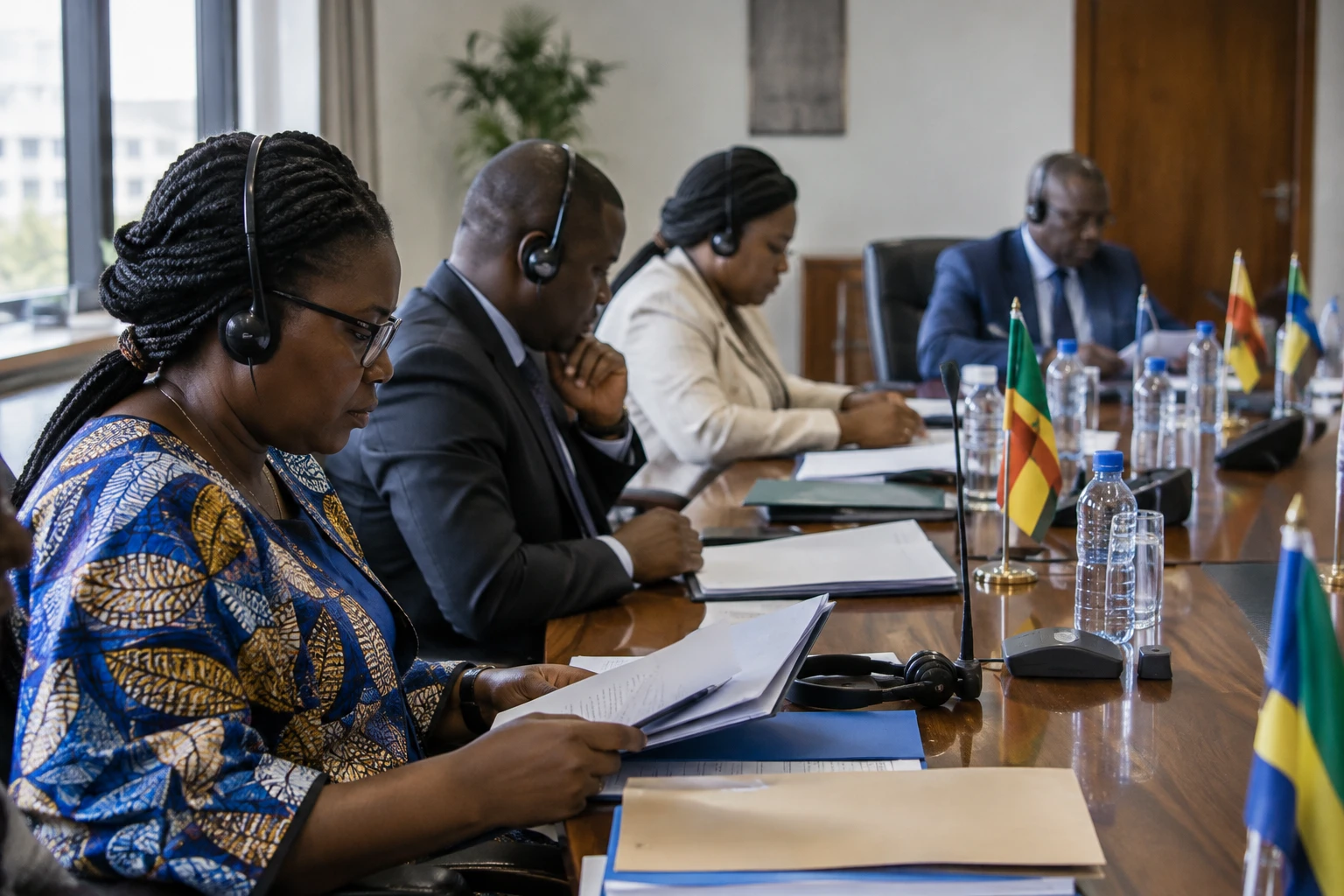
In the trial over the murder of Cameroonian journalist Martinez Zogo, the question is no longer only who took part in the operation. The hearings are also addressing the soundness of the investigation itself: which evidence was examined, which leads were pursued and which may have been overlooked?
The debate has taken on particular significance in Yaoundé, where the case is being heard by the Military Tribunal. It concerns the accused, the victim’s relatives and Cameroonian journalists alike, for whom the outcome of the trial will weigh on confidence in the institutions’ ability to establish responsibility.
Investigation challenged by one of its former members
Gendarmerie Lieutenant-Colonel Parfait Armand Ayissi Nanga was called to testify as the prosecution’s 36th witness at hearings on 26 and 27 October 2026. A former member of the joint commission tasked with the investigation, he was removed from it, according to hearing reports. His testimony began late in the evening of 26 October and continued over the following days.
Before the court, the officer challenged the methods used by some investigators. In particular, he disputed the way physical and digital evidence had reportedly been examined. His statements about the victim’s phones and their location data must, however, be understood as claims made at the hearing, not as findings already accepted by the court.
Ayissi Nanga also named Martin Savom, former mayor of Bibey and a co-defendant, as a central actor in the events. According to his account, Martinez Zogo was moved after being abducted and tortured, and his body was then left where it was found. This is the version put forward by the witness. The criminal responsibility of each defendant remains to be established at the end of the proceedings.
Savom’s defence disputed the accusation. His lawyer argued that the witness had to provide concrete evidence establishing his client’s direct involvement. Lawyers for the civil parties also questioned certain stages of the reconstruction presented. These opposing arguments are part of the legal debate and do not, by themselves, settle what happened.
Accounts to be tested against the case file
Ayissi Nanga’s testimony comes after several hearings focused on investigative acts. During the cross-examination of the 35th witness, former head of the General Directorate for External Research (DGRE) Léopold Maxime Eko Eko had questioned investigators about whether there was evidence confirming that surveillance footage had been shown to him. The witness had replied that he was not present when it was shown and had no other evidence to confirm this.
The exchanges also addressed a possible interruption of WhatsApp communications on the evening of 3 February 2023. Investigator Dieudonné Bialo said there had been no disruption, citing, among other things, the existence of messages sent at the relevant times. This answer, like the defence’s questions, must be considered alongside the evidence submitted to the court and all the testimony.
The trial thus brings several accounts into conflict over the victim’s movements, the examination of phones and the chain of decision-making. The court will have to distinguish verifiable evidence from inferences and accusations. At this stage, a witness’s statements do not, on their own, constitute a judicial ruling.
Case ongoing since the journalist’s death in 2023
Martinez Zogo, whose legal name was Arsène Salomon Mbani Zogo, worked for private radio station Amplitude FM in Yaoundé. In January 2023, his disappearance and the subsequent discovery of his body prompted a judicial investigation and drew widespread attention in Cameroon. Several people were later sent for trial before the Military Tribunal, including former intelligence officials and private-sector figures.
The proceedings have seen lengthy debates before the testimony was examined in depth. Since the hearings began, successive sessions have laid bare a case involving technical evidence, statements by defendants and accounts from investigators. The number of witnesses heard indicates the scale of the inquiry, but does not foreshadow the court’s conclusion.
The choice of a military court to try a case involving, among others, members of the security services also raises an institutional question: how can an impartial examination be ensured when figures from the state apparatus are among those accused? In its report submitted to the United Nations, the Cameroonian government says military courts deal with certain offences and that their decisions can be appealed. The safeguards provided for by law and their practical application remain a focus of attention in this trial.
Beyond the accused, trust in justice
For Martinez Zogo’s family and the civil parties, the priority is to have responsibility established on the basis of evidence debated in public, and to have unanswered questions addressed by the courts. For the accused, the trial must allow them to challenge the evidence against them and present their defence. For Cameroonian journalists, the case is a reminder of the risks that can come with the profession when investigations touch influential figures.
The debate extends beyond national borders. Cameroon belongs to the Economic and Monetary Community of Central Africa (CEMAC), which brings together six Central African countries, and to the African Union. The way such a closely watched case is investigated and tried is fuelling regional discussions on the protection of journalists, the independence of institutions and the accountability of public officials.
The next step is to continue the testimony and cross-examinations. Ayissi Nanga’s statements will have to be tested against the evidence, other testimony and the responses of those accused. Ultimately, it is for the court, not isolated accounts given at the hearing, to determine the established facts and criminal responsibility.