
 Algeria
 Egypt
 Libya
 Morocco
 Sudan
 Tunisia
 Benin
 Burkina Faso
 Cabo Verde
 Côte d'Ivoire
 Ghana
 Guinea
 Guinea-Bissau
 Liberia
 Mauritania
 Niger
 Nigeria
 Senegal
 Sierra Leone
 The Gambia
 Togo
 Cameroon
 Central African Republic
 Chad
 DR Congo
 Equatorial Guinea
 Gabon
 Republic of the Congo
 São Tomé and Príncipe
 Burundi
 Comoros
 Djibouti
 Eritrea
 Ethiopia
 Kenya
 Madagascar
 Malawi
 Mauritius
 Mozambique
 Rwanda
 Seychelles
 Somalia
 South Sudan
 Tanzania
 Uganda
 Angola
 Botswana
 Eswatini
 Lesotho
 Namibia
 South Africa
 Zambia
 Zimbabwe
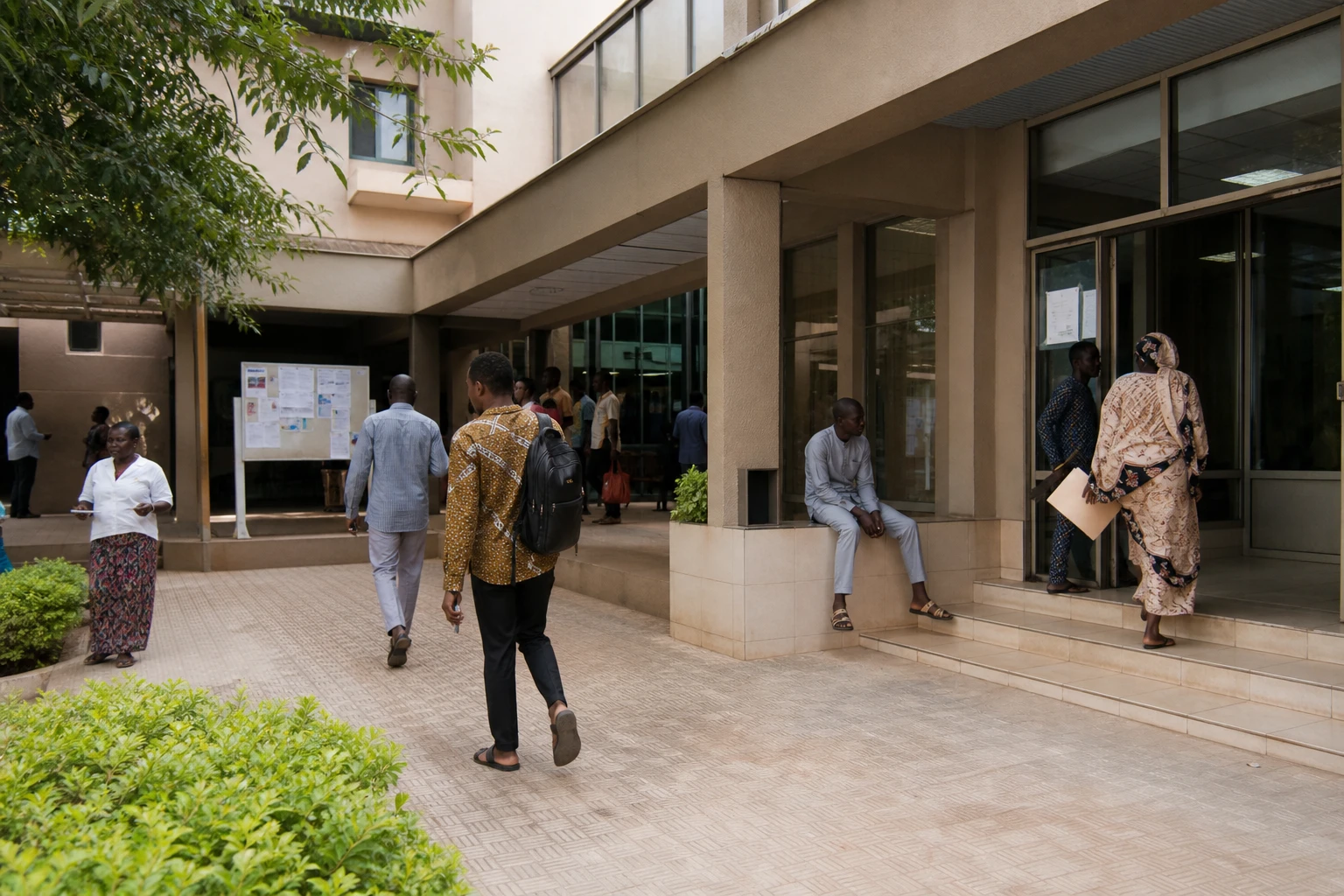
In Mali, Independence Day comes this year amid a clash between the narrative of sovereignty and a very practical question: what can citizens still expect from the transition? In Bamako and across the regions, security, electricity, incomes and the prospect of a return to open political life remain central concerns.
A celebration under the banner of sovereignty
In his address to the nation on 21 September 2026, on the eve of the 66th anniversary of independence, General Assimi Goïta defended the transition’s record and reaffirmed his government’s priorities.
Mali’s head of state highlighted the defence of territorial integrity, the fight against armed groups and the determination to consolidate national sovereignty free from external dependencies. He also called for cohesion and reconciliation.
The speech follows the course set since the coups of 2020 and 2021. Since then, the military authorities have repeatedly postponed the election timetable, while presenting “refoundation” as a necessary step before a return to regular institutions.
Mali has also deepened its ties with Burkina Faso and Niger within the Alliance of Sahel States, an organisation created by the three military regimes after their gradual break with the Economic Community of West African States, or ECOWAS. The latter is the regional organisation responsible, among other things, for economic co-operation and preventing political crises in West Africa.
Security situation puts speech to the test
The celebration comes days after an attack on the military camp at Dioura, in central Mali. On 10 September, the Group for the Support of Islam and Muslims, or JNIM, an al-Qaeda affiliate, claimed the assault on the Malian armed forces’ position.
Malian authorities acknowledged losses among their ranks but did not publish a detailed toll. Military, security and local sources cited by Agence France-Presse nevertheless reported that at least 100 Malian soldiers had been killed, as well as people missing, wounded and taken prisoner. JNIM gave higher figures that could not be independently verified.
This reticence over casualties has fuelled questions from soldiers’ families. It also underscores the authorities’ difficulty in presenting the overall situation as improved while several garrisons remain exposed in the centre and north of the country.
After Dioura, further operations were reported around Konna and Sévaré, in the Mopti region. The attacks show that pressure from armed groups is not confined to areas farthest from Bamako. It affects transport routes, military centres and areas vital to exchanges between the south and the north.
Critics point to gap between official narrative and daily life
From exile, Malian economist and academic Étienne Fakaba Sissoko challenged the decision to link the commemoration of independence to the transition’s record. He argues that attachment to Mali and support for its soldiers can go hand in hand with demands for accountability from the country’s leaders.
In his view, the population’s priorities are practical above all: being able to travel without fear, work, feed a family, access electricity, speak freely and regain a credible political outlook.
The criticism reflects a broader unease. In cities, power cuts disrupt households, shops and small businesses. In rural areas, insecurity weighs on travel, markets, access to public services and agricultural production. The effects therefore vary depending on whether people live in Bamako, a regional capital or a municipality near a conflict zone.
The debate also concerns the security partnership with Russia. The Malian authorities present it as a sovereign choice intended to strengthen national capabilities. Critics, meanwhile, call for measurable results and greater transparency over casualties, operations and responsibility.
The presence of Russian personnel linked to Africa Corps has not prevented armed groups from retaining a significant capacity to attack. This alone is not enough to establish that the co-operation has failed, but it fuels questions about its real effectiveness and political cost.
Transition still has no clear election date
The political question remains the second point of tension. The transitional authorities say they want to rebuild the state, overhaul institutions and create the conditions for lasting stability. Some opposition figures counter that this approach risks turning an exceptional period into a lasting system of military rule.
Political and civil society actors in Mali have limited room to voice dissent. Several critical voices have fallen silent, left the country or faced legal proceedings. Abroad, opposition coalitions are seeking to keep the debate alive, but their capacity to act remains limited by exile and the fragmentation of political forces.
For the authorities, security and control of the territory remain the priority. Their opponents say this cannot justify the prolonged absence of elections or the indefinite postponement of democratic safeguards. The disagreement is therefore less about the principle of sovereignty than about how it is defined and made effective.
Mali at the heart of a regional choice
The debate in Mali extends beyond its borders. Alongside Burkina Faso and Niger, Bamako advocates a break with ECOWAS and calls for autonomous security and diplomatic co-operation. This stance influences the balance of power in West Africa, particularly on the movement of people, trade and the collective response to armed groups.
But the Alliance of Sahel States will also have to meet practical expectations. Its credibility will depend on its ability to secure roads, protect populations, support local economies and report on its results. Sovereignty is not measured only in diplomatic speeches. It is also judged by a state’s ability to provide accessible services, justice and security.
After Independence Day on 22 September 2026, the next indicators will therefore be both security-related and political: developments in Dioura and across the centre of the country, transparency over military casualties, the institutional timetable and the conditions for a possible national dialogue. For Malians, the question now is whether the transition can turn its sovereignty rhetoric into visible results in daily life.



