Algeria
 Egypt
 Libya
 Morocco
 Sudan
 Tunisia
 Benin
 Burkina Faso
 Cabo Verde
 Côte d'Ivoire
 Ghana
 Guinea
 Guinea-Bissau
 Liberia
 Mauritania
 Niger
 Nigeria
 Senegal
 Sierra Leone
 The Gambia
 Togo
 Cameroon
 Central African Republic
 Chad
 DR Congo
 Equatorial Guinea
 Gabon
 Republic of the Congo
 São Tomé and Príncipe
 Burundi
 Comoros
 Djibouti
 Eritrea
 Ethiopia
 Kenya
 Madagascar
 Malawi
 Mauritius
 Mozambique
 Rwanda
 Seychelles
 Somalia
 South Sudan
 Tanzania
 Uganda
 Angola
 Botswana
 Eswatini
 Lesotho
 Namibia
 South Africa
 Zambia
 Zimbabwe
When cultural cooperation becomes a test of vigilance
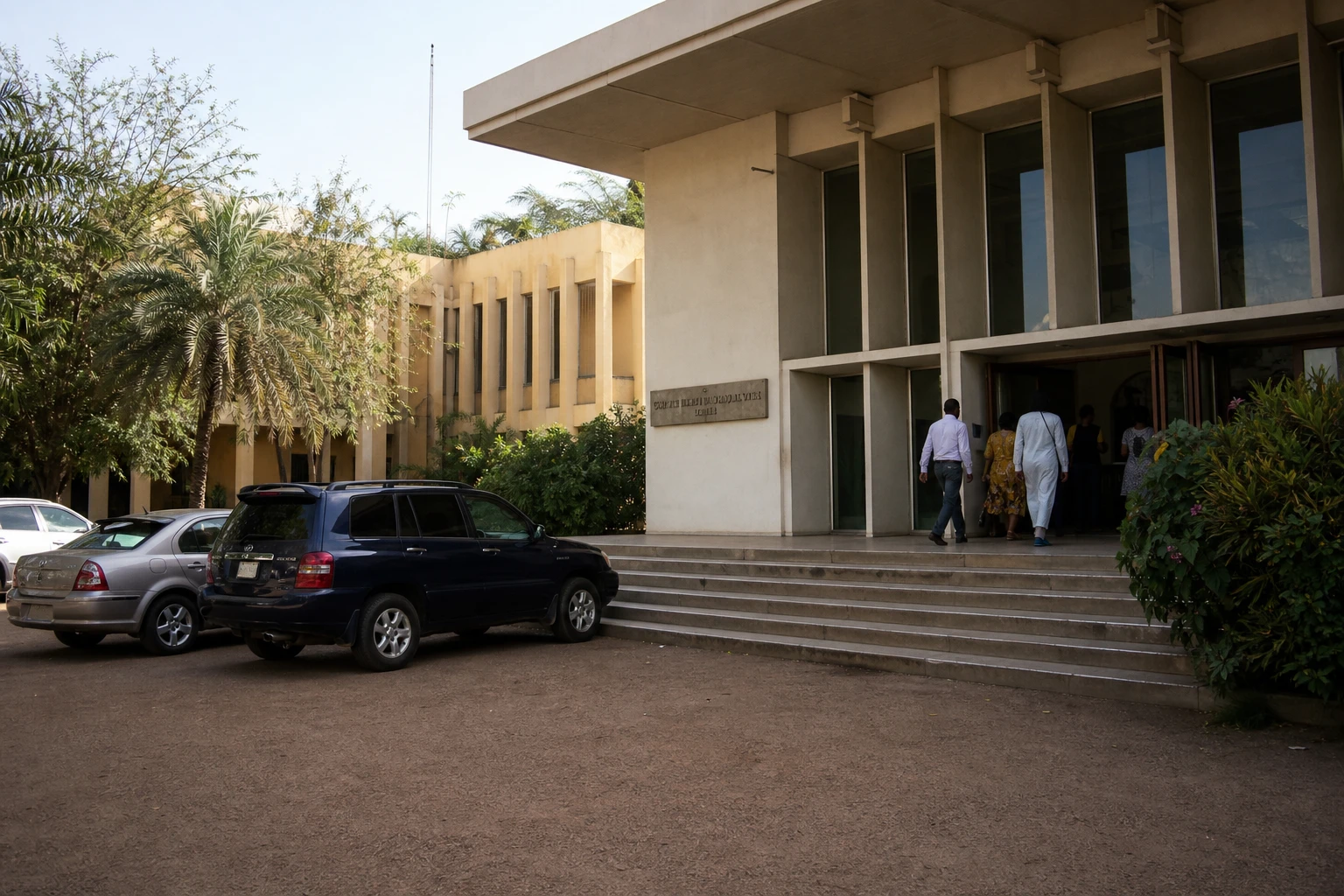
In Bamako, the question is not simply who will open a new Russian institution. It is broader: who will set the rules, who will oversee its activities, and how far the mix of culture, training and political influence will go. In several African capitals, this kind of centre may seem innocuous at first glance. Yet the precedent set by Bangui shows that a cultural outpost can also serve as a base for far more sensitive operations.
Mali already has close ties with Moscow. The Malian government, for example, announced 300 Russian study grants for the 2026-2027 academic year, one sign among others of active cooperation in education and student mobility. At the same time, Russia continues to strengthen its public presence in Africa through institutions presented as cultural, educational or cooperative.
Eight new centres announced, including in Mali
According to information released in early September 2026, Moscow is preparing to open eight new “Russian Houses” in Africa: in the Democratic Republic of the Congo, Senegal, Togo, Mali, Kenya, Madagascar, São Tomé and Príncipe, and Sierra Leone. The approach is familiar: work with organisations already operating locally, then give them the Russian House label and place them under Russian supervision. Similar announcements had already been made in 2024, and the network says it already has several branches on the continent.
Officially, these institutions are intended to promote the Russian language, university exchanges, film screenings, science and culture. This reflects the purpose of the “Russian Houses”, successors to Soviet cultural diplomacy and overseen by Rossotrudnichestvo, Russia’s federal agency for international cooperation. The agency was sanctioned by the European Union in July 2022, with Brussels saying it plays an important role in projecting Kremlin influence.
The word “culture” should not be dismissed out of hand. But in the current context, it calls for scrutiny of the practical arrangements: who funds, recruits and hosts, who approves local partnerships, and what opportunities for mobility are subsequently offered to young people. That is where the issue goes beyond a simple exchange of languages.
The Central African Republic precedent clouds the image
In the Central African Republic, the Russian House in Bangui has recently served as a warning. According to press and research investigations, the institution took part in recruiting young Central African women for the Alabuga Start programme, linked to an industrial zone in Tatarstan, Russia. An Associated Press investigation published in October 2024 had already shown that young African women were drawn in by promises of travel, training and pay, only for some to discover a very different working environment.
The Alabuga Start programme is not a minor communications detail. Accounts gathered by AP described long working days, close surveillance, deductions from wages and tasks that sometimes bore little resemblance to the initial promises. Specialist sources later documented the same pattern: incomplete information, economic dependence, harsh working conditions and, according to their analyses, a serious risk of a slide into forms of exploitation.
The Global Initiative Against Transnational Organized Crime devoted a report to the programme in May 2025. It describes deceptive recruitment, constant surveillance and difficult working conditions. It does not use the term trafficking as a definitive legal finding, but says several elements of the programme could point to it. This caution matters: it is a reminder that, in international mobility, the gap between promise and reality can become a blind spot for countries of origin.
The Central African case is particularly sensitive because, according to sanctions documents and several analyses, Bangui is part of a broader Russian ecosystem in which cultural, security and economic diplomacy intersect. In other words, the cultural centre is not necessarily an isolated outpost; it may be one element of a wider system.
What this means for Mali and West Africa
For Mali, the stakes are twofold. On the one hand, the authorities may see it as a way to diversify partnerships, in a context where ties with Moscow have strengthened over several years. On the other, the country must ensure that cultural institutions do not act as opaque gateways to mobility programmes that families, students and women seeking to travel cannot readily understand. Where information often circulates in fragments, transparency becomes a matter of sovereignty.
Vigilance is also warranted in Senegal, Togo and Sierra Leone, named in the same wave of new centres. The risk is not that cultural cooperation should be banned. It is that different functions are allowed to overlap without clear safeguards: language, scholarships, internships, recruitment and political representation. It is precisely in these grey areas that abuses can arise.
An African reading of the issue must therefore remain practical. For governments, that means written agreements, oversight mechanisms and identifiable public contacts. For students and young jobseekers, it means verifiable information about the conditions they will face, the actual nature of the work and the social rights attached to it. For regional diplomatic services, finally, it calls for particular attention to mobility channels involving West Africa, where promises of training can quickly become tools of influence.
An African issue to follow beyond the walls of cultural centres
At continental level, the issue points to a broader question: how do African states regulate powers seeking to combine public diplomacy, education, recruitment and an economic presence? This debate is not limited to Russia. It concerns all powers that use culture as a gateway to other interests. But the Bangui precedent shows that the line between a public-facing image and strategic use can be fine.
For West Africa, the issue must also be viewed in light of young people’s movement, scholarships and jobs abroad. Here, too, figures alone are not enough. What matters is oversight of these pathways and the ability of states to verify what programmes presented as educational or cultural actually involve. In Mali, in Bamako, as elsewhere in the region, this oversight will determine whether cooperation remains an exchange or becomes a blind spot.