Algeria
 Egypt
 Libya
 Morocco
 Sudan
 Tunisia
 Benin
 Burkina Faso
 Cabo Verde
 Côte d'Ivoire
 Ghana
 Guinea
 Guinea-Bissau
 Liberia
 Mauritania
 Niger
 Nigeria
 Senegal
 Sierra Leone
 The Gambia
 Togo
 Cameroon
 Central African Republic
 Chad
 DR Congo
 Equatorial Guinea
 Gabon
 Republic of the Congo
 São Tomé and Príncipe
 Burundi
 Comoros
 Djibouti
 Eritrea
 Ethiopia
 Kenya
 Madagascar
 Malawi
 Mauritius
 Mozambique
 Rwanda
 Seychelles
 Somalia
 South Sudan
 Tanzania
 Uganda
 Angola
 Botswana
 Eswatini
 Lesotho
 Namibia
 South Africa
 Zambia
 Zimbabwe
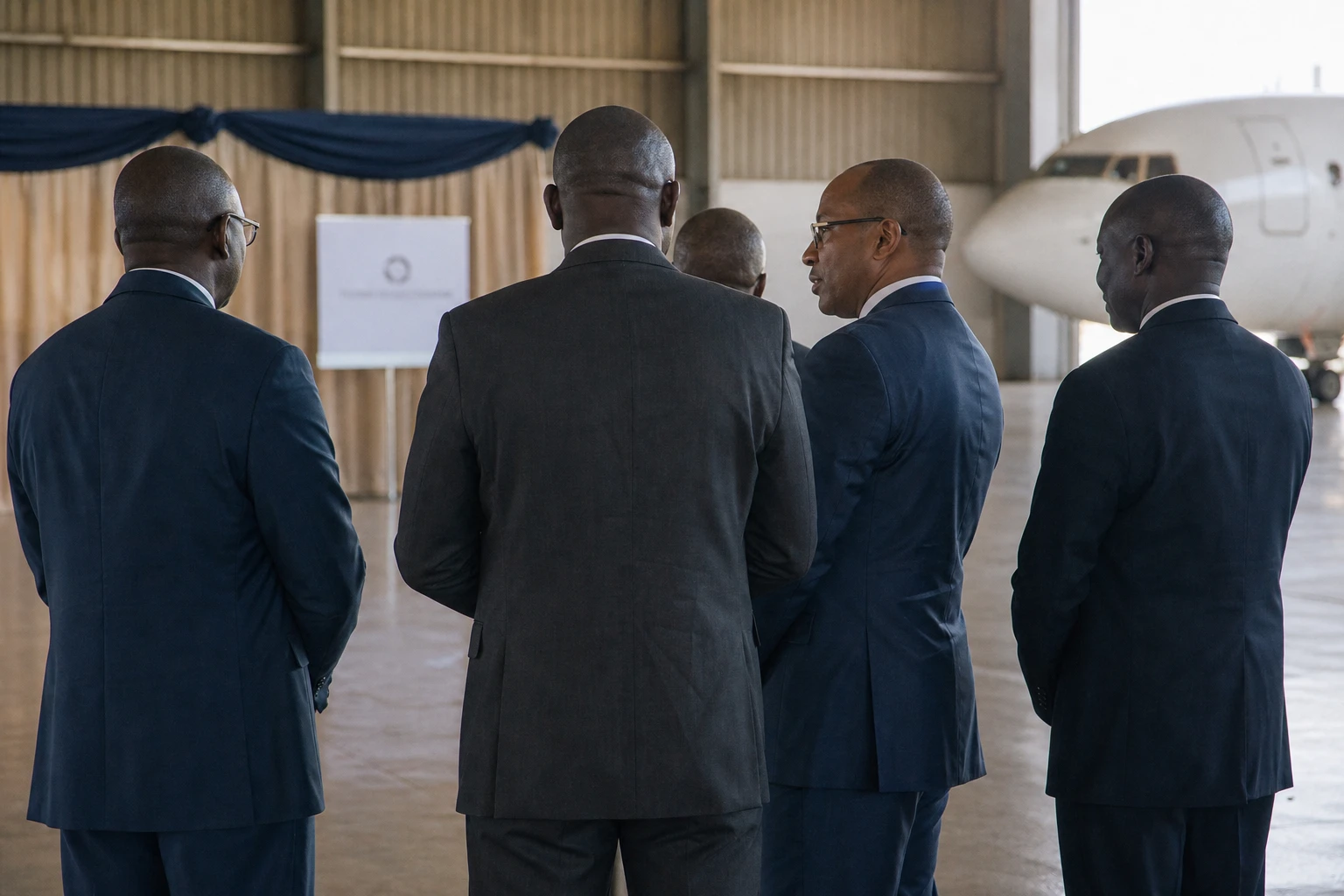
In Bamako, a plane is never just a plane
For a state in transition, a presidential aircraft says more than simply how well it can transport people. It tells a story about how those in power project themselves, protect their institutions and weigh their priorities, at a time when Mali remains under security and diplomatic pressure. The presentation of a new Boeing 737 in Bamako fits this logic: restoring a command tool after an episode that exposed the vulnerability of the heart of the Malian state.
The issue also has regional significance. Since 29 January 2025, Mali, Burkina Faso and Niger have officially left ECOWAS, while continuing to draw closer within the Alliance of Sahel States, the AES. In this new environment, every public procurement decision is read both as an administrative measure, a signal of sovereignty and an indicator of state capacity.
What the new acquisition really shows
Malian authorities have presented a Boeing 737 refitted for official travel by the highest-ranking officials. The announced cost is 15.6 billion CFA francs. The aircraft is to replace the former presidential plane, taken out of service after the 17 September 2024 attack on the military airport complex at Bamako-Sénou, claimed by JNIM, a group affiliated with al-Qaeda. Reuters and the Associated Press reported that the assault hit the airport and the presidential jet, while several media outlets published images of the aircraft ablaze on the tarmac.
The government maintains that repairs were not economically viable. The argument is based on the former aircraft’s mechanical and structural condition. At this stage, figures released by the authorities also indicate a compensation approach: 6 billion CFA francs have reportedly already been paid to the Treasury under the insurance policy, and the sale of recoverable parts could bring in a further 3 to 4 billion CFA francs. As things stand, this would reduce the net cost borne by the state, but not eliminate it.
The decision to retain the same type of aircraft is not incidental. It simplifies maintenance, crew training and technical availability. The Boeing 737 on display is said to have a range of about 11,500 kilometres, a maximum cruising speed close to 950 km/h and a cruising altitude of 41,000 feet. These specifications matter to a country that needs to connect Bamako with African capitals, the Gulf, Europe and, more broadly, its diplomatic partners without making multiple stopovers.
A budgetary symbol in a state under strain
The debate is not just about the president’s comfort. It concerns the transparency of public spending. In Mali, the purchase of a presidential aircraft has remained politically charged since the 2014 affair, which fuelled suspicions, legal proceedings and lasting controversy. That history explains why the new acquisition is being viewed through the lens of cost, oversight and practical value. Even when the equipment meets an operational need, it is difficult to avoid questions about the balance between presidential priorities and social needs.
In a country facing rising security spending, pressure on infrastructure and demands for more visible public services, the presidential aircraft becomes a political object. Its supporters see it as a tool of sovereignty, useful for maintaining an international presence amid regional realignment. Its critics see it as a symbol of budgetary priorities, especially when the state communicates little about some sensitive contracts but more about prestige equipment. This tension is not unique to Mali, but it is heightened there by the memory of previous controversies and the fragility of the security situation.
Bamako’s decision also comes after a year, 2024, marked by an attack of unprecedented scale in the capital since the start of the military transition. The authorities’ narrative about regaining control of the situation was then contradicted by armed groups capable of striking as far as the airport and its surroundings. In this context, re-equipping the presidential fleet also amounts to restoring a minimum of institutional continuity, even if it does nothing to resolve the threat or the insecurity affecting roads and strategic facilities.
What this says about Mali, the AES and West Africa
The significance extends beyond the Malian presidency. Since leaving ECOWAS, Mali has been operating in a narrower but more assertively claimed political space, with the AES as its priority framework for co-operation. This development changes how state investment is interpreted: it is national, regional and symbolic at once. In this context, the presidential aircraft serves both the mobility of those in power and the projection of a capacity to act without depending on the former institutional neighbourhood.
For the population, the issue is more tangible. In Bamako, the acquisition raises questions about the place of sovereign functions spending in a national budget under severe constraints. Outside the capital, it fuels another debate: whether a state capable of investing in a command tool can also deliver on everyday security, transport, services and stability. For African partners, the episode is a reminder that presidential transport is never merely a technical detail. It is an indicator of state continuity, diplomatic room for manoeuvre and the ability to project itself into a region undergoing realignment.
One fundamental question remains: in a Sahel where states are reorganising their alliances and instruments of sovereignty, what level of transparency should accompany strategic purchases? Mali offers a partial answer. It has disclosed the amounts involved and the expected financing, but leaves open the debate over public oversight, the hierarchy of urgent needs and the real cost of state security. That debate, more than the jet itself, will shape how Bamako is viewed in the coming months.