Algeria
 Egypt
 Libya
 Morocco
 Sudan
 Tunisia
 Benin
 Burkina Faso
 Cabo Verde
 Côte d'Ivoire
 Ghana
 Guinea
 Guinea-Bissau
 Liberia
 Mauritania
 Niger
 Nigeria
 Senegal
 Sierra Leone
 The Gambia
 Togo
 Cameroon
 Central African Republic
 Chad
 DR Congo
 Equatorial Guinea
 Gabon
 Republic of the Congo
 São Tomé and Príncipe
 Burundi
 Comoros
 Djibouti
 Eritrea
 Ethiopia
 Kenya
 Madagascar
 Malawi
 Mauritius
 Mozambique
 Rwanda
 Seychelles
 Somalia
 South Sudan
 Tanzania
 Uganda
 Angola
 Botswana
 Eswatini
 Lesotho
 Namibia
 South Africa
 Zambia
 Zimbabwe
In Mopti, exile often means a classroom turned into a dormitory
In central Mali, the war is not measured only in columns of fighters or military communiqués. It is also measured in families sleeping in schools, children without exercise books, and farmers watching the rainy season pass without being able to sow. In Kouakourou, this forced displacement speaks to a simple reality: when a locality empties, an entire area loses its bearings, its income and its ability to hold on.
Kouakourou is part of a wider crisis that has affected central Mali for years, particularly Mopti, Bandiagara, Ségou and the areas along the Niger Inland Delta. In this region, armed groups linked to jihadism, foremost among them the Group for the Support of Islam and Muslims, or JNIM, are increasing pressure on villages, roads and military positions. Internal displacement remains widespread: the IOM and UNHCR still counted more than 400,000 internally displaced people in the country at the end of 2024, and humanitarian needs remain very high in 2026.
Residents flee in haste after ultimatum
In Kouakourou, in the Mopti region, residents fled after JNIM fighters affiliated with al-Qaeda seized the local military camp, and then issued an ultimatum ordering the entire population to leave. The village emptied within hours or days, according to accounts gathered on the ground. Families scattered to neighbouring villages, Djenné, Mopti and Bamako. Others found temporary shelter, sometimes in schools requisitioned for emergency accommodation.
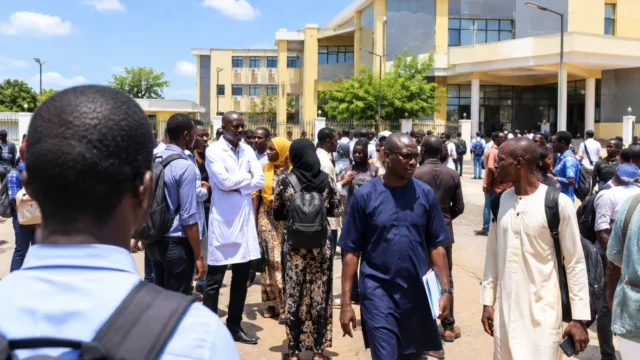
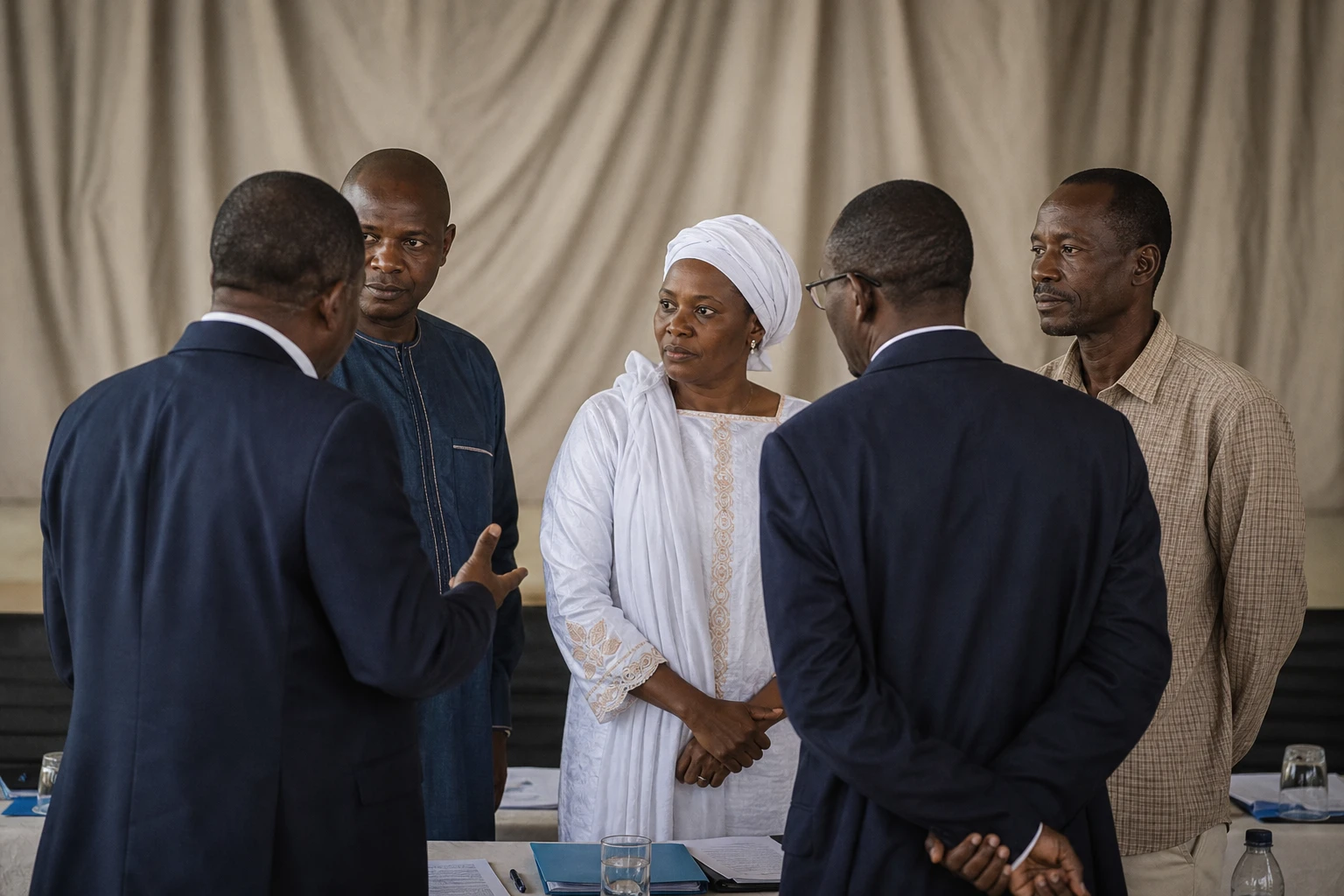
In Mopti, the region’s economic and administrative capital, displaced people were temporarily housed in a school, with support from the town hall and private donations. Food aid reported on the ground includes rice, tea, sugar, oil and powdered milk. But the shelter remains precarious. One displaced person described crowded classrooms, people sleeping in the courtyard and families crammed together when it rains. This kind of emergency accommodation, seen in previous waves of displacement in Mali, offers protection from immediate danger without resolving housing insecurity or the loss of livelihoods.
Perhaps the heaviest toll for residents is invisible from Bamako: the farming season has been interrupted. In a rural area, leaving fields at sowing time means delaying the harvest, putting livestock at risk and becoming more dependent on aid. The IOM, WFP and UN agencies stress that food security in Mali is directly linked to forced displacement, access to land and the provision of basic services.
A local crisis, with a chain reaction across the country’s centre
Kouakourou is not an isolated case. In central Mali, pressure from armed groups has long upended the rural economy. Communes are losing traders, teachers, health workers and some of their seasonal farmers. Schools become places of refuge, markets shrink, and travel to administrative centres becomes more dangerous. In Mopti, this vulnerability is also reflected in the burden shouldered by local authorities, often on the front line of organising accommodation, distributions and coexistence between displaced people and host families.
Central Mali is also paying the price of its strategic geography. Mopti is a crossroads between the north and south, and on routes towards Burkina Faso. When transport there becomes unstable, fish, livestock, millet and market-garden produce face delays, higher costs and sometimes supply disruptions. The consequences are not the same for everyone: urban households adapt better than isolated family farms, while already-poor households lose their margin for survival more quickly.
Institutionally, this crisis is unfolding in a Mali undergoing regional realignment. Since the country’s withdrawal from ECOWAS took effect on 29 January 2025, Bamako has strengthened its ties within the Alliance of Sahel States alongside Burkina Faso and Niger. This break is changing the frameworks for political and security cooperation in West Africa. But on the ground, the needs of displaced people remain the same: protection, food, healthcare, schooling and safe return.
What Kouakourou reveals about Mali and the Sahel
The Kouakourou case highlights a tension that has become central to Mali: the state says it is regaining the military initiative, while armed groups retain a strong capacity to disrupt rural areas. Recent fighting and claims of control around Mopti, Sévaré and other positions in the centre illustrate this war of positions, in which one side’s victory claims are not enough to restore normal life for others.
For displaced people, the immediate priority remains return. But that requires more than a temporary lull. It takes a stable security presence, passable roads, access to fields, open schools and aid mechanisms able to support families beyond the emergency phase. Without these, departures turn into prolonged exiles, and emptied villages become pockets of uncertainty across central Mali. Humanitarian agencies are already warning that, despite ongoing responses, needs continue to outstrip available funding.
Across the continent, Kouakourou is a reminder of a recurring lesson from the Sahel: a local crisis can quickly become a regional problem. Internal displacement puts pressure on neighbouring communes, regional capitals and trade corridors. It also weakens education, healthcare and farming systems. Across an area stretching from Mali to Burkina Faso and Niger, security is no longer determined only on military fronts. It also depends on villages’ ability to remain inhabited.