Algeria
 Egypt
 Libya
 Morocco
 Sudan
 Tunisia
 Benin
 Burkina Faso
 Cabo Verde
 Côte d'Ivoire
 Ghana
 Guinea
 Guinea-Bissau
 Liberia
 Mauritania
 Niger
 Nigeria
 Senegal
 Sierra Leone
 The Gambia
 Togo
 Cameroon
 Central African Republic
 Chad
 DR Congo
 Equatorial Guinea
 Gabon
 Republic of the Congo
 São Tomé and Príncipe
 Burundi
 Comoros
 Djibouti
 Eritrea
 Ethiopia
 Kenya
 Madagascar
 Malawi
 Mauritius
 Mozambique
 Rwanda
 Seychelles
 Somalia
 South Sudan
 Tanzania
 Uganda
 Angola
 Botswana
 Eswatini
 Lesotho
 Namibia
 South Africa
 Zambia
 Zimbabwe
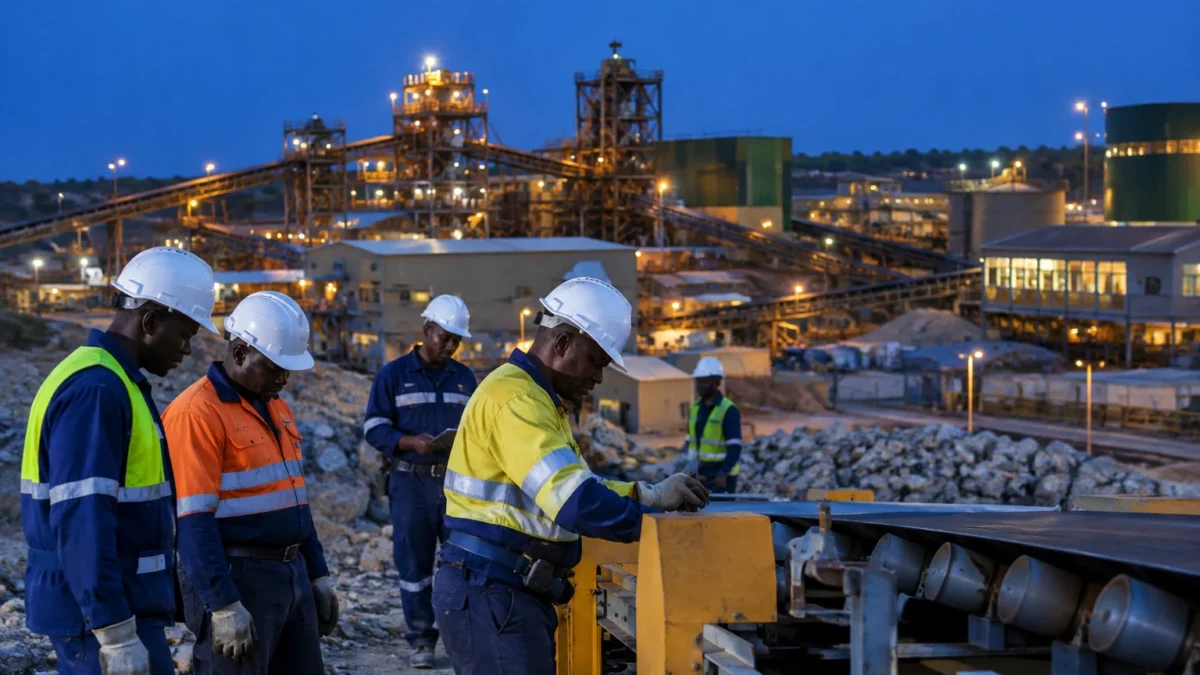
In Bamako, a visit by a Barrick executive follows a standoff that halted operations at Loulo-Gounkoto and put the distribution of mining revenues at the centre of debate. It signals a resumption of dialogue. On its own, however, it is not enough to establish that all fundamental disagreements between the two sides have been resolved.
The mining code at the heart of the standoff
Since the 2020 coup, Mali’s transitional authorities have sought to increase state revenues and national control over resources. In this context, Mali adopted a new mining code in 2023, as well as a law on local content. The code provides, among other things, for increased state participation in certain projects. Its application to existing mining agreements has fuelled disputes with several companies.
For Bamako, the challenge is to turn gold mining more effectively into public revenue and local benefits. For companies, the issue also concerns the rules applicable to contracts already signed, tax obligations and the predictability of investment. These positions do not cancel each other out: they define the balance of power that any agreement must address.
Loulo-Gounkoto, in the west of the country, is a major gold complex operated by Barrick. The dispute with the Malian state intensified between 2023 and 2025 over the application of the new mining framework, financial claims and control of operations. In December 2024, Barrick’s subsidiaries initiated international arbitration proceedings. In January 2025, operations at the site were suspended, according to company documents submitted to US securities regulators.
An agreement, followed by renewed contact
On 24 November 2025, the Malian government and Barrick announced an agreement ending their disputes over Loulo-Gounkoto. Barrick said that proceedings against the group, its subsidiaries and its employees would be dropped, that steps would be taken to secure the release of the four detained employees, and that the complex’s provisional administration would end. In return, its subsidiaries were to withdraw their arbitration claims.
The figures reported on the settlement should be distinguished. The agreement announced by the parties did not publicly set out all its terms. Press reports cited a total of about $430 million. In its financial documents, Barrick later specified that a payment of $253 million had been made to the Malian government in November 2025 as part of the settlement. These amounts should therefore not be presented as though they necessarily refer to the same thing.
A year later, the transitional prime minister, General Abdoulaye Maïga, received Sebastiaan Bock, a Barrick International executive, in Bamako, at the head of a group delegation. The meeting took place on Wednesday 25 November 2026, according to the official statement published the following day. Bock reaffirmed the company’s commitment to complying with the mining code and its intention to contribute to the national economy. Maïga, for his part, called for a transparent and mutually beneficial partnership.
Interests extending beyond the state-group relationship
The resumption of dialogue matters for public finances, but also for workers, suppliers and communities linked to the mine. A production halt affects income connected to the operation, subcontracting contracts and direct or indirect jobs. Conversely, stable operations do not automatically guarantee that the benefits will be distributed as the authorities and communities concerned wish.
The challenge for the Malian state is to enforce its rules while ensuring that agreements and tax obligations are applied clearly. For Barrick, the priority is to restore predictable operating conditions while committing to apply the national framework. The precise terms of the commitments, their monitoring and the settlement of any future disputes will matter more than the expressions of goodwill used at a meeting.
The issue also extends beyond the capital. Decisions made in Bamako concern a site in western Mali, but their effects may be felt by workers and local businesses that depend on its operations. Mining revenues, meanwhile, contribute to state resources nationally. How they are collected and redistributed therefore remains an issue for institutions and communities alike.
A signal being closely watched across the region
The case is part of a broader debate in West Africa: how can resource-rich countries increase the value captured locally without creating lasting uncertainty for mining projects? Mali is a member of the Economic Community of West African States (ECOWAS), although regional relations have been shaped by political changes in the Sahel. Resource management and the attractiveness of investment remain issues watched by governments and economic actors across the region.
The November 2026 meeting marks a sign of normalisation in relations between Bamako and Barrick, following the 2025 agreement. It does not, however, allow the conclusion that the partnership has been definitively restored. The points to watch are concrete: compliance with commitments linked to the mining code, continuity of operations at Loulo-Gounkoto, payments due to the state, and the role given to Malian companies and workers.
For the authorities, the test will be to turn the renegotiation of the rules into verifiable revenue and benefits. For the company, it will be to maintain operations in compliance with the national framework. The agreement closed a major dispute; the relationship will be measured by how it is implemented.