Algeria
 Egypt
 Libya
 Morocco
 Sudan
 Tunisia
 Benin
 Burkina Faso
 Cabo Verde
 Côte d'Ivoire
 Ghana
 Guinea
 Guinea-Bissau
 Liberia
 Mauritania
 Niger
 Nigeria
 Senegal
 Sierra Leone
 The Gambia
 Togo
 Cameroon
 Central African Republic
 Chad
 DR Congo
 Equatorial Guinea
 Gabon
 Republic of the Congo
 São Tomé and Príncipe
 Burundi
 Comoros
 Djibouti
 Eritrea
 Ethiopia
 Kenya
 Madagascar
 Malawi
 Mauritius
 Mozambique
 Rwanda
 Seychelles
 Somalia
 South Sudan
 Tanzania
 Uganda
 Angola
 Botswana
 Eswatini
 Lesotho
 Namibia
 South Africa
 Zambia
 Zimbabwe
When public procurement becomes a test of trust
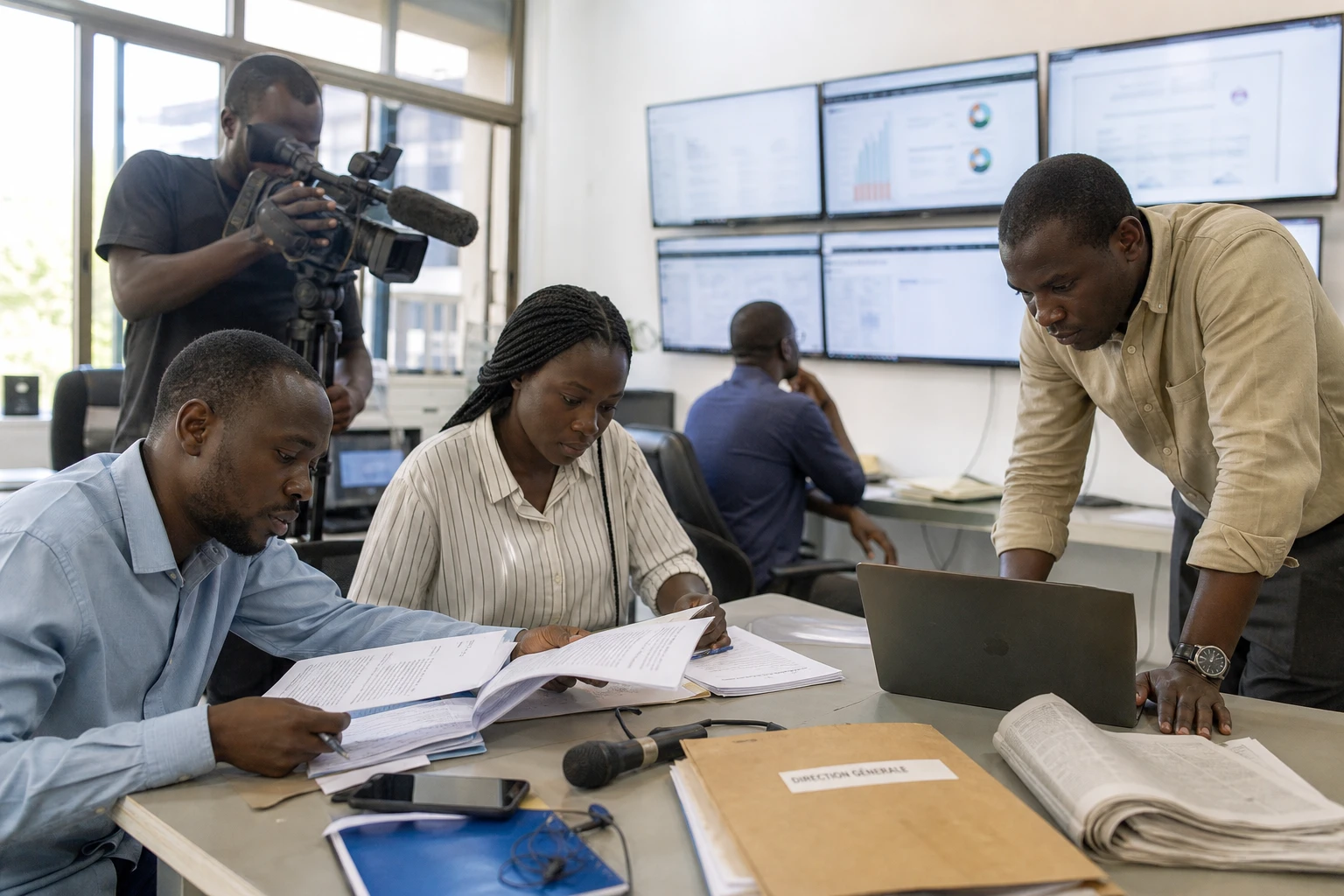
In Bamako, one question is being asked with increasing insistence: how can the use of public money be verified when the most sensitive spending concerns defence and state equipment? In a Mali still marked by the coups of 2020 and 2021, followed by an extended political transition, calls to audit contracts awarded under military rule go beyond a routine exercise in oversight. They strike at the heart of the credibility of public financial management.
The country nevertheless has institutions dedicated to transparency. The Auditor General was strengthened by a 2012 law, while the Public Procurement and Public Service Delegation Regulatory Authority oversees public procurement, with a national public procurement portal launched in Bamako. Meanwhile, the Central Office for the Fight against Illicit Enrichment stresses that preventing and prosecuting corruption remain state responsibilities.
Anti-corruption network calls for broad audit
On 4 September, an umbrella body representing around a hundred Malian associations working against corruption and financial crime petitioned the Auditor General to request an audit of public contracts awarded under the military transition. Its request covers the entire system, with particular attention to military spending, which is considered less accessible to standard oversight mechanisms. The call comes six years after the overthrow of Ibrahim Boubacar Keïta, known by the initials IBK.
The associations cite, in particular, purchases of military equipment, which often lack sufficient visibility for citizens and some watchdogs alike. They also point to the case of the new command aircraft unveiled in Bamako this summer. The authorities announced that a modernised Boeing 737 had been acquired for 15.6 billion CFA francs, or about €23.8 million, with the net cost to the Treasury significantly lower after compensation and the resale of reusable components were taken into account. African media outlets have repeated these figures without disputing them.
The aircraft’s unveiling was justified by the need to replace a plane damaged during the 17 September 2024 attack on Bamako-Sénou military airport. Several African sources agree on the date, type of aircraft and announced price. They also confirm that it is used for travel by the transitional president and official delegations. In the Malian context, the issue is therefore not only a budgetary one. It is political too: who oversees spending deemed strategic, and with what safeguards?
A budgetary issue, but also an institutional one
In Mali, defence absorbs a significant share of public resources amid continuing insecurity. The authorities have made sovereignty and rearmament central pillars of their governance. But as military spending rises, so does the need for traceability. Without a clear audit, suspicions flourish. With a credible audit, the state can instead show that it is protecting both security and public money.
For the population, the stakes are tangible. In large cities and rural regions alike, people’s priorities include essential services, stable prices, roads, healthcare and education. If public contracts are poorly documented, the impact is felt twice: first in the state’s finances, and then in the quality of services delivered. Conversely, tighter oversight of public procurement can strengthen trust, especially in a country where the institutional crisis has already eroded the relationship between citizens and the authorities.
The civil society call for oversight also fits into a broader regional context. Mali was suspended from ECOWAS and the African Union after the coups, and later distanced itself from several West African organisations. In this context, every sign of transparency matters. It affects the country’s standing in the region, as well as how African partners view Mali’s transition: as a period of lasting rupture, or as a moment when oversight institutions are seeking to reclaim their role.
What this episode says about Mali and the region
This case goes beyond one aircraft or a batch of public contracts. It points to a question that has become central in several Sahelian states: how can security be funded without weakening accountability? Mali, Burkina Faso and Niger are all undergoing political realignments in which sovereignty, security emergencies and budget transparency are sometimes in tension. In this landscape, the push for an audit is no technical footnote. It is a marker of governance.
The next point to watch is what follows the petition to the Auditor General. If the institution launches an inquiry and publishes detailed findings, it will be able to shed light on a sensitive case without relying on general statements. If nothing follows, the associations’ request will remain a political signal, but have no immediate effect on transparency in contracts awarded under the transition. Either way, the issue will remain central to Mali’s debate on public financial management in Bamako.