Algeria
 Egypt
 Libya
 Morocco
 Sudan
 Tunisia
 Benin
 Burkina Faso
 Cabo Verde
 Côte d'Ivoire
 Ghana
 Guinea
 Guinea-Bissau
 Liberia
 Mauritania
 Niger
 Nigeria
 Senegal
 Sierra Leone
 The Gambia
 Togo
 Cameroon
 Central African Republic
 Chad
 DR Congo
 Equatorial Guinea
 Gabon
 Republic of the Congo
 São Tomé and Príncipe
 Burundi
 Comoros
 Djibouti
 Eritrea
 Ethiopia
 Kenya
 Madagascar
 Malawi
 Mauritius
 Mozambique
 Rwanda
 Seychelles
 Somalia
 South Sudan
 Tanzania
 Uganda
 Angola
 Botswana
 Eswatini
 Lesotho
 Namibia
 South Africa
 Zambia
 Zimbabwe
In Mali, the question is no longer simply whether the army can retake a position. It is now whether it can hold it, protect its soldiers and maintain the routes linking the regions to Bamako.
September 2026 attacks in the centre of the country have brought this challenge back into focus. Within a few days, the Group for the Support of Islam and Muslims, or JNIM, struck a base in Dioura, positions in Konna and the military airport in Sévaré. The attacks came after the loss of Kidal in the spring and as Malian forces fight with the support of Russia’s Africa Corps.
A series of attacks on central strongholds
On 10 September, JNIM fighters attacked the military camp in Dioura, in the Mopti region. The Malian army confirmed the operation and announced an air-and-ground response. It did not, however, publish a detailed account of its losses.
Military, security and local sources cited by several media outlets reported that at least 100 Malian soldiers had been killed. Five Africa Corps members were also reportedly killed, according to information reported by Agence France-Presse. The Associated Press confirmed the severity of the attack, while noting that figures given by the different sides could not be independently verified.
JNIM claims a higher death toll and says it captured dozens of soldiers. The group released footage showing prisoners and equipment said to have been seized at the base. These claims are part of its wartime messaging and cannot therefore be treated as an established account of the losses.
The best-documented fact remains the scale of the setback. The garrison was overrun and some of its weapons were reportedly taken. Images released show assault rifles, machine guns, mortars, rocket launchers, ammunition and vehicles. This loss goes beyond a simple tactical incident. It affects the army’s ability to hold an isolated position in a rural area that is difficult to supply.
Four days later, JNIM targeted Konna and Sévaré airport. The facility is an important military hub in central Mali. Malian aircraft are stationed there, as are Africa Corps personnel.
The attacks reportedly involved explosives-laden drones and fire directed at the airport area. Sources cited by the international press reported that Malian soldiers and Russian fighters had been wounded. JNIM, for its part, claimed to have inflicted heavy losses on the forces at Sévaré and Konna. Here too, the figures given by the group remain unverifiable.
Partnership with Moscow put to the test on the ground
Since 2021, Mali’s transitional authorities have gradually strengthened military cooperation with Russia. The departure of French forces, followed by that of the United Nations mission, left the Malian army at the centre of the security strategy. Wagner was later replaced by the Africa Corps, a structure under the authority of Russia’s Ministry of Defence.
The change was meant to provide Bamako with more integrated support. The Africa Corps supplies personnel, training, air assets, armoured vehicles and artillery. Estimates cited in several analyses put its presence in Mali at around 2,000 to 2,500 troops.
Yet equipment alone does not solve the problem of territorial control. The attacks in Dioura and Sévaré show that JNIM retains the ability to concentrate forces, gather intelligence and move quickly. The group can strike a garrison, attack an airfield and retreat into an environment where the state remains largely absent.
The situation also highlights the fragility of declared military gains. In November 2023, the recapture of Kidal was presented as a symbol of Bamako’s return to authority in the north. In April 2026, the city came back under the control of the Azawad Liberation Front, as part of an offensive carried out with JNIM against government positions.
The withdrawal of a major Africa Corps contingent from Kidal added to the political significance of the episode. It shows that a military victory can be reversed when deployed forces lack administrative support, lasting local backing and sufficiently protected supply lines.
Civilians feature in a separate toll
The question of security effectiveness is not limited to military losses. It also concerns the protection of people in operational areas.
Human Rights Watch says nine civilians, including four children, were killed in Bombori, in the Mopti region, during an operation in July carried out by Africa Corps members accompanied by Malian soldiers. The organisation says it interviewed witnesses, community leaders and civil society actors. According to their accounts, residents were shot, beaten or displaced, while homes were set on fire.
In a separate case, the organisation says eight civilians, including three children, were killed in Kyrnia on 15 June in an air strike. Evidence gathered by Human Rights Watch, including satellite images, indicates the impact of munitions dropped from an aircraft. The organisation identifies the aircraft as a Sukhoi Su-24 used by the Africa Corps, while noting that JNIM fighters were in the area.
These allegations should be examined through independent investigations. They nonetheless illustrate a major risk for Bamako. A campaign to retake territory cannot establish lasting authority if people associate state operations with insecurity, abuses or a lack of information.
A crisis that extends beyond Mali’s borders
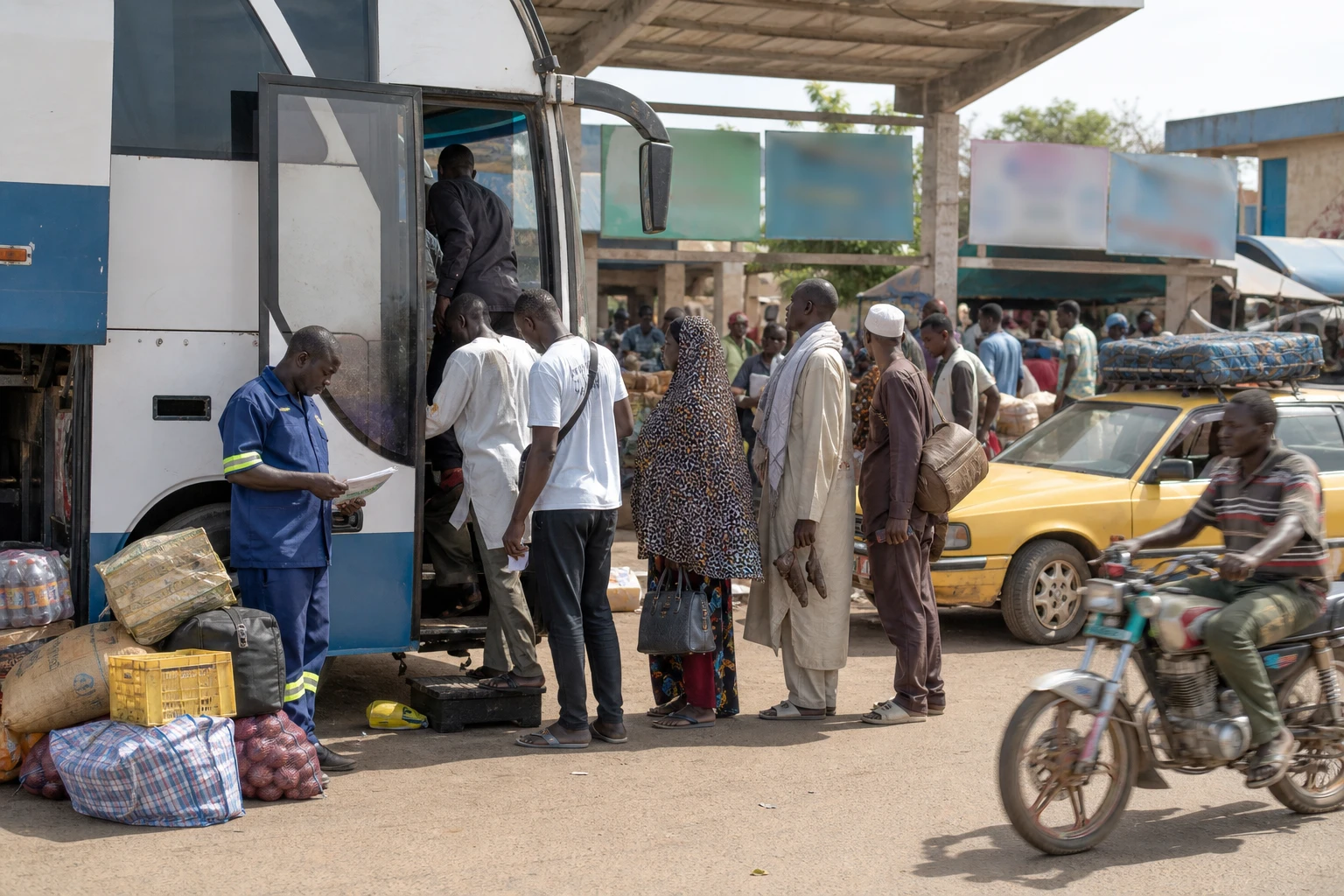
JNIM is not just seeking to attack camps. For several years, the group has also put pressure on trade routes and corridors linking Mali to ports on the Atlantic coast.
This directly affects Côte d’Ivoire. The Abidjan–Bamako corridor carries fuel, food and imported goods. It serves an economy heavily dependent on regional trade. Any prolonged disruption raises costs in cities, slows business activity and also affects traders and transport operators in the informal economy.
The deteriorating security situation is therefore of concern to the Economic Community of West African States, or ECOWAS, even though Mali withdrew from the bloc alongside Burkina Faso and Niger to form the Alliance of Sahel States. Political borders do not stop trade flows or the movement of armed groups.
For Bamako, the next challenge will be to turn the military resources available into lasting control. That means securing bases, roads and communities. September’s attacks above all show that a larger foreign presence alone does not guarantee stability across Malian territory.