Algeria
 Egypt
 Libya
 Morocco
 Sudan
 Tunisia
 Benin
 Burkina Faso
 Cabo Verde
 Côte d'Ivoire
 Ghana
 Guinea
 Guinea-Bissau
 Liberia
 Mali
 Mauritania
 Niger
 Nigeria
 Senegal
 Sierra Leone
 The Gambia
 Togo
 Cameroon
 Central African Republic
 Chad
 DR Congo
 Equatorial Guinea
 Gabon
 Republic of the Congo
 São Tomé and Príncipe
 Burundi
 Comoros
 Djibouti
 Eritrea
 Ethiopia
 Kenya
 Madagascar
 Mauritius
 Mozambique
 Rwanda
 Seychelles
 Somalia
 South Sudan
 Tanzania
 Uganda
 Angola
 Botswana
 Eswatini
 Lesotho
 Namibia
 South Africa
 Zambia
 Zimbabwe
A mining project scales up in Lilongwe
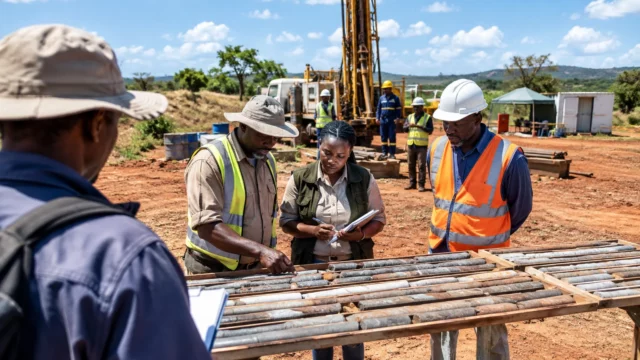
In Malawi, major mining projects are no longer simply about extracting ore and shipping it abroad. The question is now broader: how much value can the country retain at home, and on what terms? At the Kasiya site, in Lilongwe district, this question is taking concrete shape. The project, led by Sovereign Metals, no longer targets only rutile and graphite. It now includes a rare earths prospect, with a monazite concentrate presented as a strategic by-product.
This shift comes in a country that has for several months been pushing the idea of moving its extractive sector up the value chain. The Malawian government has included the opening of negotiations on mining agreements linked to Kasiya in its 2026 budget framework, while calling for more local processing, domestic benefits and compliance with local-content rules. At the same time, the Ministry of Mines and the Mining Regulatory Authority have been tasked with strengthening oversight of mining rights, exports and compliance. The signal is clear: Lilongwe wants projects that are more transparent, but also more profitable for the national economy.
What the new Kasiya study says
On 9 September 2026, the Australian operator of Kasiya published a scoping study on the recovery of monazite, a mineral that can contain rare earths. The study puts the additional investment required to add a recovery and separation circuit at about $29m, without opening a new mine or changing the upstream processing. The company estimates that this component could produce about 2,626 tonnes a year of rare earth concentrate, with a pre-tax net present value of about $722m over more than 23 years. The study nevertheless specifies that it remains preliminary and is not, on its own, sufficient to establish mineral reserves or definitive viability.
This component adds to an already highly ambitious project. The definitive feasibility study published in April 2026 describes Kasiya as a mine expected to produce 222,000 tonnes of rutile and 275,000 tonnes of graphite a year over an initial 25-year life, for an investment of about $727m. The new rare earths study reuses part of this industrial infrastructure and draws on the same processing flows, limiting the additional cost announced. In practice, the project is changing status: it is no longer presented only as an industrial minerals development, but as a critical minerals project in the broader sense.
Why rare earths change how the project is viewed
The significance lies not only in the volume announced, but above all in the market’s geopolitics. Heavy rare earths such as dysprosium, terbium and yttrium are sought for electronics, magnets, aerospace and certain defence applications. The company says the concentrate targeted at Kasiya could cover five of the seven rare earths subject to Chinese export restrictions. The US Geological Survey, for its part, says in its 2026 overview that the United States remains 100% dependent on imports for yttrium, with supplies largely derived from materials processed in China.
For Malawi, this international dimension could become a negotiating lever. The country is seeking investors, but also wants to avoid being confined to the role of raw-material exporter. That is the central issue in the mining agreements mentioned in the 2026 budget: retaining more value locally, increasing the state’s share, regulating exports and requiring commitments on local processing. In a landlocked country, where logistical costs weigh heavily, the choice of industrial model matters as much as the deposit itself. A mine that feeds foreign value chains does not have the same impact as a project that develops services, maintenance, transport, separation chemistry and skilled employment around Lilongwe.
The Malawian government is also counting on several mining projects to scale up the sector. Official documents also cite Kangankunde, Songwe and Kanyika among the projects expected to strengthen the country’s position in strategic minerals. Kasiya is therefore part of a broader strategy, in which the extractive sector is expected to support foreign-currency earnings, broaden the industrial base and carry more weight in an economy still highly exposed to climate shocks and imports. This ambition nevertheless depends on a simple constraint: electricity, infrastructure and the quality of the contractual framework must keep pace. Without them, the promise of a major mine is quicker to write down than to build.
A regional significance for SADC
Kasiya’s significance extends beyond Malawi’s borders. Malawi is a founding member of SADC, the Southern African Development Community, and the bloc itself is promoting regional industrialisation and more integrated value chains. In this context, a project such as Kasiya has more than mining value. It also feeds into a debate about Southern Africa’s place in critical minerals, local processing and high-value-added exports. SADC has recently stressed the strengthening of regional industrial value chains and economic ties between member states.
The timeline to watch is now less about a market announcement than about technical and political milestones. Sovereign Metals says it intends to continue its studies ahead of a pre-feasibility study expected in 2027. In parallel, Lilongwe must clarify the terms of the mining negotiations, the state’s role and the safeguards for the communities concerned. That is where the project’s real transformation will be decided: not in the volume of rare earths announced alone, but in Malawi’s ability to turn a promising deposit into a sustainable industrial asset, sovereign in its governance and beneficial to its economy.