Algeria
 Egypt
 Libya
 Morocco
 Sudan
 Tunisia
 Benin
 Burkina Faso
 Cabo Verde
 Côte d'Ivoire
 Ghana
 Guinea
 Guinea-Bissau
 Liberia
 Mali
 Mauritania
 Niger
 Nigeria
 Senegal
 Sierra Leone
 The Gambia
 Togo
 Cameroon
 Central African Republic
 Chad
 DR Congo
 Equatorial Guinea
 Gabon
 Republic of the Congo
 São Tomé and Príncipe
 Burundi
 Comoros
 Djibouti
 Eritrea
 Ethiopia
 Kenya
 Madagascar
 Mauritius
 Mozambique
 Rwanda
 Seychelles
 Somalia
 South Sudan
 Tanzania
 Uganda
 Angola
 Botswana
 Eswatini
 Lesotho
 Namibia
 South Africa
 Zambia
 Zimbabwe
Targeted credit for a sector short of breathing space
In a country where land still provides most livelihoods, the real issue is not simply producing more. Above all, farmers need to finance the next season, buy inputs at the right time and absorb a climate shock without sliding into informal debt.
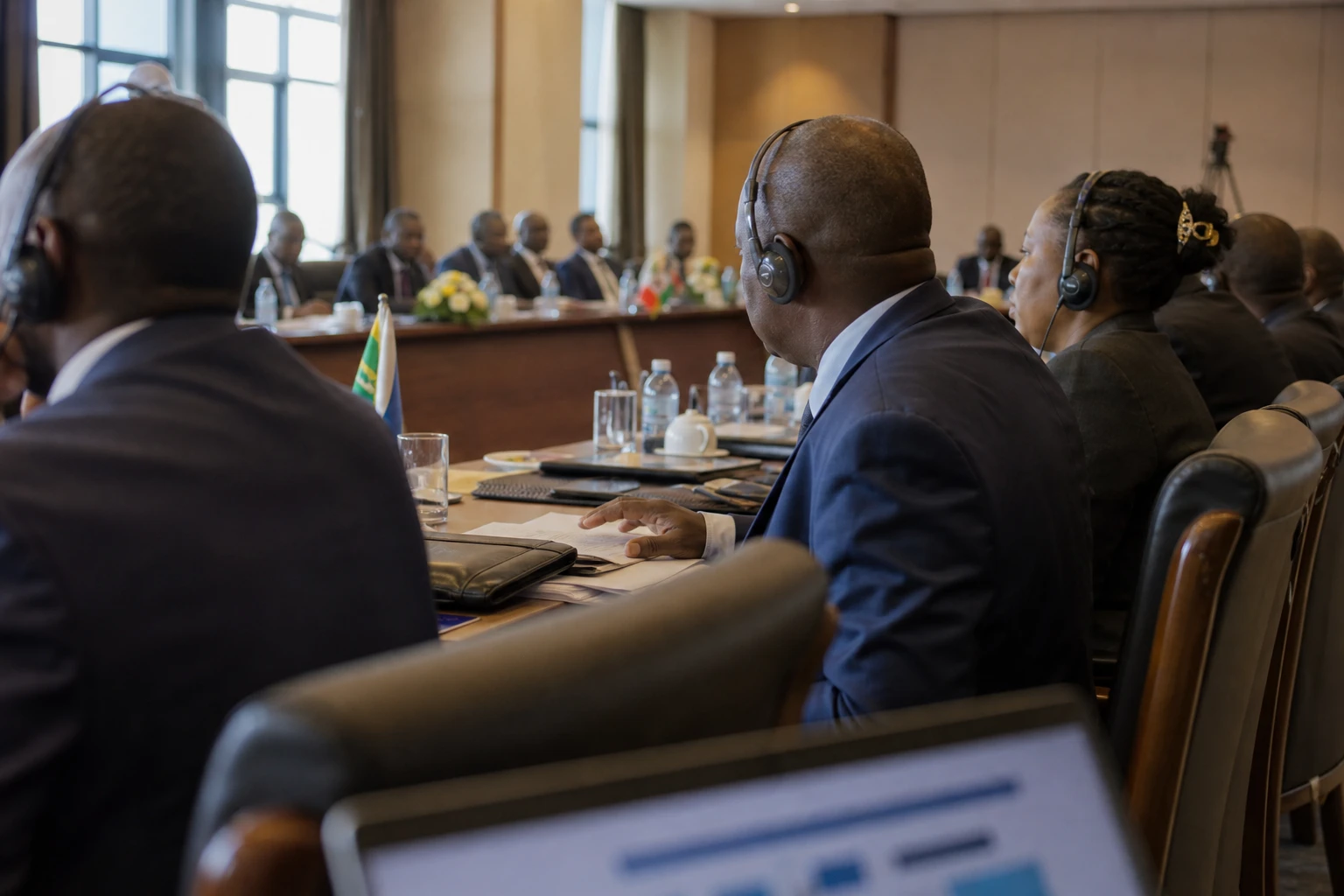
With this in mind, the European Investment Bank, through EIB Global, announced on 15 September 2026 a €7.5 million financing package for Centenary Bank Malawi. The loan is to be on-lent to smallholder farmers and agri-food micro-enterprises with fewer than 10 employees.
The arrangement has two strands. Half of the funding is intended to support sustainable agriculture that is resilient to climate change. The other half is to go to businesses run by women or those that have a positive knock-on effect on their economic empowerment. The scheme also includes technical assistance to help the bank lend more to the agricultural sector and reach underserved customers.
The signal matters as much as the amount. In Malawi, the issue is not a lack of agricultural activity. It is a lack of long-term, suitable and patient finance in a country where rural incomes remain highly exposed to weather extremes and input prices.
Malawi seeks to transform its rural base
Malawi, whose capital is Lilongwe, remains one of the countries in southern Africa where agriculture accounts for the largest share of employment and exports. The World Bank notes that the sector still provides a large proportion of jobs, while the Malawian government places agriculture at the heart of its economic transformation strategy through to 2063.
This priority is not new. It responds to a straightforward constraint: production depends heavily on rainfall, margins are thin, and losses caused by droughts and floods can quickly erode the gains from a growing season. The World Bank’s country profile also stresses that the economy needs higher agricultural productivity to support incomes and employment. The European Commission makes the same point: Malawi’s economy remains heavily dependent on rain-fed agriculture and is therefore vulnerable to climate shocks.
In this context, a well-structured bank loan can make a difference for a market gardener, a processing co-operative, a small mill or a storage business. It will not solve everything. But it can pay for a pump, an irrigation system, a dryer, a warehouse or a small processing facility — equipment that increases local added value.
The bank concerned is not an outsider to Malawi’s financial landscape. Centenary Bank Malawi is regulated by the Reserve Bank of Malawi and has focused on SMEs, microfinance and financial inclusion. The partnership with EIB Global therefore uses a channel already rooted in the local market, rather than an entirely new scheme.
What this type of financing can change
The key issue is how risk is structured. Small farms and agri-food micro-enterprises are often considered too fragile by conventional banks. They may not have formal collateral, their incomes are seasonal and their markets can be irregular. As a result, they pay more for credit — or cannot access it at all.
The announced funding aims to correct this bias. It is part of the Global Gateway strategy, the EU’s external investment strategy. It also forms part of a broader effort: the European Union has earmarked €480 million for its partnership with Malawi for 2021–2027, with a focus on green transformation, governance and human capital.
For women, the stakes are even more tangible. In Malawian agriculture and small-scale processing alike, they often perform the most exposed roles: production, sales, storage and day-to-day income management. When credit reaches them, it is more likely to support schooling, household food and business stability. That is why the funding earmarked for women-led businesses is not a minor detail, but a deliberate targeting choice.
There is also a potential territorial benefit for rural areas. In Lilongwe, Blantyre and Mzuzu, the banking sector can attract loan applications. But in the districts, a lack of finance remains a major obstacle to modernising value chains. If the funds genuinely reach small-scale producers, they could help reduce dependence on emergency purchases after climate shocks.
A Malawian issue with regional significance
The issue extends beyond Malawi. The SADC, the Southern African Development Community, said in Lilongwe in June 2026 that agriculture is one of the sectors most affected by climate impacts in the region. Droughts, floods and cyclones do not stop at borders. They disrupt markets, roads, stocks and incomes in several countries at once.
This is where the multiplier effect matters. A €7.5 million loan remains modest on a national scale. But it can send a signal to other funders, local and international. It shows that a local financing model, backed by a bank operating in Malawi, can support agriculture without relying solely on major infrastructure projects.
Success will, however, depend on implementation. If the funds remain concentrated in a few urban centres, the impact will be limited. If they genuinely reach smallholders, local processors and women-led businesses, they could support a broader productive base. Malawi does not only need to produce more. It also needs to get credit into villages, district markets and the small processing facilities that underpin its real economy.
In the coming months, attention will therefore focus on the speed of disbursement, the quality of technical support and Centenary Bank Malawi’s ability to reach customers who usually remain on the margins of the financial system. Only then can the announced financing become more than good news: a practical tool for economic resilience.