Algeria
 Egypt
 Libya
 Morocco
 Sudan
 Tunisia
 Benin
 Burkina Faso
 Cabo Verde
 Côte d'Ivoire
 Ghana
 Guinea
 Guinea-Bissau
 Liberia
 Mali
 Mauritania
 Niger
 Nigeria
 Senegal
 Sierra Leone
 The Gambia
 Togo
 Cameroon
 Central African Republic
 Chad
 DR Congo
 Equatorial Guinea
 Gabon
 Republic of the Congo
 São Tomé and Príncipe
 Burundi
 Comoros
 Djibouti
 Eritrea
 Ethiopia
 Kenya
 Madagascar
 Mauritius
 Mozambique
 Rwanda
 Seychelles
 Somalia
 South Sudan
 Tanzania
 Uganda
 Angola
 Botswana
 Eswatini
 Lesotho
 Namibia
 South Africa
 Zambia
 Zimbabwe
When Malawi’s minerals enter the sights of major industrial supply chains
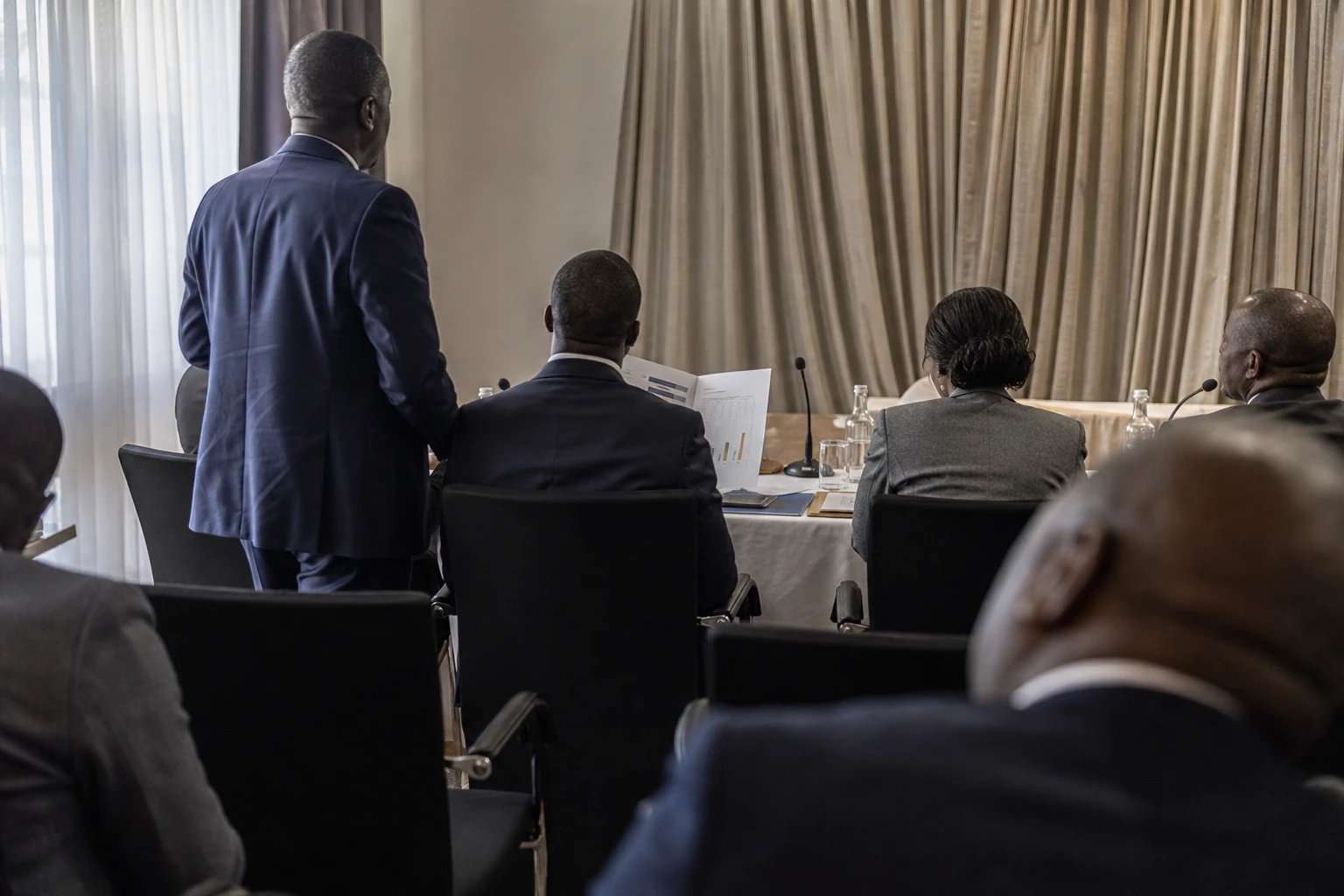
In Malawi, mining is no longer just a matter of what lies underground. It now touches on a development choice: export quickly, or build industries capable of retaining more value in the country. As Western manufacturers seek to secure supplies of so-called critical minerals, Lilongwe sees a rare but still fragile window of opportunity. The challenge is easy to state and difficult to meet: turn geological promise into sustainable revenue without letting the country become merely a starting point on the raw materials map.
This issue extends beyond Malawi alone. The country is a founding member of SADC, the Southern African Development Community, a bloc of 16 states that promotes economic integration and regional cooperation. Across the region, securing supplies, creating jobs and moving up the industrial value chain have become shared priorities. For Malawi, a landlocked and still lightly industrialised country, the challenge is therefore twofold: attract investment, then prevent the wealth created from flowing too quickly towards foreign ports, refineries and financial centres.
Projects still in the making, but already attracting interest
The first project drawing attention is Kangankunde, led by Australian company Lindian Resources. The project aims to produce about 20,000 tonnes of monazite concentrate a year, with commissioning expected in the fourth quarter of 2026, according to the company. Monazite is sought after because it contains rare earths, metals used in permanent magnets, electronics and a range of equipment linked to the energy transition. The company also says it is seeing demand from end users in the United States, France, Europe and Japan. This is a statement by a listed company, and therefore a commercial signal to be treated with caution, but it confirms the genuine interest in this Malawian site.
Alongside Kangankunde, the Kasiya project, developed by Sovereign Metals in central Malawi, illustrates another aspect of this growing momentum. The company describes it as the world’s largest natural rutile deposit and the second-largest flake graphite deposit. Its profile is of particular interest to industrial supply chains linked to titanium and batteries. In July 2026, the company said it wanted to give Kasiya a strategy focused on the United States and its allies, in response to demand for non-Chinese sources of graphite, rutile and potentially heavy rare earths as a by-product.
A third project, Songwe Hill, shows that Malawi is not betting on just one option. In March 2026, Mkango Resources published an updated feasibility study for the rare earths project and a separation plant in Puławy, Poland. The company forecasts an initial investment of about $325.5 million for Songwe Hill and highlights products suited to international markets. In September 2025, it also announced a repayable financing facility of $4.6 million from the Development Finance Corporation, the US public development finance institution. The message is clear: Malawian rare earths are already part of value chains extending far beyond the country’s borders.
Western strategy: diversification alongside accepted dependence
Interest from the United States and Europe is driven by industrial and geopolitical calculations. The major powers are seeking to reduce their dependence on China, which dominates a large share of the value chains for rare earths and other critical minerals. International developments in 2026 have underscored this trend: Washington has raised the possibility of creating a critical-minerals trading bloc with its allies, while several Western partners are seeking to organise more secure supplies. In this context, Malawi’s projects are gaining value because they offer geographical diversification, not just mining returns.
But foreign demand alone guarantees nothing for the Malawian economy. The country remains at a stage where exploration, feasibility studies, permits, roads, energy and processing facilities matter as much as ore quality. The Ministry of Finance has previously noted that mining accounts for only about 1% of GDP, while having the potential to reach 10% of the economy. The government, for its part, says it wants to raise that contribution to between 10% and 15% by 2030, or even higher, according to some official statements. This is an ambitious goal, but it requires infrastructure, a stable tax framework and strong negotiating capacity when dealing with foreign operators.
For the Malawian authorities, the challenge is therefore not limited to attracting capital. It is also about steering these projects towards local employment, the procurement of domestic goods and services, technical training and, if possible, some processing on site. Otherwise, the country risks remaining dependent on a familiar model: extraction in the south, value added in the north. Conversely, if the projects advance to production, Malawi could begin to change its position in global graphite and rare earths supply chains, two segments that have become strategic for the electrical industry, defence and advanced technologies.
What Malawi can gain, and what it still needs to secure
The continental significance of this moment is clear. Several African countries are now appearing on the maps of critical minerals sought by industrial powers. This creates new room for negotiation for producer states, provided they avoid competing with their neighbours and strengthen their position in regional blocs such as SADC. Southern Africa already has a substantial mining base. Malawi can become part of it, not as a passive outpost but as an actor capable of influencing specific segments of the energy transition.
What happens next will depend on a few very concrete milestones: moving from studies to production, securing finance, regulatory stability and the choice of markets. That is where everything will be decided. If Kangankunde, Kasiya and Songwe Hill clear their next hurdles, Malawi will be able to discuss not only export volumes, but also local content, skilled jobs and public revenue. If the projects remain stuck at the announcement stage, Western interest will remain largely that of prospectors. In a global market shaken by rivalry over critical minerals, Malawi therefore has a card to play. It must still set the rules itself.