Algeria
 Egypt
 Libya
 Morocco
 Sudan
 Tunisia
 Benin
 Burkina Faso
 Cabo Verde
 Côte d'Ivoire
 Ghana
 Guinea
 Guinea-Bissau
 Liberia
 Mali
 Mauritania
 Niger
 Nigeria
 Senegal
 Sierra Leone
 The Gambia
 Togo
 Cameroon
 Central African Republic
 Chad
 DR Congo
 Equatorial Guinea
 Gabon
 Republic of the Congo
 São Tomé and Príncipe
 Burundi
 Comoros
 Djibouti
 Eritrea
 Ethiopia
 Kenya
 Malawi
 Mauritius
 Mozambique
 Rwanda
 Seychelles
 Somalia
 South Sudan
 Tanzania
 Uganda
 Angola
 Botswana
 Eswatini
 Lesotho
 Namibia
 South Africa
 Zambia
 Zimbabwe
A transition still searching for its pace
In Antananarivo, the challenge is not just to set a date. Above all, it is to convince the Malagasy people that the end of the transition will not be a mere succession of deadlines, but a clear path back to constitutional order. In a country where confidence in the electoral system has already been weakened, every week matters as much as every announcement.
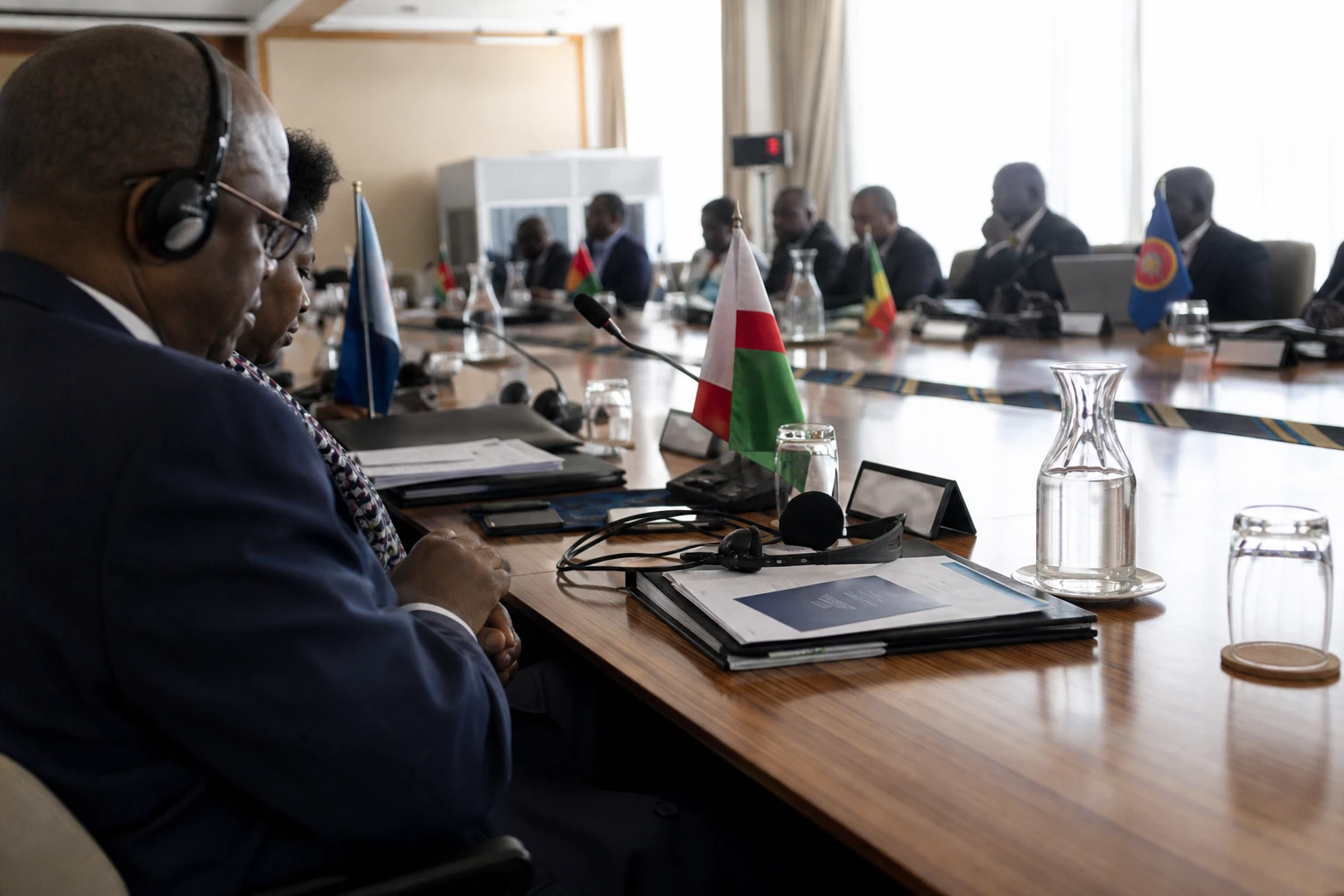
The process is part of a broader refoundation launched after the transition began in October 2025. Madagascar’s authorities have submitted a “Refoundation Programme” to the Southern African Development Community, or SADC, setting out four phases: national consultations, electoral governance reform, drafting a new constitutional text, and then holding elections. The idea of an election in 2027 is therefore not new. What has changed is the level of detail being presented—or the lack of it.
July 2027, but which vote exactly?
According to details made public after discussions in Durban, the timetable envisages an initial vote in July 2027 on the future constitutional framework, without using the word referendum, followed by a presidential election before the end of the same year. This is close to what the Independent National Electoral Commission, or CENI, had already indicated in spring 2026, when it mentioned a referendum in June 2027 and a presidential election in October 2027. In other words, the electoral process exists on paper, but its precise contours remain fluid.
The authorities have also placed this timetable within a regional framework. At SADC, Madagascar presented its refoundation programme as a 24-month roadmap intended to restore credible institutions and lead to elections considered acceptable to the widest possible number of people. At its June 2026 summit, the regional organisation said it expected “clear” reforms, accompanied by a precise and transparent timetable and open to all Malagasy stakeholders. SADC has therefore not endorsed a deadline down to the day; it has mainly demanded clarity.
On the ground, CENI says it has already begun discussions through a permanent consultation forum in Antananarivo, with support from technical and financial partners. The European Union, for its part, has reiterated its support for the electoral process while stressing the need to prepare for elections from 2027. This matters: external support is focused less on the date than on the credibility of the rules of the game.
The national consultation bottleneck
Before any vote, two areas of work must still move forward. First, the national consultation entrusted to FFKM, the Council of Christian Churches in Madagascar. Second, a political dialogue with the parties. The principle is clear: work up from the communes to the national level to develop a text and rules that can win broader acceptance. But the timetable remains unclear. The authorities had announced a launch in August; at this stage, the themes, pace and method have not been settled.
This uncertainty is fuelling reservations among some of the young people mobilised under the Gen Z banner. The criticism is not only political. It is also practical: how can anyone believe in an electoral timetable if the consultation meant to prepare it has not begun at local level or clarified its priorities? The criticism reflects a broader point about Madagascar: civic patience exists, but it is wearing thin when institutions promise a process and struggle to show its first milestone.
The debate extends beyond activist circles. The revision of the electoral register, launched or announced for 2026 by CENI, shows that the electoral administration wants to prepare in advance. The question is whether this technical preparation will be enough to make up for a political process that is still incomplete. In a transition, forms, lists, local offices and appeals matter as much as speeches.
What this timetable changes in practice
For the executive, even an approximate date sets a horizon. It makes it possible to talk about reform rather than an endless interim period. For CENI, it provides a reference point for updating the lists, training staff and upgrading the electoral system. For the parties, it means taking a position on substance: the Constitution, institutions, rules of competition and the security of the vote. And for citizens, it raises a simple question: when will voting carry full political legitimacy?
The economic context makes this task even more sensitive. In Madagascar, public priorities are not limited to the ballot box: water, energy, basic services, urban jobs and the stability of regions. SADC, in its discussions with the Malagasy authorities, also highlighted the importance of stabilising essential services during the transition. A poorly prepared electoral process could therefore affect the administration, local investor confidence and households’ daily lives long before it influences the broader institutional balance.
Across Africa, Madagascar offers a test case. SADC is testing its ability to support a transition without endorsing uncertainty. The African Union, too, is observing a simple principle: a return to constitutional order cannot be decreed; it must be built through verifiable steps. If the 2027 timetable becomes clearer, it will say much about the maturity of Madagascar’s institutions and how Southern Africa balances diplomatic pressure with respect for political sovereignty.
The next phase will therefore hinge on three very concrete milestones: the actual holding of the national consultation, publication of a coherent electoral timetable, and then putting the constitutional text to a vote. That is where it will finally become clear whether July 2027 marks the start of institutional normalisation or merely another stage in a transition that still needs to be consolidated.