Algeria
 Egypt
 Libya
 Morocco
 Sudan
 Tunisia
 Benin
 Burkina Faso
 Cabo Verde
 Côte d'Ivoire
 Ghana
 Guinea
 Guinea-Bissau
 Liberia
 Mali
 Mauritania
 Niger
 Nigeria
 Senegal
 Sierra Leone
 The Gambia
 Togo
 Cameroon
 Central African Republic
 Chad
 DR Congo
 Equatorial Guinea
 Gabon
 Republic of the Congo
 São Tomé and Príncipe
 Burundi
 Comoros
 Djibouti
 Eritrea
 Ethiopia
 Kenya
 Malawi
 Mauritius
 Mozambique
 Rwanda
 Seychelles
 Somalia
 South Sudan
 Tanzania
 Uganda
 Angola
 Botswana
 Eswatini
 Lesotho
 Namibia
 South Africa
 Zambia
 Zimbabwe
A scholarship, but above all a professional stepping stone
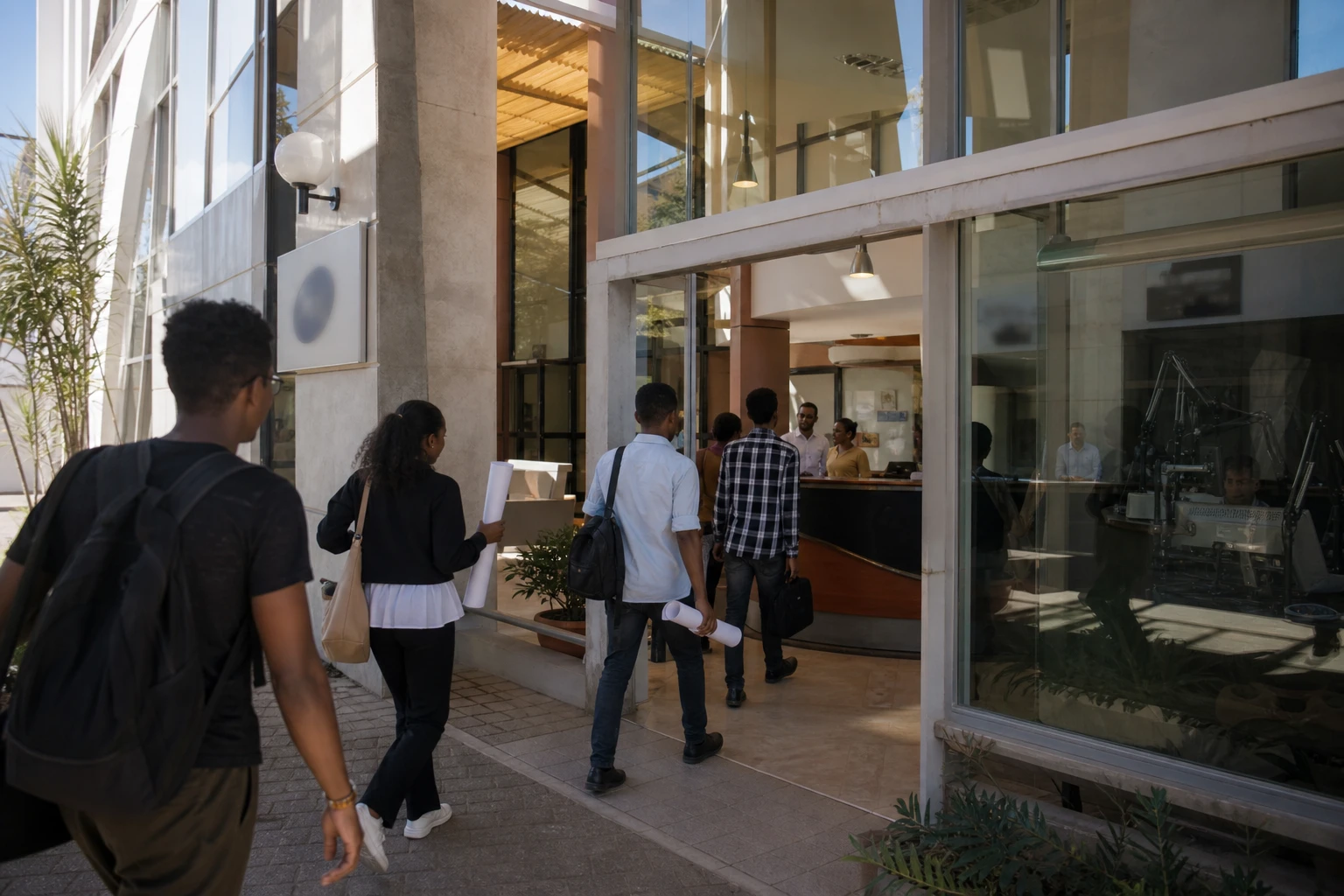
In Antananarivo, young radio journalists and technicians can, for a few weeks, take a step up. For many Malagasy professionals, the stakes go beyond winning an award. It is about gaining access to methods, a network and recognition that can shape an entire career.
In a media landscape where radio remains a vital source of local information, this opportunity comes as Madagascar is also seeking to strengthen its institutions and professional skills. The country belongs to SADC, the Southern African Development Community, a region where expertise, training and technical cooperation are increasingly shared. Holding this edition in Madagascar is a reminder that the Malagasy media scene is not peripheral. On the contrary, it is a source of talent and a hub for regional exchange.
What the 2026 edition involves
Applications have been open since Monday 3 August 2026. The scholarship is open only to journalists and technicians living in Madagascar, under the age of 35 and with at least two years’ experience in radio. Applications must be submitted by midnight Paris time on Sunday 23 August 2026.
Under the announced arrangements, five journalists and five technicians will be selected for a week of workshops in Antananarivo in late October. After this training, two award winners will then spend a month in Paris for further professional development at RFI, Sciences Po’s journalism school and the National Audiovisual Institute. An additional prize, awarded by the Association of Friends of Ghislaine Dupont and Claude Verlon, will also recognise two deserving candidates who do not win the main award, with equipment to support their professional work.
This format has become familiar. The Ghislaine Dupont and Claude Verlon Scholarship was created in tribute to the two RFI reporters murdered in Mali on 2 November 2013. The UN later proclaimed 2 November the International Day to End Impunity for Crimes against Journalists, specifically in memory of that date.
Why Madagascar matters in this chain of knowledge-sharing
The choice of Antananarivo is no coincidence. Madagascar has hosted the scholarship before, in 2015, and several editions have since taken place in other French-speaking African countries, reflecting a continent-wide approach to sharing skills rather than training centred on a single hub. France Médias Monde notes that the scholarship each year rewards two young winners, one journalist and one technician, from a French-speaking African country.
For Malagasy participants, the training can open very practical doors. It provides a reporting method, high technical standards and exposure to other editorial practices. For local radio stations, it also brings wider benefits: training a journalist or technician improves the quality of broadcasts, the rigour of production and, often, the outlet’s credibility in its broadcast area.
The benefits are not confined to the capitals. In Madagascar’s regions, where people still get much of their information from radio, strengthening reporting teams has a direct effect on the quality of content broadcast outside Antananarivo. It therefore reaches urban centres as well as secondary cities and more remote areas.
An African network taking shape
Over the years, the scholarship has also helped build a professional community. A network of past winners and participants has taken shape around investigative journalism and solidarity among peers. France Médias Monde says the scholarship is part of a broader policy to support talent, including placements at RFI, the INA and Sciences Po’s journalism school.
This kind of network matters on a continent where the movement of skills remains uneven. A young reporter trained in Madagascar can then work in Dakar, Abidjan, Kinshasa or Antananarivo to comparable standards. That is one of the benefits of such programmes: raising professional standards without losing sight of local realities.
The scholarship’s recognition also stems from its symbolic dimension. It links training with the memory of a crime against journalists. In Africa, where press freedom remains fragile in several countries, this reminder is not merely symbolic. It says that informing the public comes at a cost, but also that the profession can organise to pass on knowledge, protect and train its members.
What to watch between now and November
The timetable is already set. Applications close at midnight Paris time on 23 August 2026. The workshops will follow in late October in Antananarivo, ahead of the award ceremony on 2 November 2026. Once again, that date will coincide with the International Day to End Impunity for Crimes against Journalists.
At continental level, the initiative is a reminder that training African journalists does not depend solely on major international schools. It is also built through targeted partnerships, grassroots networks and ways of sharing knowledge that are suited to the continent’s realities. For Madagascar, it is a welcome signal: its media landscape can host, train and reach beyond its borders.
In a region shaped by political and economic change, this edition highlights another form of sovereignty: expertise. Better training, better production, better investigations. That is often where public trust begins.