Algeria
 Egypt
 Libya
 Morocco
 Sudan
 Tunisia
 Benin
 Burkina Faso
 Cabo Verde
 Côte d'Ivoire
 Ghana
 Guinea
 Guinea-Bissau
 Liberia
 Mali
 Mauritania
 Niger
 Nigeria
 Senegal
 Sierra Leone
 The Gambia
 Togo
 Cameroon
 Central African Republic
 Chad
 DR Congo
 Equatorial Guinea
 Gabon
 Republic of the Congo
 São Tomé and Príncipe
 Burundi
 Comoros
 Djibouti
 Eritrea
 Ethiopia
 Kenya
 Malawi
 Mauritius
 Mozambique
 Rwanda
 Seychelles
 Somalia
 South Sudan
 Tanzania
 Uganda
 Angola
 Botswana
 Eswatini
 Lesotho
 Namibia
 South Africa
 Zambia
 Zimbabwe
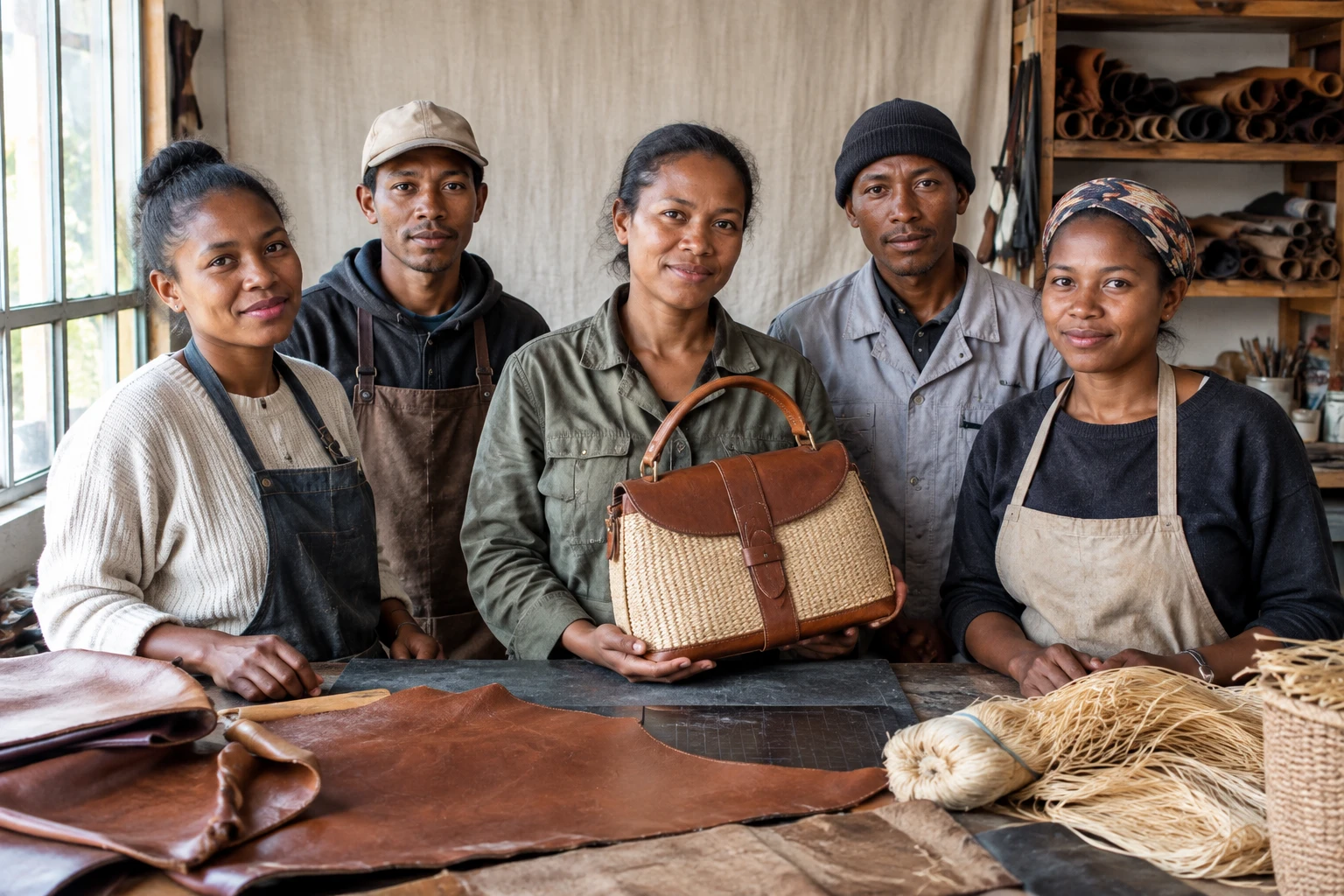
In Antananarivo, the value of a bag can be determined well before the first stitch: by the time spent tanning, the choice of fibres and the mastery of techniques learned in the workshop. For Malagasy designers, processing raffia and zebu leather locally is also a way to retain more skills and value in the country.
From local materials to finished products
In the Andraisoro neighbourhood, a young Malagasy company, Saravea, works with hides and fibres at several stages of production. Founded in 2025 by Ando Rasolonjatovo and Domoina, it designs bags combining zebu leather and raffia. Its aim is to make carefully finished products locally, rather than selling only raw materials or semi-finished components.
The work begins with vegetable tanning. The hides remain for at least 21 days in a basin containing water and bark, then dry before being prepared and cut. The founders have chosen to handle this stage themselves, particularly to obtain supple leather and limit odours. The process requires time and manual labour; it also means checking the consistency of the material before moving on to production.
Raffia, too, is carefully sorted and worked. Some fibres are dyed with plant-based ingredients, such as cassava leaves or turmeric. Successive baths produce different shades. The result combines a fibre familiar to Malagasy artisans with shapes and uses designed for contemporary markets.
In the workshop, the work does not stop at cutting. The pieces are assembled by hand, including with saddle stitching: two needles sew in opposite directions, stitch by stitch. This technique requires time and precision. It is also a skill that must be passed on to maintain consistent and sustainable production.
A value chain seeking to capture more value
The project is part of a sector that already has a significant export presence. According to data from the Ministry of Tourism and Crafts cited by the Malagasy press, handicraft products generated €31.9 million in exports in 2024. Articles made from plant fibres accounted for 58%. These figures describe the handicraft sector as a whole, not Saravea’s sales. The data on Malagasy handicraft exports in 2024 show the commercial importance of this sector.
But exporting does not always mean processing. In July 2025, Madagascar’s Ministry of Tourism and Crafts estimated that around 70% of exported raffia left the country in its raw state. In other words, a large share of the material is sold before the stages that turn it into finished objects. The national conference on the raffia sector put local processing at the heart of its discussions.
The issue goes beyond design alone. Local processing requires a regular supply, fair pay for those who harvest and prepare the fibre, and access to equipment, training and markets. If production develops only in the capital, the benefits risk remaining concentrated in workshops and urban commercial networks. For producing communities to benefit too, links between collection, processing and sales need to be organised.
Raffia is a resource drawn from natural environments, so its economic value cannot be separated from its availability or the management of the areas where it grows. The ministry cites traceability, training and better organisation of the sector among the possible approaches. These are important conditions for preventing increased demand from undermining supply or leaving artisans competing for a scarcer raw material.
Creating markets without losing control
Saravea’s founders are targeting exports of finished products and subcontracting contracts with major brands. This approach could open up markets and make orders more stable. It also raises a question of bargaining power: workshops need to be able to set terms that cover the cost of labour, the quality of materials and the time required for handmade production.
A subcontracting contract does not, by itself, guarantee that value will be shared more equitably. The price paid, order volumes, production requirements and recognition of skills directly affect workshop incomes. For artisans, moving upmarket can therefore be an opportunity to consolidate their business, provided it is accompanied by sustainable access to raw materials and pay that reflects the work involved.
Passing on skills is another challenge. The workshop manager, Lucien, helps train young people and develop the products. This role matters as much as designing the models: manual skills do not automatically spread as a brand grows. Training takes time, orders need to be regular enough to retain skills, and those learning the trade need prospects.
A Malagasy issue with regional implications
Madagascar is a member of the Southern African Development Community (SADC), which brings countries in the region together around economic co-operation and integration. Local processing of resources such as raffia is therefore part of a wider regional question: how to develop higher-value products without reducing producers to suppliers of raw materials. The official list of SADC member states places Madagascar within this economic area.
The next challenge will be to see whether workshop initiatives can become part of a more structured value chain, with reliable supply, training, consistent quality and market access. In Antananarivo, Saravea’s work illustrates one possible approach on a small scale. Its development will depend as much on demand for its bags as on its ability to maintain strong ties with the artisans and producers who make this processing possible.