Algeria
 Egypt
 Libya
 Morocco
 Sudan
 Tunisia
 Benin
 Burkina Faso
 Cabo Verde
 Côte d'Ivoire
 Ghana
 Guinea
 Guinea-Bissau
 Liberia
 Mali
 Mauritania
 Niger
 Nigeria
 Senegal
 Sierra Leone
 The Gambia
 Togo
 Cameroon
 Central African Republic
 Chad
 DR Congo
 Equatorial Guinea
 Gabon
 Republic of the Congo
 São Tomé and Príncipe
 Burundi
 Comoros
 Djibouti
 Eritrea
 Ethiopia
 Kenya
 Malawi
 Mauritius
 Mozambique
 Rwanda
 Seychelles
 Somalia
 South Sudan
 Tanzania
 Uganda
 Angola
 Botswana
 Eswatini
 Lesotho
 Namibia
 South Africa
 Zambia
 Zimbabwe
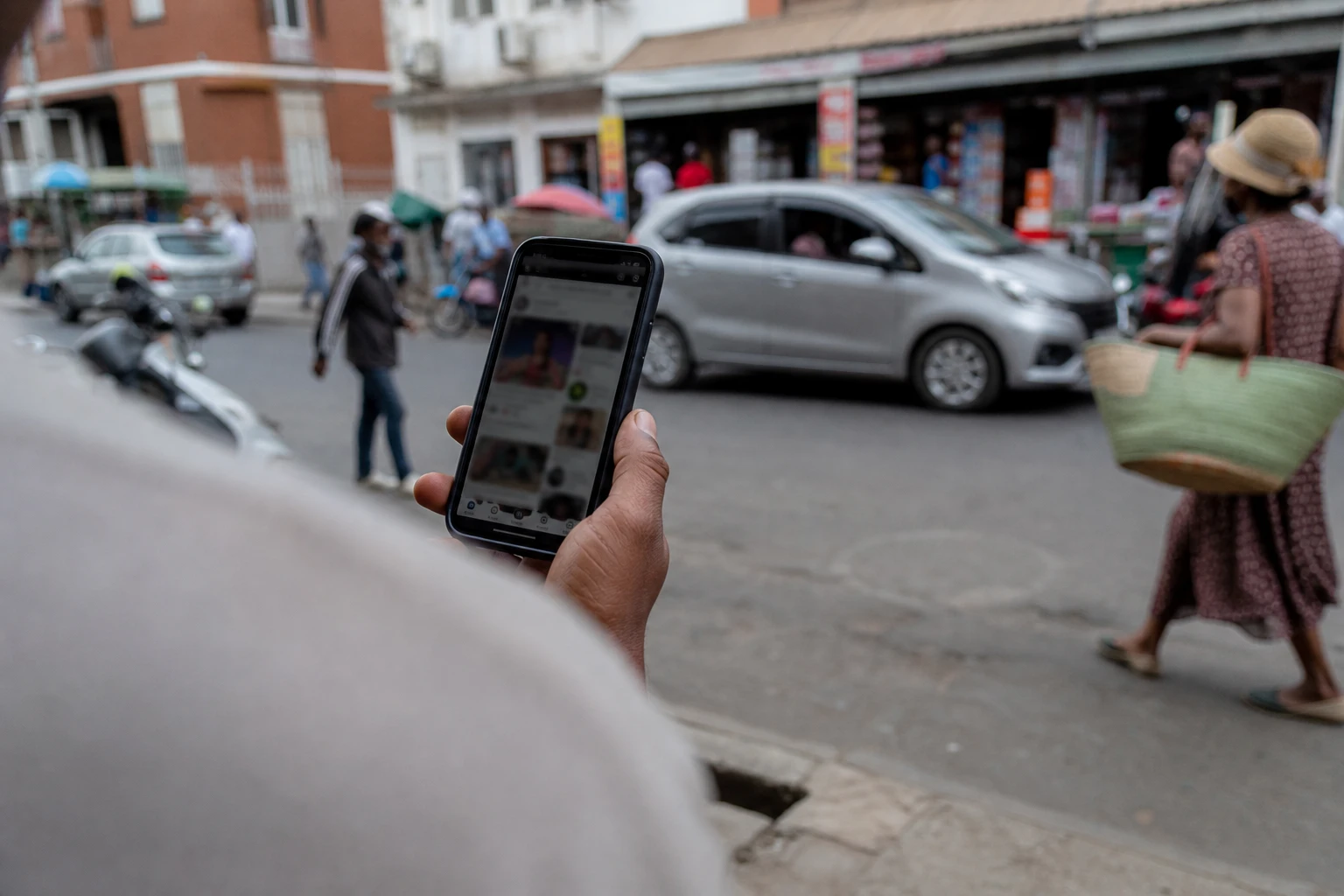
In Antananarivo, fear is no longer fuelled by rumours alone
In Madagascar, fear had taken hold in people’s homes long before the official mourning began. For several weeks, the capital, Antananarivo, and its outskirts have been gripped by reports of disappearances, bodies found and families still seeking answers. The authorities have finally given this security crisis a symbolic framework by declaring a national day of mourning on Friday 24 July 2026.
This gesture comes in a country where security already weighs heavily on daily life, particularly in densely populated urban areas and outlying neighbourhoods. Madagascar is a member of SADC, the Southern African Development Community, a bloc where institutional stability and domestic security remain issues closely monitored by regional partners. Antananarivo, meanwhile, is the focus of expectations, concerns and political pressure.
National mourning, but also a response to a crisis of confidence
According to information cross-checked by the Malagasy press and international media, the gendarmerie has reported 200 disappearances, of which 175 cases were resolved when the people concerned returned to their families. Six people are said to have been found dead, and 19 remain missing. These figures are being treated with caution because they are changing rapidly, but they convey the scale of the current tension.
The presidency presented the day as a tribute to the victims of disappearances and murders. An ecumenical ceremony was also announced in Antananarivo, to be attended by the head of the Refoundation, Colonel Michaël Randrianirina. This institutional sequence shows that the authorities are seeking to respond to public grief while retaining control of the political narrative.
The case of 23-year-old Heriniaina Rakotoarifara has made a deep impression. His family last saw him on 4 July 2026, before he disappeared. His body was later found in a rice field on the outskirts of Antananarivo, after several days of searches first carried out by his relatives and later joined by the authorities. The family said an autopsy had been performed, but that it had yet to receive detailed findings on the cause of death.
His relatives describe him as an unassuming young man, a gardener for a private group, sociable and well-liked in the neighbourhood of Manazary. This family dimension matters. It is a reminder that behind the statistics are ordinary lives, often in households without the connections or resources to speed up investigations. In Madagascar, unequal access to public protection is fuelling distrust, particularly when incidents are concentrated around the capital.
What the wave of disappearances reveals about the Malagasy state
This is not the first time the Malagasy authorities have announced a security crisis. In recent weeks, official statements have taken a tougher tone. The head of the Refoundation even described the crimes and disappearances as “acts of terrorism”, according to the local press. The phrase conveys the perceived gravity of the moment, but it is no substitute for a thorough investigation or visible judicial results.
At the same time, the authorities have raised the prospect of setting up a task force to coordinate searches and investigations. Here, too, the challenge goes beyond the announcement. A special unit is valuable only if it can better coordinate the police, gendarmerie, courts and social services. In a country where complaints are mounting, institutional coordination is becoming a test of credibility.
The climate is all the more sensitive because children and teenagers are bearing the brunt. Figures published in early July reported 172 missing minors in the first half of 2026, with a significant share of cases recorded in Analamanga, the region around Antananarivo. This geographical concentration shows that the crisis is not merely widespread in theory: it is hitting the most populous, mobile and exposed areas first.
Families, for their part, want more than statements. They want names, deadlines, arrests and then trials. This is also where the divide between the capital and the provinces, connected classes and ordinary households, public messaging and judicial evidence comes into play. When trust fractures, fear spreads faster than verified facts.
A Malagasy case, but a signal for the whole region
The significance of these events extends beyond Madagascar. In the Indian Ocean region and across SADC, the movement of people, cross-border family ties and gaps in some protection systems make this kind of crisis particularly sensitive. For the African Union, too, the question is clear: how can children, teenagers and vulnerable people be protected when the police response is seen as slow or fragmented?
In the short term, the next test will be what follows the national day of mourning. The Malagasy authorities will have to show whether the symbolism is matched by concrete action: published investigations, updated figures, on-the-ground checks and regular information for families. Without this, mourning risks becoming a brief interlude in a deeper crisis of public security and institutional trust.