Algeria
 Egypt
 Libya
 Morocco
 Sudan
 Tunisia
 Benin
 Burkina Faso
 Cabo Verde
 Côte d'Ivoire
 Ghana
 Guinea
 Guinea-Bissau
 Liberia
 Mali
 Mauritania
 Niger
 Nigeria
 Senegal
 Sierra Leone
 The Gambia
 Togo
 Cameroon
 Central African Republic
 Chad
 DR Congo
 Equatorial Guinea
 Gabon
 Republic of the Congo
 São Tomé and Príncipe
 Burundi
 Comoros
 Djibouti
 Eritrea
 Ethiopia
 Kenya
 Malawi
 Mauritius
 Mozambique
 Rwanda
 Seychelles
 Somalia
 South Sudan
 Tanzania
 Uganda
 Angola
 Botswana
 Eswatini
 Lesotho
 Namibia
 South Africa
 Zambia
 Zimbabwe
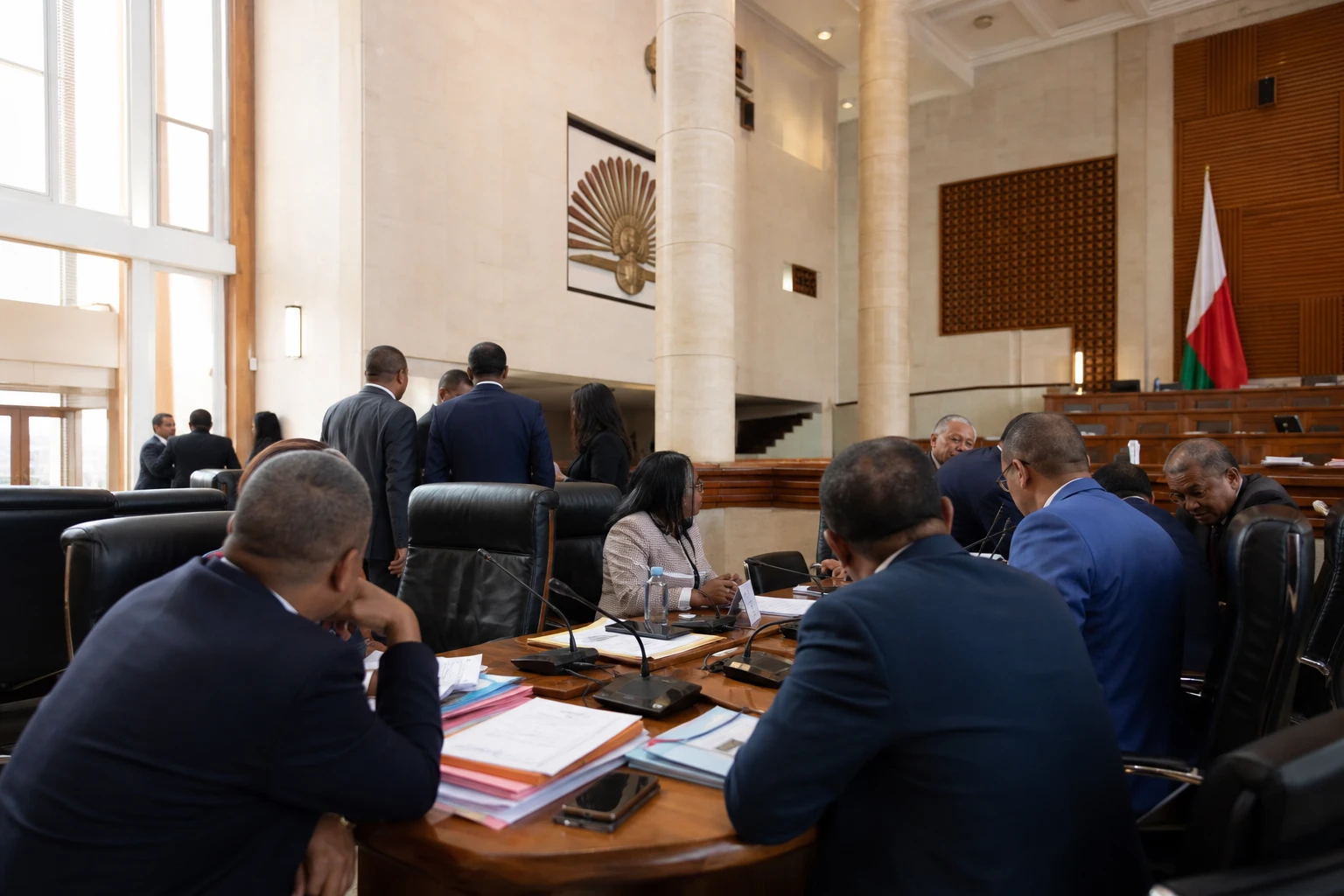
In Antananarivo, a majority is reshaping itself beyond the slogans
In Malagasy politics, blocs shift quickly, but power balances always leave their mark. In Antananarivo, the real issue is not simply who supports the government. It is how a National Assembly, already reshaped by the upheavals of 2025, has become one of the places where the country’s stability is being negotiated. Since the fall of President Andry Rajoelina and Colonel Michaël Randrianirina’s seizure of power in October 2025, Madagascar has been under a transition announced to last 24 months.
In this context, MPs joining the government camp is no trivial matter. It says something deeper: the search for a new institutional footing, as the electoral legitimacy of 2024 was swept away by the political crisis of the following year and parliamentary balances remain fragile. The National Assembly, which has 163 seats, is at the heart of this reshaping.
From IRMAR to refoundation: a Parliament under strain
Before the rupture of 2025, the parliamentary majority was already structured around IRMAR, the coalition supporting Andry Rajoelina. After the May 2024 legislative elections, the platform won 84 seats, according to the official results proclaimed by the High Constitutional Court, giving it an absolute majority in the National Assembly. The Inter-Parliamentary Union confirmed the result and noted that the vote had taken place amid political tensions.
Since the military seizure of power in October 2025, the framework has changed. The African Union described it as a “change of power” and called for a return to constitutional order. SADC, too, has closely monitored the situation and sent a technical mission to establish the facts and encourage inclusive dialogue. Madagascar therefore remains under regional scrutiny, in an environment where every parliamentary alliance is viewed in light of the transition timetable.
It is in this shifting political landscape that 80 MPs have joined the government in power. The figure matches the historical base of the majority formed in 2024, but now takes on a new meaning: this is no longer simply a matter of party discipline, but a repositioning towards a transitional regime seeking to consolidate its civilian support. Information published in recent months also shows that several MPs from the former president’s circle, including IRMAR, have already changed their political stance or chosen not to oppose the government head-on.
What this backing changes in practice
On paper, the support of 80 MPs gives the transitional government breathing space. In practice, it could chiefly make three things easier: passing legislation, controlling the parliamentary agenda and normalising the institutional discourse around refoundation. In 2026, Madagascar’s National Assembly has already passed several bills affecting sensitive sectors such as oil, land, anti-money laundering and access to drinking water. Broad parliamentary backing therefore reduces the risk of deadlock in Tsimbazaza, the Assembly building.
For the executive, this support also serves as a political signal. The refoundation regime wants to show that it does not govern solely with the military, but also has civilian allies capable of passing laws and giving the transition a semblance of pluralism. For the MPs who have joined, the benefits are even more tangible: keeping a place in the game, preserving local networks, influencing the allocation of responsibilities and remaining visible at a time when voters are demanding concrete results. This is a longstanding pattern in Madagascar, where coalitions often regroup around access to the state rather than stable ideological programmes.
But this move has a downside. The more elected representatives align themselves with whoever holds power, the more Parliament risks looking like a place for rallying to the government rather than a check on it. The Malagasy transition is already under the scrutiny of the African Union, SADC and the United Nations, which are calling for a gradual return to a consensual institutional order. If parliamentary support is used only to lock down the system, it could undermine the process’s credibility rather than strengthen it.
Significance beyond Madagascar
The Malagasy case is of interest across southern Africa and, beyond that, to the African Union. First, it shows that a military transition is not played out only in barracks or presidential palaces. It also unfolds in assemblies, parliamentary groups and local alliances. Second, Madagascar is at a pivotal moment: the country chaired SADC in 2025, then relinquished the role after the change of power. The sequence illustrates the entanglement of regional prestige, domestic crisis and the search for an institutional way out.
The next steps will therefore need close watching: the transition roadmap, the pace of constitutional reforms, the real space left for the opposition and Parliament’s ability to speak for the Malagasy people, not just for those in power. In Antananarivo, the question is not only who governs today. It is whether Madagascar’s institutions can still produce a lasting compromise in a country where political ruptures often come faster than reforms.