Algeria
 Egypt
 Libya
 Morocco
 Sudan
 Tunisia
 Benin
 Burkina Faso
 Cabo Verde
 Côte d'Ivoire
 Ghana
 Guinea
 Guinea-Bissau
 Liberia
 Mali
 Mauritania
 Niger
 Nigeria
 Senegal
 Sierra Leone
 The Gambia
 Togo
 Cameroon
 Central African Republic
 Chad
 DR Congo
 Equatorial Guinea
 Gabon
 Republic of the Congo
 São Tomé and Príncipe
 Burundi
 Comoros
 Djibouti
 Eritrea
 Ethiopia
 Kenya
 Malawi
 Mauritius
 Mozambique
 Rwanda
 Seychelles
 Somalia
 South Sudan
 Tanzania
 Uganda
 Angola
 Botswana
 Eswatini
 Lesotho
 Namibia
 South Africa
 Zambia
 Zimbabwe
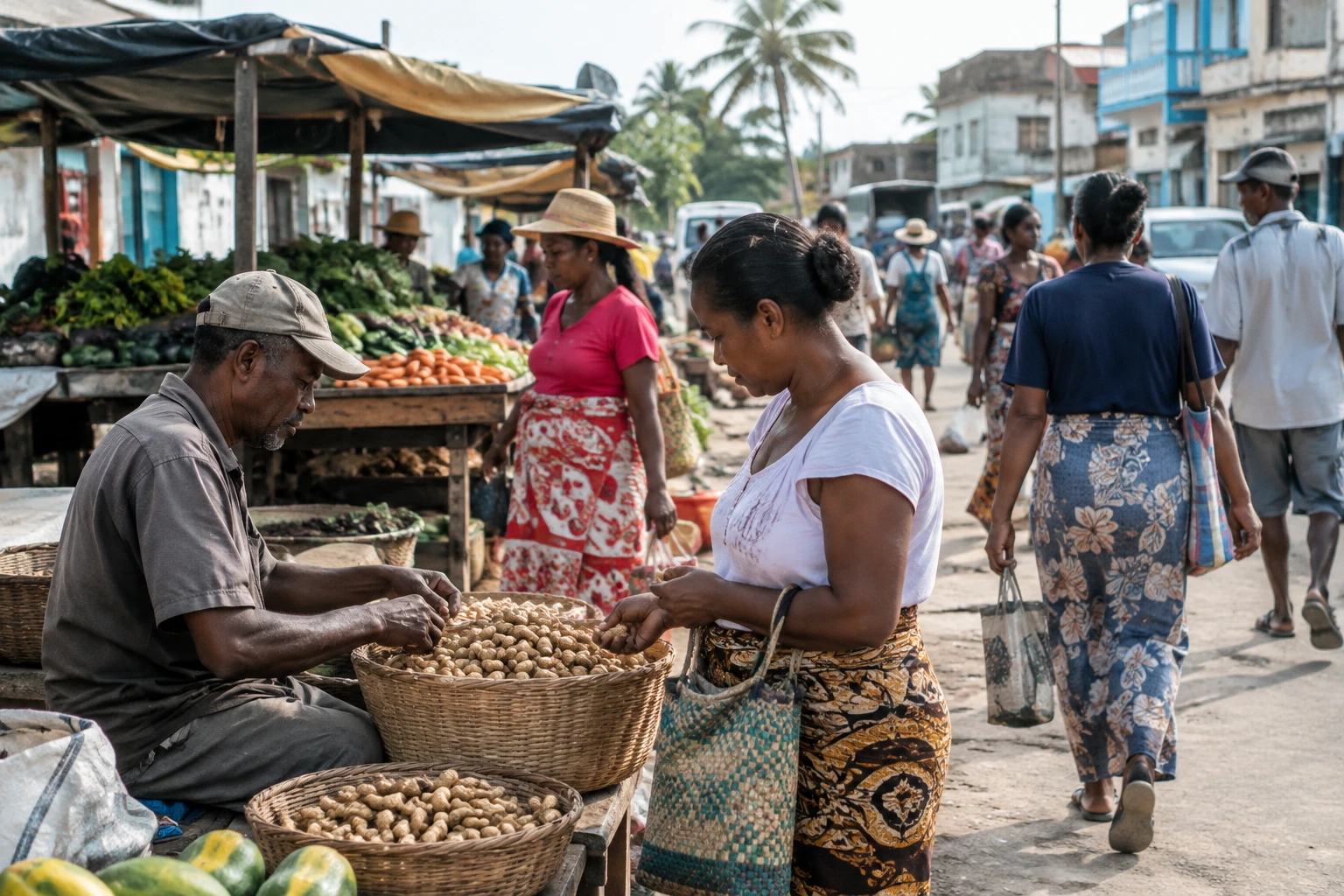
In Madagascar’s Grand South, next season’s harvest is at stake even before planting begins. After a very poor 2025-2026 season, lower rainfall and high temperatures could further deplete families’ reserves. The forecasts are worrying, but the difficulties are already visible on the ground.
A crisis taking hold before the next rains
In Madagascar, the lean season — the months when stocks from the previous harvest run out before the next one — has started early and could last. Across the south-western Indian Ocean, the effects of El Niño vary from one area to another. In the Grand South, however, national forecasts point to a drier-than-normal start to the rainy season in several districts of Androy, Anosy and Atsimo-Andrefana.
Madagascar’s meteorological service forecasts below-average rainfall in October and November in south-western Androy, north-western Anosy and almost all of Atsimo-Andrefana. These are seasonal trends, not a certainty for every locality. But they come after a prolonged drought and the collapse of the 2025-2026 agricultural season.
In Antananarivo, national authorities and meteorological services are monitoring a risk that primarily affects rural livelihoods. In the areas concerned, families depend on rain-fed crops, livestock and markets where prices can limit access to food even when it remains available.
Projections deteriorate
An analysis by the Integrated Food Security Phase Classification (IPC), a shared tool that ranks the severity of food insecurity across five phases, provides a national benchmark. It estimates that 2.12 million people in Madagascar were in Phase 3 or above between June and September 2026. Phase 3 corresponds to a crisis and Phase 4 to an emergency.
For the period from October 2026 to February 2027, the IPC projects about 3.72 million people in Phase 3 or above, including nearly 426,000 in Phase 4. Six districts in the Grand South could face emergency conditions. These figures are projections, not an assessment of the situation across the entire period. The analysis links the expected deterioration to the lean season, depleted stocks, high prices, the delayed effects of cyclones and climate risks associated with El Niño.
Action Against Hunger estimates that more than 500,000 children under five could suffer from acute malnutrition by April 2027. This estimate should be read as a warning from the organisation. It highlights the particular pressure on young children, pregnant or breastfeeding women and households with few reserves.
Harvests, incomes and displacement under pressure
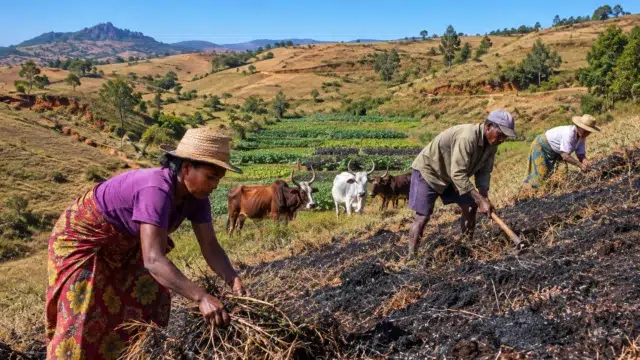
The shock is not limited to the amount of food harvested. A poor harvest also reduces income from sales, while households have to buy more at markets. A civil society representative in Androy reports that peanut production, which sometimes reached five tonnes per farmer, is said to have fallen to no more than one tonne in the March harvest. This local account illustrates a trend but is not a measure of the region as a whole.
When agricultural incomes fall, families change their coping strategies. Some men leave to look for work in other communes or regions and send money back to the village. If resources remain scarce for a long time, their relatives may join them. These movements redistribute responsibilities within families and weaken local activities, while declining purchasing power also affects small businesses and the informal economy.
Growing needs coincide with less-funded humanitarian aid. Action Against Hunger says it has scaled back its operations and closed its office in Ampanihy, in Atsimo-Andrefana, keeping only a base in Ambovombe in the south. This is one organisation’s reorganisation; nevertheless, it illustrates the risk that more limited coverage will leave some households further from services.
Preventing an emergency rather than responding to one
The 2021 season remains an important recent precedent in the country’s collective memory. The south then suffered a severe drought and food security crisis, prompting humanitarian partners to warn of hunger and malnutrition. The current situation is not identical, but repeated poor harvests are reducing households’ capacity to absorb another shock.
Climate projections provide a window to act before stocks are further depleted: agricultural support adapted to expected rainfall, cash transfers or food aid, nutrition monitoring and access to water. The IPC also recommends protecting incomes and livelihoods. For farming households, early assistance can prevent the sale of livestock or tools — decisions that make subsequent farming seasons even more difficult.
Regionally, Madagascar is a member of the Southern African Development Community (SADC), which brings together countries in southern Africa and the Indian Ocean. El Niño warnings concern several countries in the region, but its effects vary according to the season and location. Madagascar’s meteorological service provides essential national insight here: the forecast rainfall deficits will not affect the island uniformly.
The coming months will test the ability of authorities, local councils and partners to turn these forecasts into practical support. Two indicators will be crucial: how rainfall actually evolves in the Grand South and the coverage of aid during the lean season, particularly for children and the most exposed rural families.
For assessments and forecasts, see the IPC analysis on Madagascar, Météo Madagascar’s seasonal outlook and Action Against Hunger’s warning.