Algeria
 Egypt
 Libya
 Morocco
 Sudan
 Tunisia
 Benin
 Burkina Faso
 Cabo Verde
 Côte d'Ivoire
 Ghana
 Guinea
 Guinea-Bissau
 Liberia
 Mali
 Mauritania
 Niger
 Nigeria
 Senegal
 Sierra Leone
 The Gambia
 Togo
 Cameroon
 Central African Republic
 Chad
 DR Congo
 Equatorial Guinea
 Gabon
 Republic of the Congo
 São Tomé and Príncipe
 Burundi
 Comoros
 Djibouti
 Eritrea
 Ethiopia
 Kenya
 Malawi
 Mauritius
 Mozambique
 Rwanda
 Seychelles
 Somalia
 South Sudan
 Tanzania
 Uganda
 Angola
 Botswana
 Eswatini
 Lesotho
 Namibia
 South Africa
 Zambia
 Zimbabwe
In Antananarivo, the trial of a former figure in the ousted government is putting the promise of a break with the past, made by Madagascar’s transition authorities, to the test. The verdict against Marie-Michelle Sahondrarimalala comes as the new authorities seek to consolidate their legitimacy and settle accounts with the former regime.
A conviction at the heart of a still-fragile transition
On Wednesday 30 September 2026, the Antananarivo Court of First Instance sentenced Marie-Michelle Sahondrarimalala to five years in prison for “undermining state security”. The former education minister stood trial alongside 12 other defendants, described as supporters of the former government.
The 12 others received one-year suspended prison sentences. The decision follows several months of pre-trial detention for Marie-Michelle Sahondrarimalala, who has been in custody since 19 January 2026, according to reports by the Malagasy media outlet 2424.mg.
Prosecutors accuse her of seeking to destabilise the transitional government established after the fall of Andry Rajoelina. The charges include the alleged distribution of 580 million ariary, or about €116,000, to finance unrest and bring about the overthrow of the new political order.
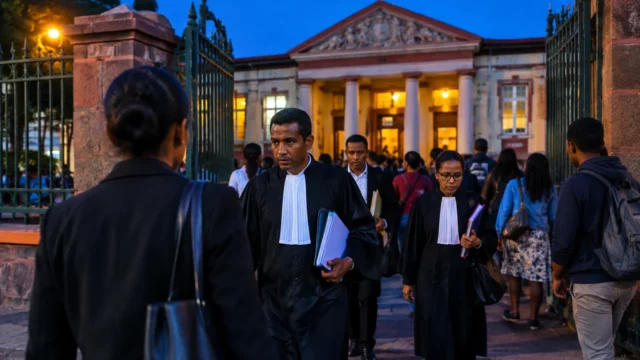
The defence, however, disputes that any money was handed over. Lawyer Nicaise Chen says no material evidence, direct testimony or bank records were presented at the hearing. He has therefore called the verdict a “purely political conviction”.
A former minister in Rajoelina’s inner circle
Marie-Michelle Sahondrarimalala was no minor figure in the former regime. A doctor by training, she headed Madagascar’s education ministry for several years under President Andry Rajoelina. She was later elected as a member of parliament for the Fianarantsoa constituency.
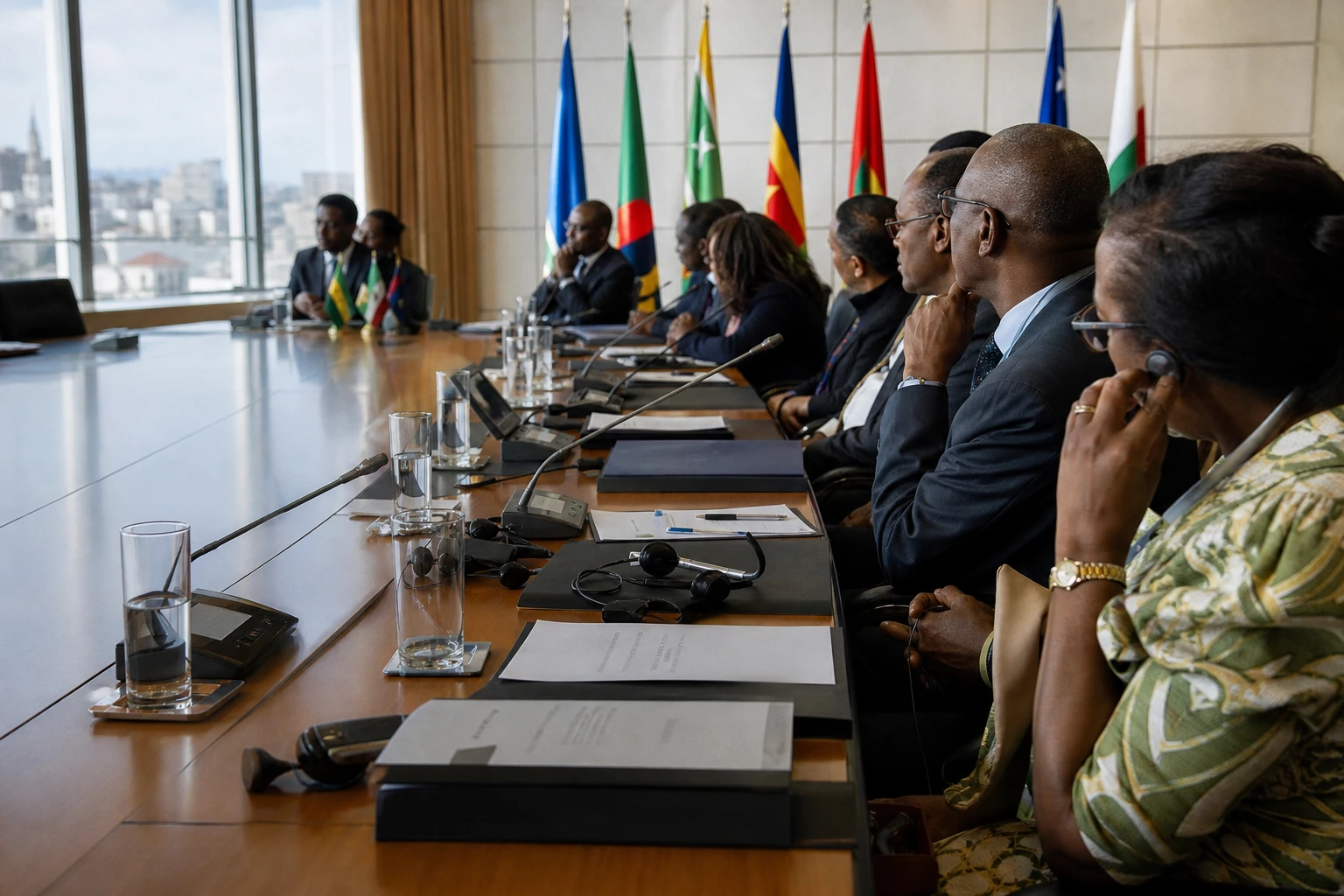
Her career brought her close to the ousted president. After Andry Rajoelina’s departure, she was notably tasked with defending his interests in mediation backed by the Southern African Development Community, or SADC. The regional organisation brings together several southern African states and regularly intervenes in political crises in the region.
The former minister’s prosecution is therefore part of a broader effort to curb the political and administrative influence of networks linked to the former government. The change of regime did more than shift the centre of decision-making. It also opened a period of scrutiny of accountability, public contracts and relations between the state and political elites.
Justice faces the risk of settling scores
The transitional authorities present the prosecutions as an exercise in accountability. They want to show that officials from the former system no longer enjoy political protection. Yet the speed of the proceedings and the nature of the charges have raised questions among the defence and some observers.
During a period of institutional rupture, the true independence of the judiciary becomes a central issue. A credible process must allow the prosecution to establish the facts. It must also guarantee the defence access to the case file, an adversarial hearing and the opportunity to challenge the decision.
The case is all the more sensitive because the country is emerging from a change of power sparked by youth protests and followed by the decisive intervention of a military unit. Colonel Michaël Randrianirina took the helm of the transition after Andry Rajoelina’s fall in October 2025. He has pledged to lead the country towards new elections after a period of refoundation.
In Madagascar, that promise remains tied to a simple question: will the transitional institutions be able to punish abuses without turning justice into an instrument of revenge? The answer will have a direct bearing on public trust, as well as relations with regional and international partners.
A separate case concerns school contracts
The conviction for undermining state security is not the end of the former minister’s legal troubles. Marie-Michelle Sahondrarimalala is also being prosecuted in a separate case for abuse of office and the alleged misappropriation of public funds.
The second case concerns a public contract for the purchase of school desks and benches. It is being handled by the Antananarivo Anti-Corruption Centre, the institution specialising in corruption cases and offences against public resources.
The financial case could have particular significance. Education is a sector closely watched by families, teachers and local authorities. Spending on classrooms, furniture and school equipment therefore affects both the management of the state and daily life in the regions.
The judiciary will nevertheless have to keep the two cases clearly separate. A political conviction cannot take the place of proving personal enrichment or a financial offence. Similarly, suspicions linked to a public contract must be established through documents, expert assessments and individually assigned responsibility.
The Malagasy precedent goes beyond one former minister
The case comes in a country marked by several contested changes of government and a heavy concentration of power around presidential figures. The change in 2025 revived debate about the role of the army, the place of public protest and the ability of institutions to ensure an orderly succession.
The SADC is closely monitoring developments. Madagascar is part of its political and economic region, even though the island has a distinct trajectory from the countries of mainland southern Africa. The organisation will in particular have to monitor the guarantees afforded to political actors, the election timetable and respect for civil liberties.
The Sahondrarimalala case has thus become a test for the transition. If the authorities want to convince people that they are building a new state governed by the rule of law, they will have to make proceedings transparent and allow the appeals provided for by law. The next stage will be as much judicial as political: any appeals and the progress of the anti-corruption investigation will help gauge the strength of the process.
In Antananarivo and across the regions, people are above all waiting for the political break to produce tangible results. The fight against corruption will be credible only if it applies to all sides, is based on evidence and does not depend on proximity to those currently in power.