Algeria
 Egypt
 Libya
 Morocco
 Sudan
 Tunisia
 Benin
 Burkina Faso
 Cabo Verde
 Côte d'Ivoire
 Ghana
 Guinea
 Guinea-Bissau
 Liberia
 Mali
 Mauritania
 Niger
 Nigeria
 Senegal
 Sierra Leone
 The Gambia
 Togo
 Cameroon
 Central African Republic
 Chad
 DR Congo
 Equatorial Guinea
 Gabon
 Republic of the Congo
 São Tomé and Príncipe
 Burundi
 Comoros
 Djibouti
 Eritrea
 Ethiopia
 Kenya
 Malawi
 Mauritius
 Mozambique
 Rwanda
 Seychelles
 Somalia
 South Sudan
 Tanzania
 Uganda
 Angola
 Botswana
 Eswatini
 Lesotho
 Namibia
 South Africa
 Zambia
 Zimbabwe
Insecurity reaches everyday journeys
In Madagascar, concern is not confined to major political issues. It is also becoming part of the simplest routines: going to class, returning home, travelling between two neighbourhoods of Antananarivo or reaching a provincial town. In recent days, two deaths described as unexplained have revived a question that has become central for many Malagasy people: who protects families when disappearances are multiplying and official answers are slow to come?
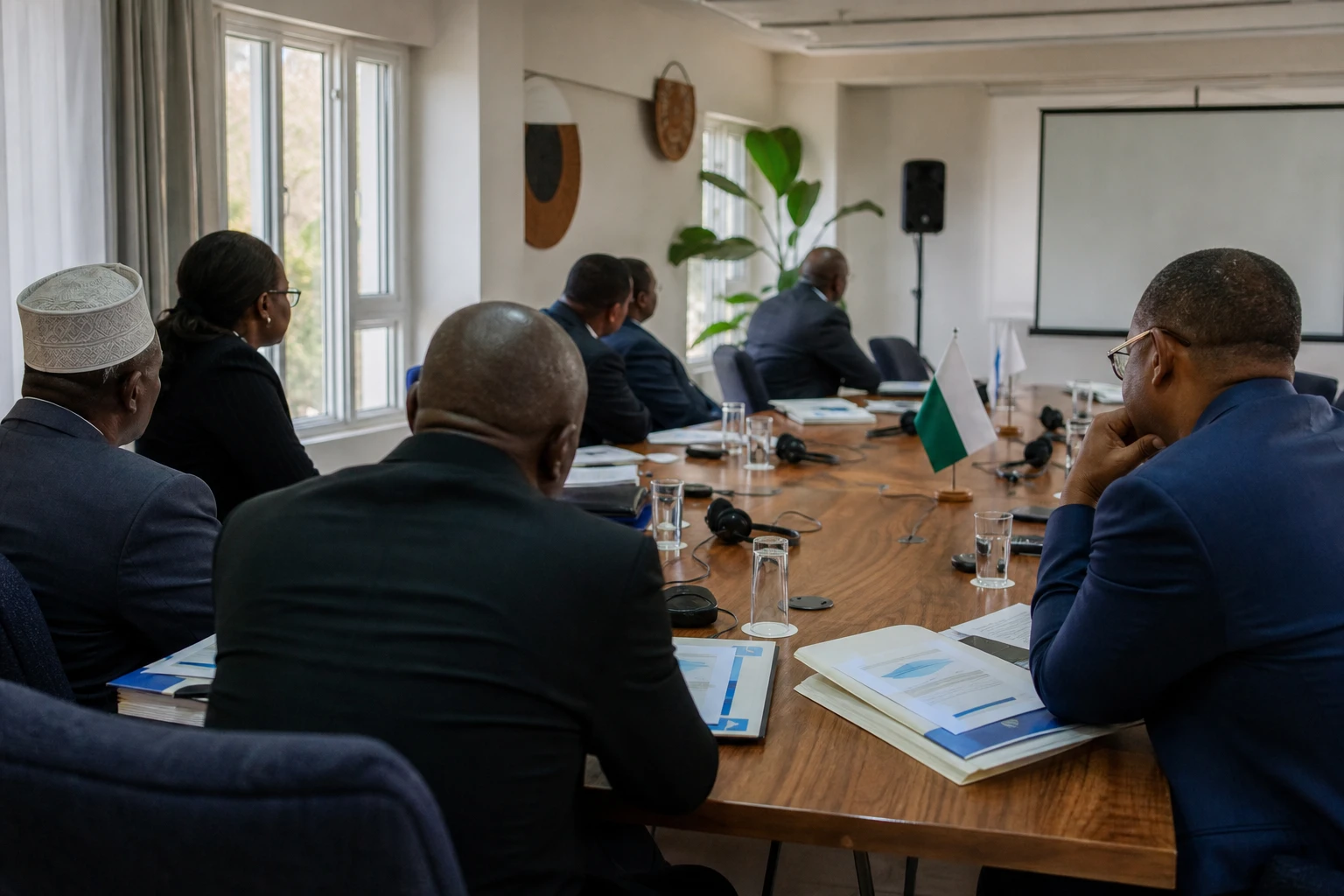
The context is fraught. For several weeks, the Malagasy authorities have been under pressure over their handling of internal security, as the country’s political crisis continues to draw the attention of the Southern African Development Community, SADC, and a joint African Union-UN mission in Antananarivo from 13 to 18 July 2026. This sequence of events shows that security is no longer solely a judicial or policing issue: it also affects trust in institutions and the credibility of the ongoing transition.
Two deaths, two families, many questions
The first case concerns Ny Aina Liantsoa Andrimasinavalona, a 22-year-old student who had been missing since 15 July. His body was recovered on 20 July from the Ikopa River, near Ambohimanambola, on the outskirts of Antananarivo. According to initial findings reported by the local press, drowning is being considered, but the exact circumstances remain to be clarified. The young man had been the subject of a missing-person notice shared on social media by his family.
The second death was that of Hortensia Mandrosovoatra, a 27-year-old woman who had recently graduated in medicine. She had disappeared the day before her body was found, on 21 July, in the waters of Andriamamovoka Falls, in Ranomafana, in the Fianarantsoa region. Here too, the available information calls for caution. No definitive conclusion had been made public at the time of the first reports, and relatives initially raised the alarm online before receiving responses from the authorities.
Civil society urges the state to break its silence
Following this succession of tragedies, voices from Malagasy civil society are calling for genuine, swift and transparent investigations. Youth groups have publicly denounced a climate in which studying, working or simply getting around has become a source of anxiety. Their demand is clear: it is no longer enough to invoke possible destabilisation or promise general reassurances; those responsible must be identified, credible investigations conducted and justice made visible.
This call echoes that of human rights advocates. They are urging the state to communicate regularly and to significantly strengthen the resources of the national police, which they consider too isolated in the face of the scale of the disappearances. They also warn of a risk already seen in several contexts of deep mistrust: the temptation of mob justice when people believe institutions are no longer responding adequately to events. In a country where justice is often seen as slow or distant, this danger threatens public security as much as the rule of law.
A political test for Antananarivo
The Malagasy government is trying to regain control of the situation. The prime minister has announced that a report will soon be presented, covering both murder and disappearance cases and the measures already taken to contain insecurity. Meanwhile, according to the local press, an operational coordination centre for anti-disappearance efforts has opened at the central police station in Tsaralalàna. But for some members of the public, these announcements will carry weight only if they are accompanied by verifiable results: completed investigations, identified perpetrators, judicial proceedings followed through and regular public updates.
The issue is all the more sensitive because Madagascar is going through a fragile institutional period. SADC reiterated its interest in stability, security and democratic governance in the country in late June and again in mid-July. The AU-UN mission, for its part, highlighted the need for inclusive political dialogue to achieve a lasting return to constitutional order. In this context, every unsolved disappearance feeds a broader interpretation: that the state must prove through its actions that it protects all citizens, not just in its speeches.
Beyond a crime story, a regional question
The situation in Madagascar resonates beyond the island. Across the SADC region, several countries are facing security, governance and public trust challenges at the same time. The response in Madagascar will therefore serve as a regional indicator: if investigations are credible and swift, they could restore a measure of trust; if they remain opaque, they will instead fuel the belief that a political transition alone is not enough to protect everyday life. It is precisely this link between tangible security and institutional legitimacy that concerns civil society as well as the African and international partners currently in Antananarivo.
In the short term, attention will focus on the promised publication of the government report, the progress of the two cases and the authorities’ ability to communicate without obscuring the facts. In a country where young people make up a significant share of those affected by perceived insecurity, the stakes go beyond the two recent tragedies: they touch on the freedom to travel, study and work in Antananarivo and the provinces, and therefore on the basic trust on which lasting stability depends.